dTAG, you’re it! Summer Research 2026
To say that I immediately fell in love with research would simply be untrue. Set the scene: it’s nine o’clock on a Saturday, and I had been here since eight in the morning. I started in the laboratory less than two weeks ago this summer, but I was already feeling the long days that lay ahead. Somehow still, the summer was a time crunch. The intensity of research hit me on my first day and intensified from observing scholars around me in the lab doing experiments from the start of the day to the end. Despite all of this, it was undeniably evident to me that the work I was doing was important. Thinking back now, I’m grateful to have been able to identify important lessons and exactly how this summer transformed me. Sometimes I joke that this period leaned towards “type two fun,” or the type of enjoyment that you don’t fully appreciate until you look back, but frankly it’s more than that. For each section describing my endeavors, I’ve included a lesson or two — one for each week of the summer.
What?
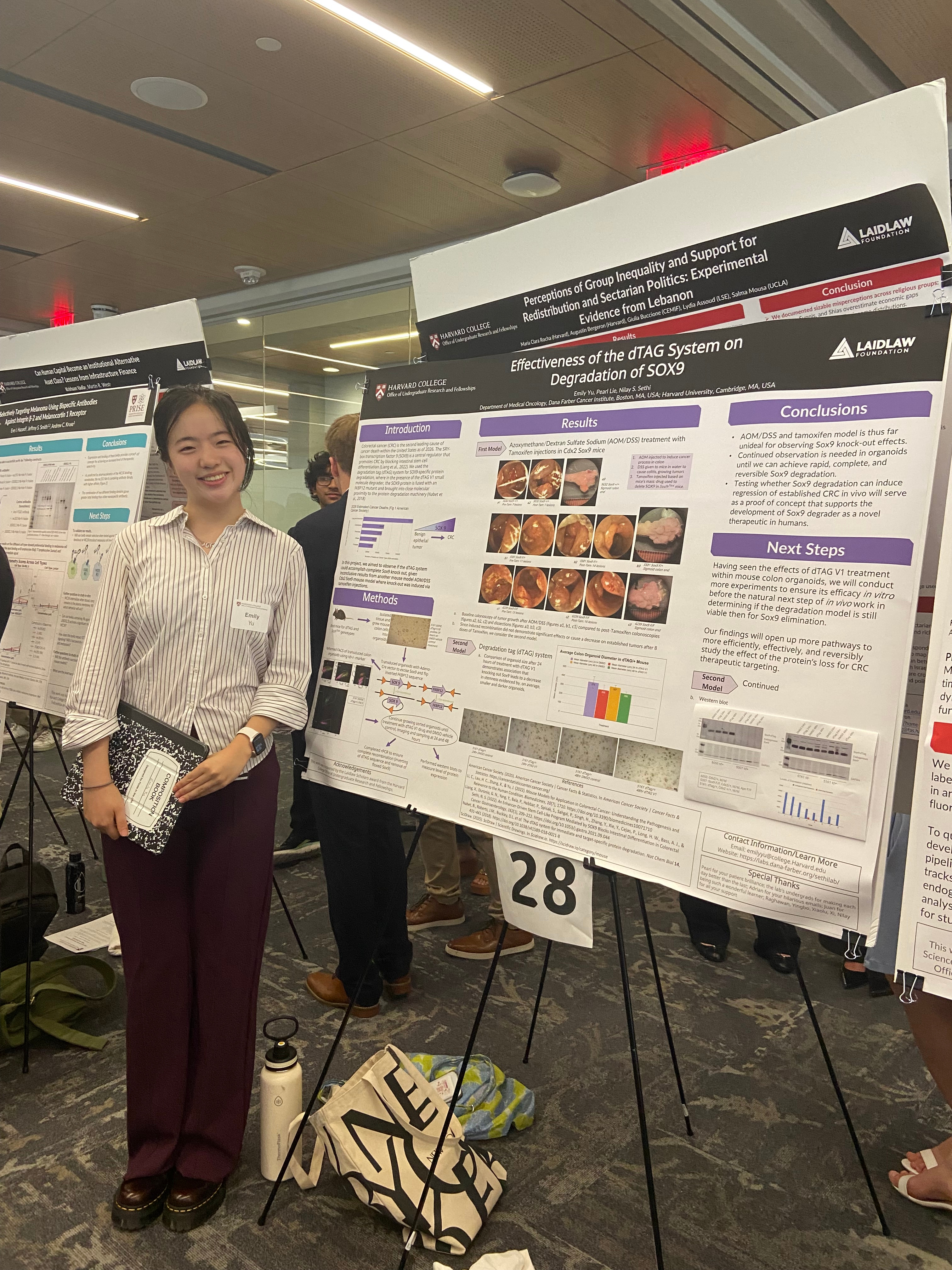
My project focused on methods of degradation for the SRY-box transcription factor 9 (SOX9), a protein that promotes colorectal cancer (CRC) by blocking intestinal stem cell differentiation (Liang et al., 2022), using the degradation tag (dTAG) system. FKBP12^F36V (or simply FKBP12 mutant) is engineered to bind to the target protein, in this case SOX9. The dTAG compound is a heterobifunctional molecule, meaning it functions similar to a bridge that binds to the FKPB12 mutant on one end and the E3 ubiquitin ligase (degradation machinery) on the other. With the target protein now held in close proximity to degradation machinery, it is degraded (Nabet et al., 2018). This summer, I was interested in how effectively this system functions in vitro for eliminating SOX9.
For reference, other technologies have been utilized for protein elimination, such as CRISPR, RNAi, and small molecule inhibitors. But while those are irreversible, tend to leave behind already-present protein, and often contain off-target effects, respectively, dTAG is highly selective and non-permanent, giving the system an edge and piquing my lab’s interest in exploring it.
Lesson #1: research is about optimizing. How can we do something better or make a process more efficient? From sharpening the techniques of pipetting small volumes to feeding cells a media composed of different reagents, something can always be made better.
Why?
On a macro level: CRC is the second leading cause of cancer death within the United States as of 2026, with rates rising especially in young adults. I started in the Sethi Lab last winter where I was greeted by my mentor and hours of pipetting. It was easy to get lost in the repetitive nature of those times, but each time we congregated as a lab to talk about experimental progress and data, I am reminded of why even the small tasks I did were essential. In the unique sense that DFCI is a research and teaching hospital, I see the people our work matters to, and it makes everyday so much more meaningful.
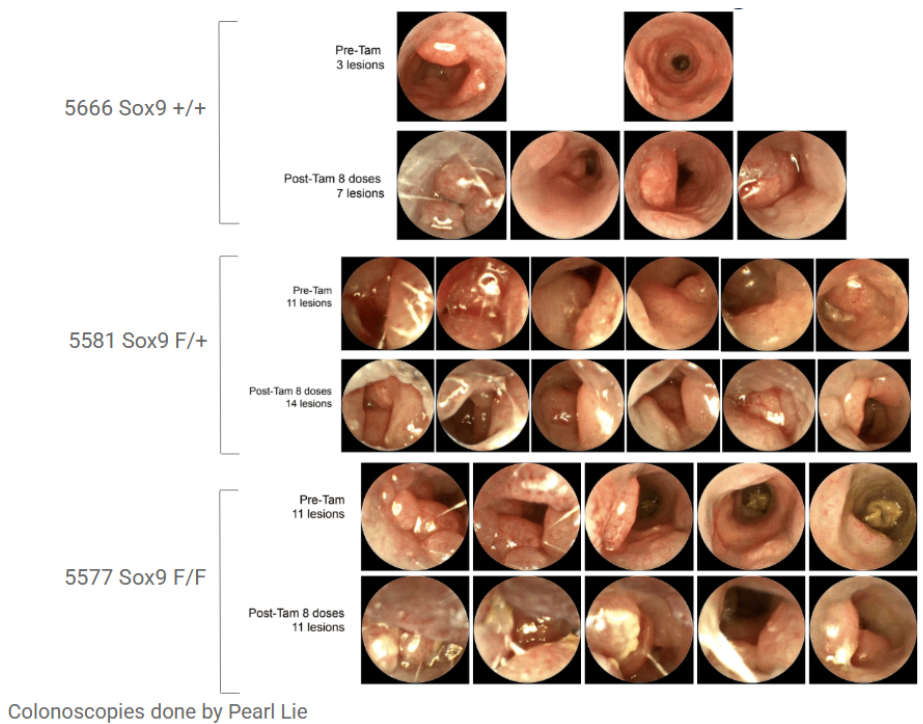
On a micro level: This project was born out of previous mouse models that tried to eliminate SOX9, that is, the AOM/DSS plus tamoxifen model. When Azoxymethane (AOM) is injected into mice flanks at appropriate doses, a cancer process is induced in the colon. Afterwards, Dextran Sulfate Sodium (DSS) is given to mice in water to cause colitis, growing tumors. Finally, tamoxifen injections based on mice’s masses deletes SOX9 in SOX9 floxed mice, among other appropriate genotypes. There were no visible signs of tumor regression in SOX9 floxed/floxed mice post tamoxifen, which is not what we expected in the case of complete SOX9 knock out after this multi-month-long endeavor. Pending the paraffin section cutting to measure true protein KO efficiencies, I began to explore the dTAG system’s effects on SOX9 degradation in vitro. It would be remiss to not try out another system of protein elimination given the efficacies.
Lesson #2: waiting is inherent to many experiments. Choosing what can be done in the meantime to fully flesh out a hypothesis helps move the project forward when time is little.
Those who made it possible
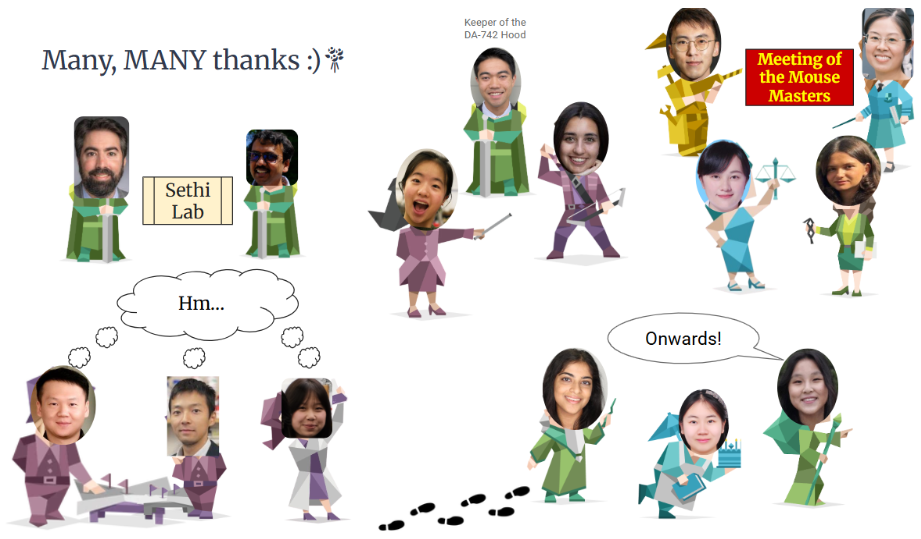
It would be inappropriate to delve any deeper into my reflection without a kudos to all those who made my summer possible. Thank you to the Sethi Lab at Dana Farber Cancer Institute and my P.I. Dr. Nilay Sethi for providing the facilities and your relentless curiosity during lab meetings. I would also like to thank my fabulous mentor Dr. Pearl Lie for being my day-one in what would be my first serious research experience. Truly, these past two months would not have been possible without your meticulous care, detailed mentorship, and admirable patience. Sitting down with you to break down the master plan for the summer so early on in this adventure was the first time I felt dialed in to the ideating and planning portions of the research process as opposed to just the labor-heavy experimental ones.
It was evident I was vulnerable to the rest of the lab’s habits when I consistently found myself staying in late or coming in on the weekends. Adrian, Xiaolu, Yingbo, Ananya, Zhixin, Xi, Juan: you all work so hard and I am happy to say that you all have been my positive influencers. It also goes without saying that I thank Raghawan for your wisdom and the undergraduates in the lab for bringing the energy when I most needed it. Whether it was as small as fitting in a gel or getting help to open the -20C fridge, you were there and I am grateful.
Lesson #3: people over places any and every time. To be influenced by those around you becomes subconscious the more you stay within an environment. Big shout out to my inaugural cohort of Laidlaw scholars at Harvard :)
Methods
My project began with breeding mice for SOX9-dTag and SOX9 floxed/floxed genotypes. With an allele of the former, the mice would produce SOX9 proteins with the “tag” (FKBP12 mutant) that would prime the protein for degradation once treated with the dTAGV-1 drug. While older dTAG molecules recruit the CRBN E3 ligase for degradation, dTAGV-1 co-opts VHL machinery, which utilizes a different complex. For this project specifically, I used four mice: a positive control (5307), negative control (6053), SOX9-dTAG heterozygous mouse (5161), and SOX9-dTAG/SOX9-floxed mouse (5881). We then derived organoids, or 3D miniaturized domes of stem cells, from the normal epithelium of uninduced mice. It was important that we did not induce the mice with tamoxifen at this stage because of confounding variables it may introduce by binding to estrogen receptors throughout the animal’s entire body.
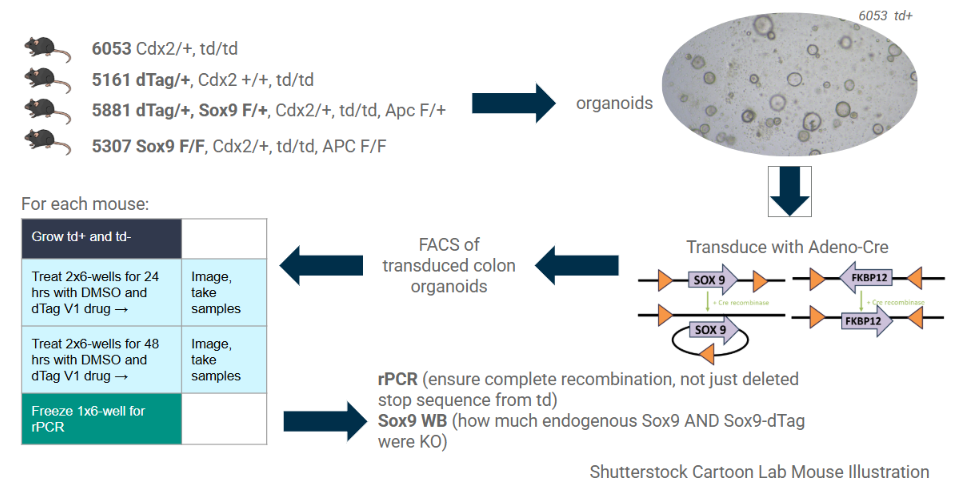
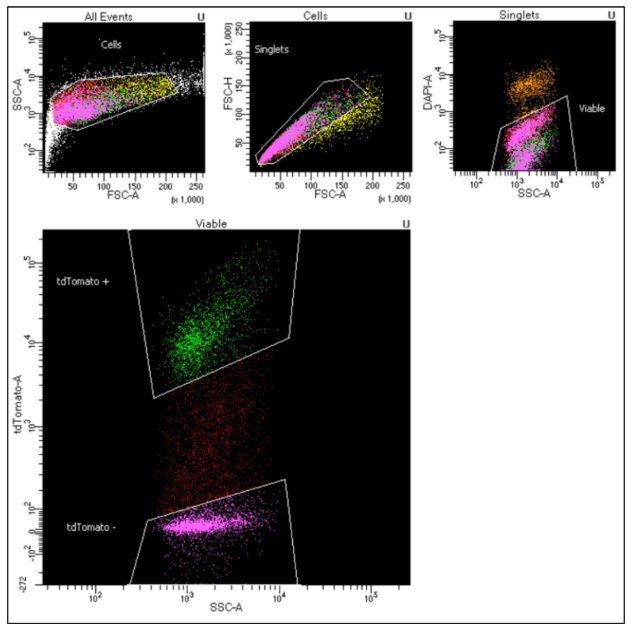
After growing the organoids out for a month so they were big enough to split and freeze, I transduced the organoids with Adenovirus-Cre-GFP (Ad-Cre-GFP), which is a viral vector that delivers cre recombinase and green fluorescent protein into cells. The purpose of the former enzyme is to, in our case, flipping the inverted FKBP12 sequence rightside forward and excising the SOX9 DNA segment between loxP sites in floxed mice. To ensure successful transduction, we put the transduced cells into fluorescence-activated cell sorting (FACS) to separate the td positive (td+), or successfully transduced cells, from the td negative (td-) ones since GFP was our visual marker.
Following yet another stretch of growing the organoids in their respective sorted wells, I treated two six-wells of each td+/- from each mouse with dimethyl sulfoxide (DMSO) as a vehicle control and another two six-wells with the dTAGV-1 drug. After 24 hours and 48 hours, I imaged, took samples, and froze wells for future use. Some of the frozen wells were used for recombination PCR (rPCR) to ensure actual inversion of the FKBP12 sequence and SOX9 floxed deletion, not just that the stop sequence was deleted during the transduction to express td+. Finally, I performed western blots for SOX9 to observe expression levels of endogenous SOX9 and SOX9-dTAG given the different treatments.
Lesson #4: better to have too many controls than not enough. Each experiment needs a baseline of comparison before significance can be confidently concluded.
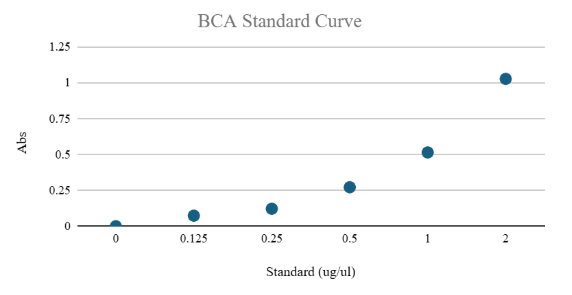
To determine the appropriate amount of protein to load for a western blot, we must first perform a BCA assay so there is a standard curve that normalizes protein concentrations. Now imagine my face when I found out I ran an assay without the standards.
Watching, learning, and teaching
Although I had been in the Sethi Lab for a few months, not a day goes by without me learning something new. Take organoids for example: they are an excellent model to grow cells in a three dimensional environment, but there are limits. Since the cells are isolated from the bodily system within the mouse they were taken from, there is no way to sustain them once differentiated, or in other words, matured into a specific cell type like eye, liver, or colon. Before I gathered any information quantitatively through western blots, much of what I knew came from what I saw under the microscope. For one, organoid size was an indication of how well the cells grew without SOX9. Additionally, darkness of organoid centers was another sign I looked out for to determine if it was time to split the organoids into a larger volume to refine growth speed and health. I was almost surprised by the amount of monitoring that my job inherently entailed. We are working with living organisms, after all.
One of my favorite aspects of my lab this summer was the opportunity I had to work alongside scientists from diverse backgrounds. I would catch Viviana, an Italian student who has come back every year by her own sheer willpower, on her way back from the animal facility to learn about the education system and how laboratory culture differed back home. Most valuable to me this summer was the chance I had to mentor Juan, a visiting physician from China. Having done lab work more than half a decade ago, she came this summer as a blank slate eager to learn anything anyone had to offer. Together, we navigated the seemingly infinite shelves of 1.5 mL tubes in fridges on various floors, dissected and isolated tissues from over a dozen mice during sacrifice week, and talked over project plans plus data analysis with my mentor. Explaining the little things to her — from why we keep certain reagents on ice or in the dark to why loading dye sank perfectly to the bottom of SDS page wells — made me gain a new appreciation and deeper understanding for all the protocols that exist in a research institute like Dana, as well as the breath of new curiosity that comes with each new lab member. During lunch, I learned all about her path to being a doctor in the mainland, her children back home, and the ways she felt supported living here in the States for the first time. As we taught each other phrases in English and Chinese, I felt more strongly than ever about the lesson below.
Lesson #5: simply because one has lesser research experience does not devalue them in the laboratory setting. The story and experiences from which one has come from are enough to bring new insights.
Conclusions about what lies ahead
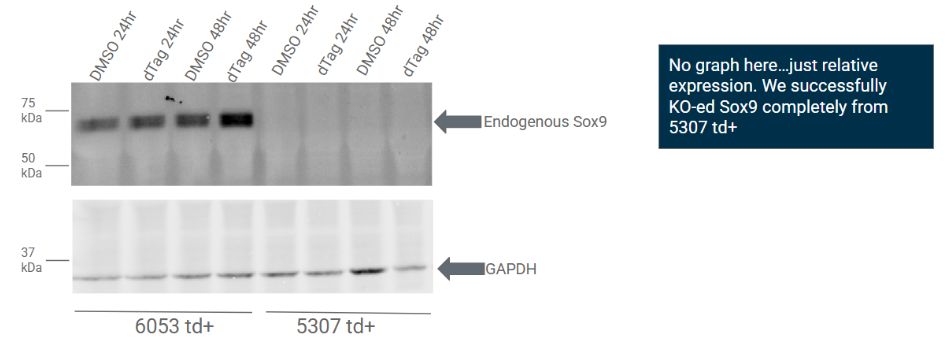
After running the western blot for the positive and negative controls, I obtained bands as expected. That is, the SOX9 wild type (6053 td+) expressed strong endogenous SOX9 whereas the SOX9 floxed/floxed genotype (5307 td+) expressed complete knock out of the protein.
As for the heterozygous SOX9-dTAG mouse, there were bands as expected in the endogenous SOX9 because of the wild type allele. Notably however, the organoids treated with dTAG for 24 and 48 hours displayed no bands for SOX9-dTAG expression, indicating that the treatment had successfully eliminated the protein. Comparing the relative expression levels, we confirm what is observed visually.
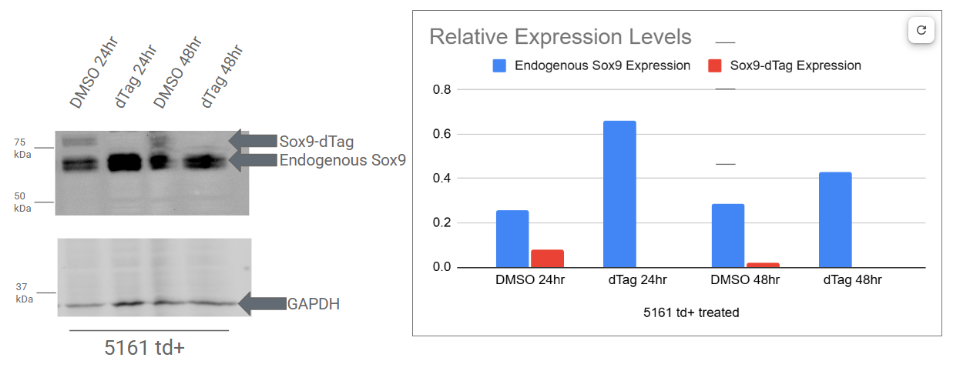
To follow up on these results, I would treat, image, and perform western blots on 5881 td+, or the SOX9-floxed and SOX9-dTAG mouse organoids to observe if SOX9, both endogenous and dTAG, would be completely knocked out given our methods. Unfortunately, the cells did not grow fast enough for me to do it this summer. Additionally, we received an unexpected band for 5161 td+ (heterozygous SOX9-dTAG mouse) for SOX9-dTAG at the 48 hour treatment mark with the drug, but none at 24 hours. In response, we are looking to redo the western blot to address any sample spillover or misloading. We will also perform an rPCR to ensure the sample recombined correctly.
With these in vitro results, we may be interested in moving the system to observe in vivo knock out of SOX9. We would start by breeding more SOX9-dTAG/SOX9-floxed mice and then injecting them with multiple doses of tamoxifen. As we gave organoids the drug through media changes, we will inject mice with dTAGV-1 versus vehicle control intraperitoneal before harvesting their colon tissue to perform similar expression detection experiments. I’m excited to see our findings open up pathways to more efficiently, effectively, and reversibly study the effect of the protein’s loss for CRC therapeutic targeting.
Lesson #6: repetition upon repetition of experiments builds credence. Perhaps the only thing more intense than the fridge organization system in my lab are the backlogs my mentor and I kept for all the experiments with dates, results, and other details. Not only are these helpful to use for organization, it is crucial to preserving credibility for evidence gathered so when an experiment is repeated for publication or other.
Final thoughts and feels
I will never forget the wealth of time I felt was in my hands at the beginning of the summer, nor will I ever struggle to remember the anxiety in my stomach when two months flew by, leaving me to count down the days in single digits before the summer research village’s postering time.
Yet, there was no place I would rather be.
Having the privilege of working in a wet lab 9-to-5 each day exposed me to the less glamorous but equally important sides of research: the repetition, the grant seeking, and the grind. The hours I spent each week helped me build confidence to not only actively listen at lab meetings, but also help in ideation. The absolute rigor that goes into publishing a paper has given me immense respect for all the unseen labor that goes into this accomplishment.
I have been able to more successfully diagnose the nerves I had when summer first began. Feeling like I had to tread carefully in the lab or else was not because the environment was toxic (though some parts may have been slightly carcinogenic) by any means, but because there were too many questions I wanted to ask but not yet enough time to do so. I am more unabashedly curious, and this has led to so many firsts.
Lesson #7: Being curious and skeptical in a productive manner is key to driving forth new ideas or optimizing old ones.
First dissection (no picture because it’s gorey)
First flow sort
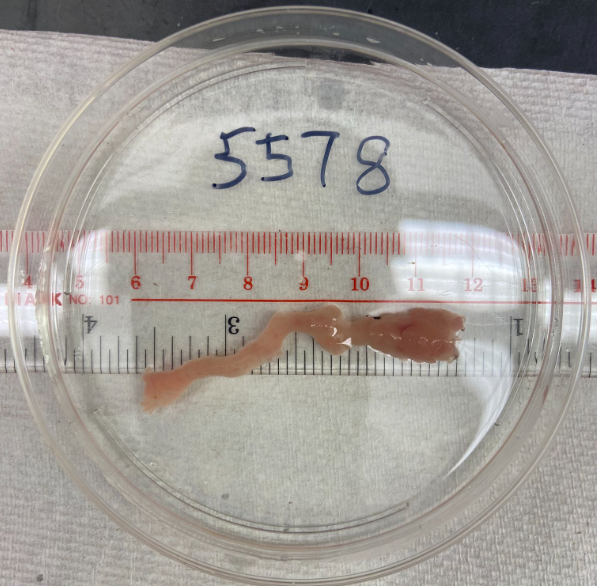
First colon isolation
Lesson #8: Opportunities do not always boomerang back later on. Chase the firsts.
References
Liang, X., Duronio, G. N., Yang, Y., Bala, P., Hebbar, P., Spisak, S., Sahgal, P., Singh, H., Zhang, Y., Xie, Y., Cejas, P., Long, H. W., Bass, A. J., & Sethi, N. S. (2022). An Enhancer-Driven Stem Cell-Like Program Mediated by SOX9 Blocks Intestinal Differentiation in Colorectal Cancer. Gastroenterology, 162(1), 209–222. https://doi.org/10.1053/j.gastro.2021.09.044
Nabet, B., Roberts, J.M., Buckley, D.L. et al. The dTAG system for immediate and target-specific protein degradation. Nat Chem Biol 14, 431–441 (2018). https://doi.org/10.1038/s41589-018-0021-8
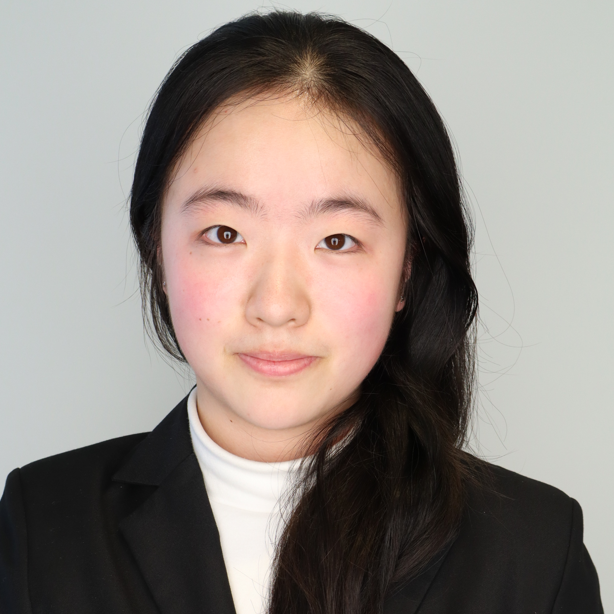
Emily Yu is a rising sophomore at Harvard College studying Chemistry with a secondary in Sociology. She calls Boston, Massachusetts her home and is proud to be part of the family that is the inaugural class of Laidlaw scholars at Harvard!
Before college, Emily was often knee-deep in case problems and Latin phrases as the captain of her mock trial team. As part of her love for public service, Emily interned in the office of the Honourable Patti B. Saris and MA's Executive Office of Labor and Workforce Development, gleaning wisdom from observing trials, reading opinions and Statehouse bills, and compiling and presenting a comparative study of workforce services across four states.
In addition to researching in college, Emily writes for The Harvard Crimson and is tapped into the many mentorship networks across campus as a Peer Advising Fellow and First-year Outdoor Program leader.
Through Laidlaw, Emily hopes to bring her research and understanding of colorectal cancer studies and treatment to new heights and depths. The intersections between law and new technology is something Emily is constantly exploring, whether it be through possible career paths or a casual conversation.
Outside of work, Emily loves trying out new styles of dance, playing around on the piano, dissecting movies, and wrapping her head around interesting would-you-rathers. She is always open to chat for anything at all!!