As part of my Laidlaw Leadership Scholarship, I completed my Leadership in Action (LiA) project with Casa Madre Impresa Sociale Srl ETS, a non-profit social enterprise based in Cabella Ligure, in the Province of Alessandria, Italy. Casa Madre is recognised by the local authority and runs a primary boarding school that admits pupils both from the surrounding area and from around the world. Alongside its regular primary schooling, Casa Madre runs several independent summer seminars each year. These are open to the public and each one welcomes approximately 30 to 40 young people, in the age range from 12 to 15.
My project was originally planned as six weeks of volunteering across three consecutive summer seminars. Because of difficulties with my visa application, I was only able to spend five weeks on site, one week less than planned. At the request of Casa Madre's management team, my role was restructured to make the best use of the time I had, and this change was approved by the Laidlaw Scholarship Programme Manager at Imperial College London.
As a result, I held three distinct roles over the five weeks:
- Seminar staff member and mathematics tutor (two weeks), supporting the students' academic, emotional and social development.
- Management diagnosis assistant to the Principal (one week), helping the school analyse the management difficulties it faced in the 2025/26 academic year and design future staff leadership training.
- Mathematics curriculum editor (two weeks), updating and developing the Grade 3 to Grade 5 mathematics curriculum and worksheets for the 2026/27 academic year.
This report presents the outcomes of each role in relation to the SMART framework: goals that are Specific, Measurable, Achievable, Relevant and Time-bound. Because two of the three roles were introduced partway through the project, their goals were set under different conditions from the original plan. I have therefore tried to be transparent about where each goal met the SMART criteria fully, where it fell short, and what I would do differently.
Section 1: Seminar Staff Member and Mathematics Tutor
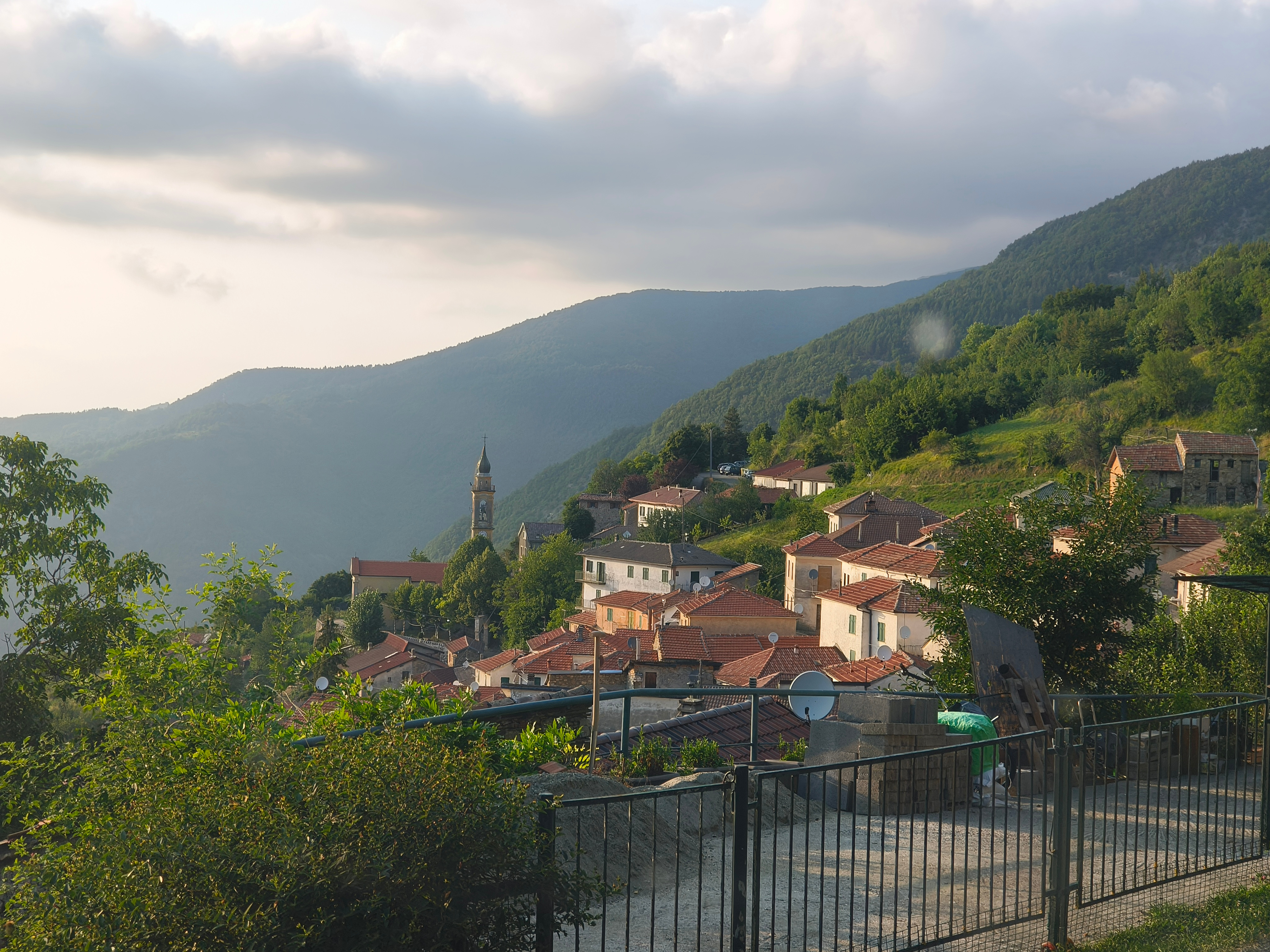
View from the peak of a hill in Cabella Ligure.
Context and role
Casa Madre's summer seminar is designed for young people aged 12 to 15 from a wide range of cultural and ethnic backgrounds. For the whole seminar, participants live without their devices and without contact with the outside world, including their parents. The aim is to help them become more independent in their daily lives, learn to interact with people they have never met before, and, within a short and intensive period, build relationships of trust and collaboration with one another. Participants also receive academic support and enrichment in subjects including mathematics, chemistry and other sciences.
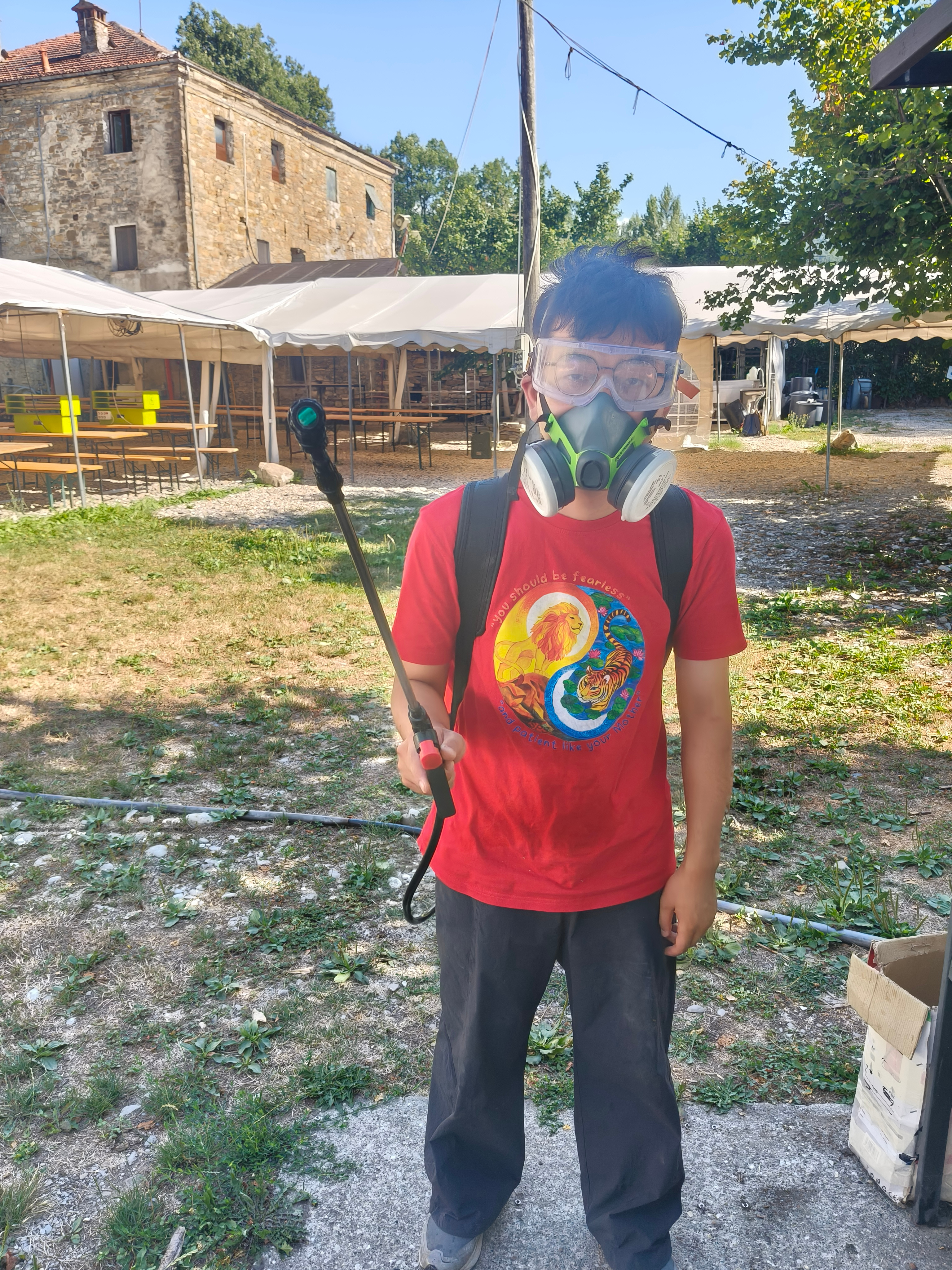
My role had two parts. First, I lived closely alongside the students, supporting their growth towards independence and looking after their emotional well-being in an unfamiliar environment. Second, drawing on my degree in mathematics, I provided mathematics tutoring, focusing in particular on students who were struggling to keep up with the material in their regular schooling.
Outcomes against the SMART goals
Specific: The goal targeted three clearly defined areas of development for a defined group of students: academic, emotional and social. My tutoring was aimed at students who were having difficulty with their current mathematics curriculum. Its purpose was not only to help them understand specific topics, but also to give them a systematic approach to studying mathematics that they could carry into their future studies, well beyond the scope of the seminar.
Measurable: The academic dimension of the project can be measured quantitatively through students' marks and academic performance. The emotional and social dimensions are harder to quantify, so the seminar used an end-of-seminar survey to capture them. In this survey, over 80% of students reported a significant improvement in themselves in at least one area, such as academic ability, social skills or emotional stability. Although this is self-reported, it gives a clear and measurable indicator of the seminar's impact from the students' own perspective.
Achievable: With a fixed group of 30 to 40 students and a two-week window, the goal was never to transform every student completely, but to give each of them a meaningful step forward and foundations to build on. The survey results show that this was achieved for the large majority of participants.
Relevant: The project contributes to the United Nations Sustainable Development Goals (SDGs), in particular SDG 3 (Good Health and Well-being), through its focus on mental health and well-being, and SDG 4 (Quality Education), through targeted academic support. It is also directly aligned with the seminar's own mission of fostering independence, collaboration and academic growth.
Time-bound: The project was clearly bounded by the seminar itself, which ran for a fixed two-week period agreed before the project began. While the project was strictly limited in time, its intended effects are long-term: the study habits, independence and collaborative skills the students developed are meant to support them well beyond the seminar.
Overall, this part of the project met all five SMART criteria. Its main limitation lies in measurement: the emotional and social outcomes rely on self-reporting, and a follow-up survey several months later would give a stronger picture of how lasting the changes are.
Section 2: Management Diagnosis Assistant
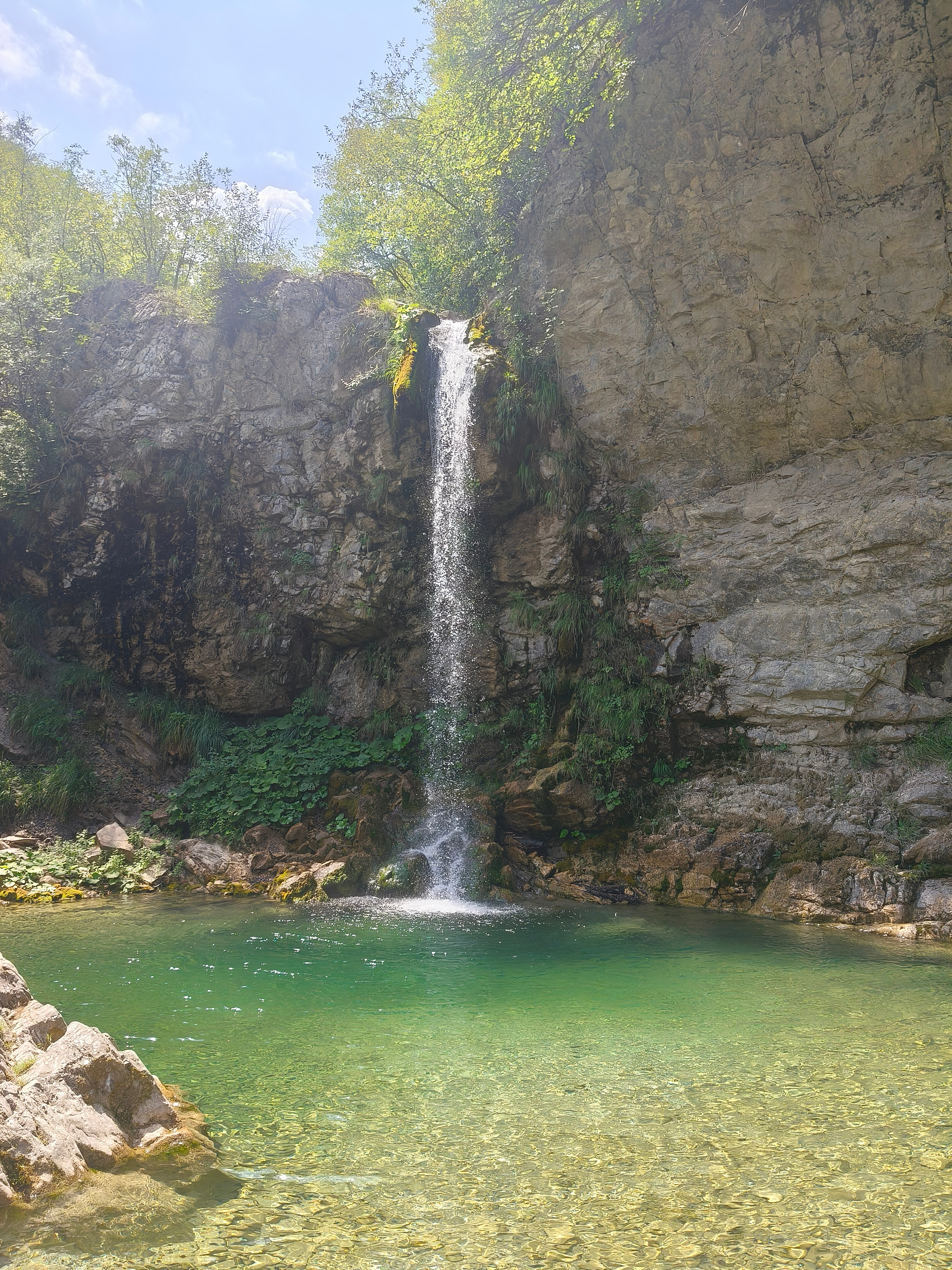
A waterfall in nature next to Cabella Ligure.
Context and role
After learning about the leadership training I had received through the Laidlaw Programme, Casa Madre's management team asked me to help diagnose the management difficulties the school had faced over the past academic year. They also wanted to draw on my three and a half years of experience at a similar international boarding school.
The role had three parts: diagnosing specific management difficulties identified by the Principal, developing a set of solutions to resolve them, and designing an outline of general leadership skills that could be taught to staff in future training sessions. Because of the sensitive nature of these matters, I signed a non-disclosure agreement. I therefore cannot describe any specific issues or solutions in this report, but I have described the outcomes as clearly as confidentiality allows.
Outcomes against the SMART goals
This role was introduced partway through the project, so its goals were defined quickly and in response to an immediate need. As a result, it did not explicitly address all five SMART criteria, although it engaged closely with most of them.
Specific: The goal was clear: to assist the Principal in working through the list of issues he had identified during the previous academic year. The outline for future staff training was likewise framed around the specific difficulties the school was facing, rather than generic leadership content.
Measurable: This is where the role fell short. No quantitative indicators were agreed at the outset, so its effectiveness can currently only be judged through qualitative feedback from the Principal and staff after the next academic year. If I were setting this goal again, I would agree simple measures with the Principal from the start, such as a staff feedback survey before and after the training sessions, or a count of how many of the identified issues recur during the year.
Achievable: The scope was realistic for one week, and the work was completed within that time. The diagnosis, proposed solutions and training outline were all delivered to the Principal.
Relevant: The work supports the school's wider goal of strengthening its management as it expands in the coming years. Stronger school leadership underpins the quality of education pupils receive, so the project also contributes indirectly to SDG 4 (Quality Education).
Time-bound: The role had a clearly defined timeframe of one week, and all deliverables were completed within it.
In summary, this part of the project met four of the five SMART criteria, with measurability as the main gap. The key lesson for me is that even an urgent, unplanned task benefits from a few minutes spent agreeing how success will be judged.
Section 3: Mathematics Curriculum Editor

Sunset in a valley right next to Cabella Ligure.
Context and role
Once my management role was complete, I was asked to update and develop the school's mathematics curriculum for Grades 3 to 5, to be used in the 2026/27 academic year. As an international boarding school in Italy, Casa Madre must prepare its local pupils for the Italian national assessments at the end of Grade 5, while also equipping all their international students to continue their secondary education elsewhere in the world.
This made the task a genuine challenge. The curriculum had to include all the examinable content required by the Italian national curriculum, while also covering the baseline knowledge expected by other systems. We used the British National Curriculum as the reference for this second requirement. Alongside the curriculum itself, I designed a set of worksheets to accompany it and support teachers in delivering it.

Authentic Italian Gelato
Outcomes against the SMART goals
Specific: The goal was stated clearly from the outset: to design a mathematics curriculum that integrates the requirements of both the Italian and British curricula for Grades 3 to 5, supported by matching worksheets.
Measurable: The curriculum can be measured at two levels. In the short term, its coverage can be verified by cross-checking every learning objective against both the Italian and British curricula, which confirms that nothing required by either system is missing. In the long term, its effectiveness will be reflected in pupils' performance in their assessments at the end of Grade 5, although this evidence will only become available after several years of teaching.
Achievable: The outcome has been achieved. The curriculum was submitted to the local education department and passed all the necessary quality checks.
Relevant: The curriculum directly supports SDG 4 (Quality Education), and in particular its aim that all children complete primary education with relevant and effective learning outcomes. By serving both local pupils and those who will continue their education abroad, it also makes the school more inclusive of its internationally diverse student body.
Time-bound: The curriculum was designed within a fixed two-week period, with a clear deadline for submission, which was met.
This part of the project met all five SMART criteria. Its long-term impact on pupils' learning remains to be seen, and the school's future assessment results will be the real test of its success.
Reflection on Leadership
The most important lesson of my LiA was that leadership often means adapting a plan without losing sight of its purpose. When my visa difficulties shortened the project, the original plan of three consecutive seminars was no longer possible. Rather than treating this as a failure, the management team and I reshaped my role around what the organisation most needed. Each new role asked me to take on a different kind of responsibility, and each required me to learn quickly and earn the trust of the people I was working with.
The three roles also showed me that leadership looks different depending on the context. At the seminar, it meant leading by example and through care: living alongside the students, being consistent and approachable, and creating an environment in which they felt safe enough to grow. In the management role, it meant listening carefully, asking the right questions, and offering honest analysis to people more senior and experienced than me, while respecting the confidentiality that their trust required. As a curriculum editor, it meant taking ownership of a complex, detail-heavy task, balancing the competing demands of two education systems, and delivering to a firm deadline.
Finally, the project taught me the value of setting clear goals at the start of any task, especially an unplanned one. Where goals were agreed carefully in advance, as with the seminar and the curriculum, it was straightforward to show what had been achieved. Where they were set in a hurry, as with the management role, it was much harder to demonstrate impact. This is a lesson I will carry into future projects: flexibility and structure are not opposites, and good leadership needs both.
Conclusion
My Leadership in Action project at Casa Madre gave me the opportunity to put the leadership ideas I had learned through the Laidlaw Programme into practice, in three very different roles. I believe the project also benefited Casa Madre and its community: by supporting the growth and well-being of the seminar students, by helping the school address its management challenges, and by delivering a mathematics curriculum that will serve its pupils from the 2026/27 academic year onwards.
Although the project went through several unplanned changes, it followed the SMART framework as closely as possible. The two roles with goals agreed in advance, the seminar and the curriculum, fully met all five SMART criteria, while the management role met four of the five. I am grateful to Casa Madre's management team for their trust and flexibility, and to the Laidlaw Scholarship Programme for supporting the changes that made this project possible.
![[LiA Poster] The Human Cost of the Green Transition: Indigenous communities and the Critical Minerals Rush in Australia](https://images.zapnito.com/cdn-cgi/image/metadata=copyright,fit=scale-down,format=auto,quality=95,width=256,height=256/https://images.zapnito.com/users/877945/documents/326599/53035ac0-e8bb-4695-bcc0-db0d93e2dad9-med.jpg)