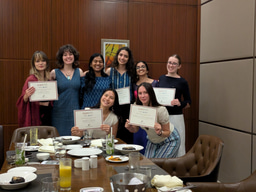
CraftHER Week 3: Collaboration in Hard Times
I had known that my Leadership in Action project would, at times, be challenging. I was not prepared, however, for week 3 at CraftHER.
The Rural Centre
We moved on a Sunday to SEWA (Self-Employed Women's Association) Rural Centre, on a fast train with programme manager Preetha Matthews. Arriving in Trivandrum, I was confronted by a bustling city in constant motion: street signs, billboards, motorbikes, tuk-tuks. And, of course, there was the constant honking - a sharp cultural reminder that I was truly in India.
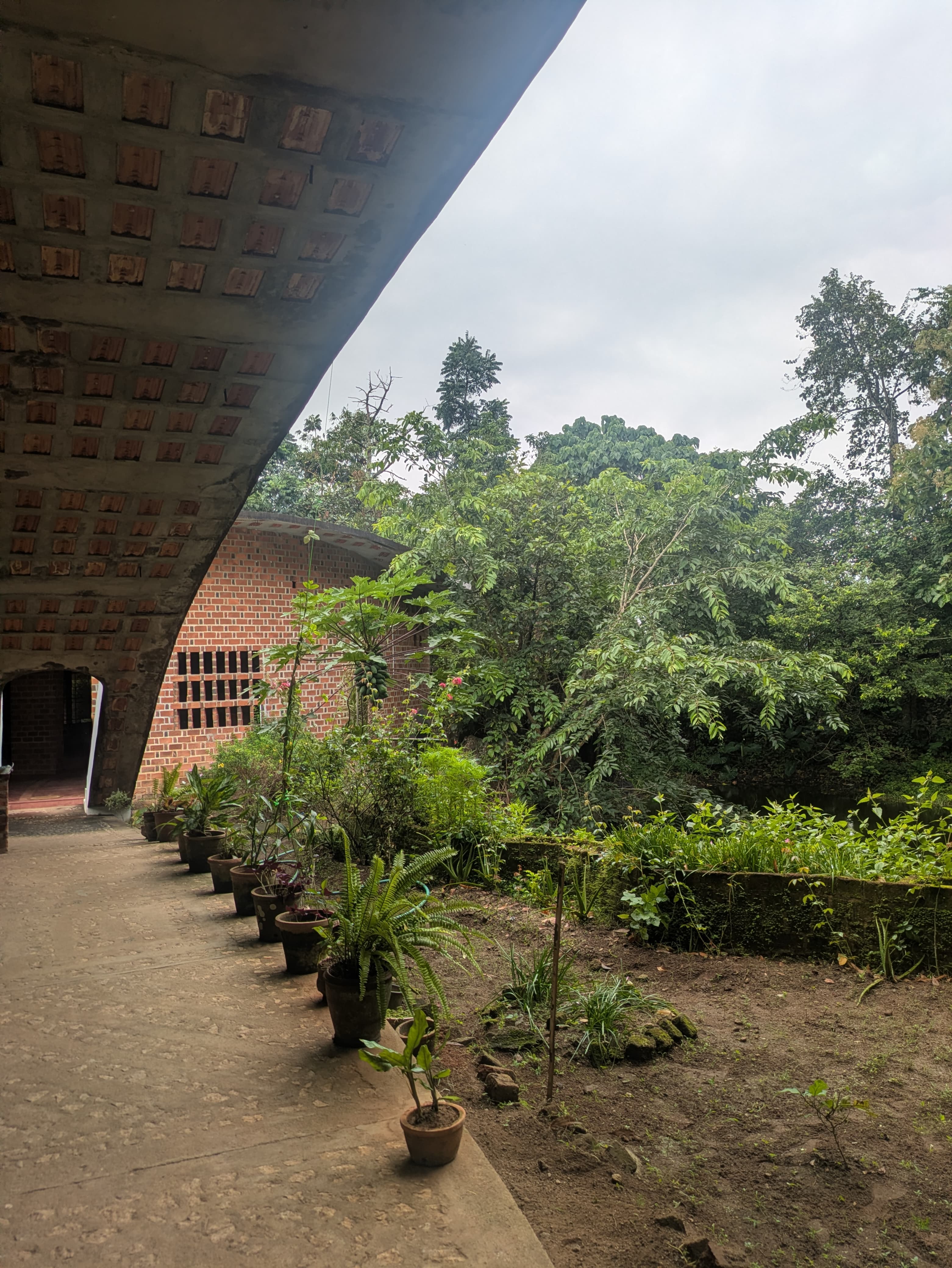
Located half an hour outside Trivandrum, the Rural Centre boasts a brutalist but striking architecture, designed by Laurie Baker. A pioneer of eco-friendly architecture, Baker's curved roofs and dome-like buildings struck me as both novel and strangely familiar.
Down a long flight of stairs and through a gate (or "grill," as I soon learned was common Indian vernacular) were our rooms. Each one had the simplicity of a student room - I later learned that they are, in fact, used as student dorms during essential training.
We had been told, and happily accepted, that this week we would not have roommates. Yet, entering the bathrooms, we soon realised that was a half-truth.
Hunched on its stick-thin legs, eyeing us with what I can only describe as quiet confidence, was one of our fellow residents: a spider. Far from the solitude we'd been promised, we had invaded an already full residency belonging entirely to the animal kingdom.
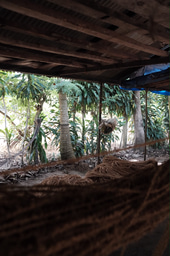
Crickets, cockroaches, beetles, huntsman spiders, mosquitoes, flatworms, geckos. I quickly became something of a savant in Indian wildlife, rooming with creatures whose existence I hadn't previously been aware of.
This isn't just a tale of another privileged girl faced with the existential conundrum of a few bugs. There was a much bigger problem - the wifi, or lack thereof.
Posing as a seasoned traveller and down-to-earth girl, I could at least pretend I was above screaming at each cockroach that so much as moved. I was, however, completely unprepared for the horror of a lack of internet connectivity.
Compounding these environmental challenges, I was also the designated group leader for the week. This meant I was solely responsible for ensuring the group was on time and participating, managing the social media, and acting as official spokesperson for everyone.
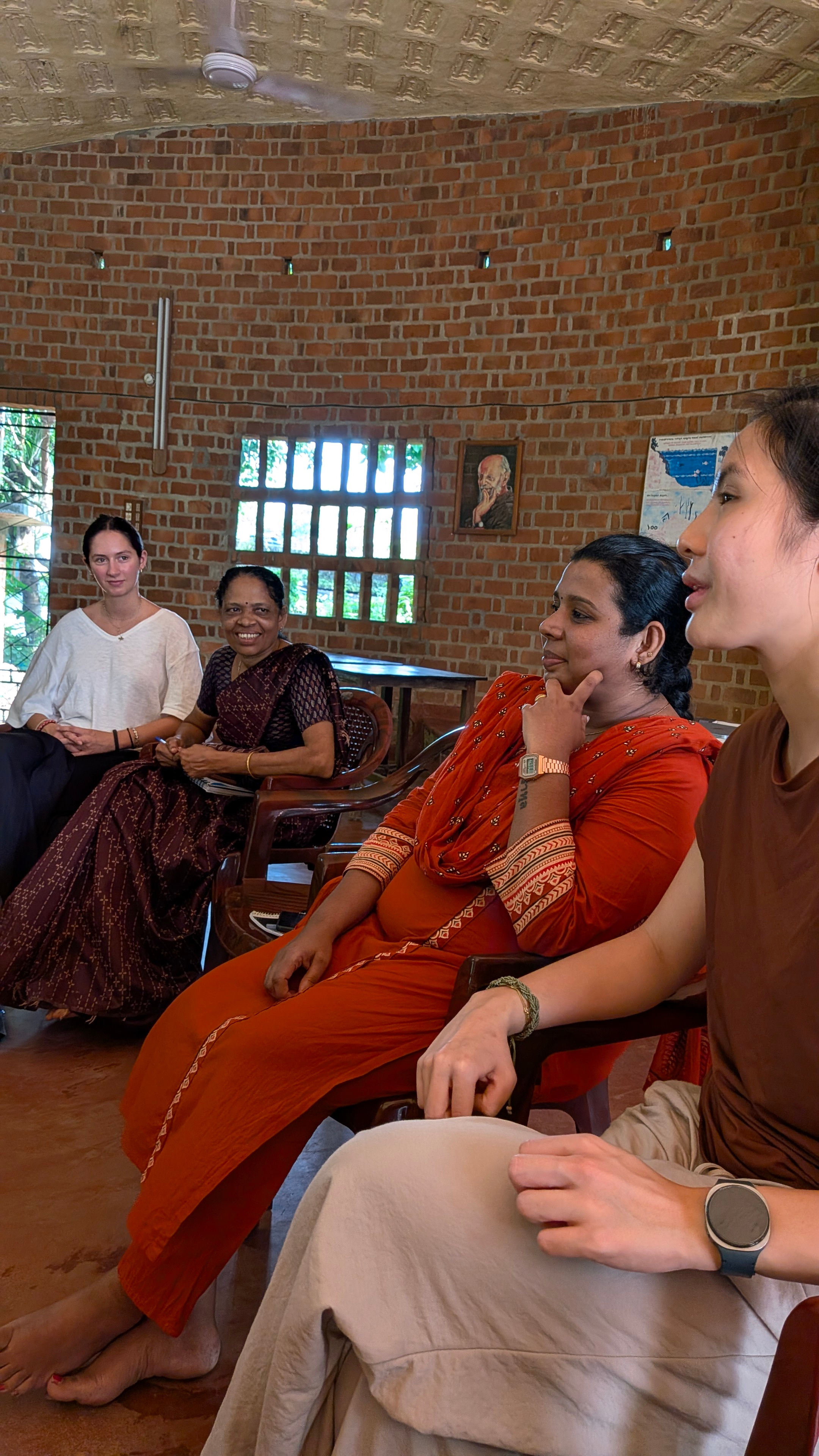
After a sleepless night for many, we met the team at SEWA and gained insight into their operations and the deliverables requested from us. As group leader, my immediate priority was task delegation. Our tasks centred on social media visibility and strategy for SEWA, with core deliverables including reels, carousel posts, blogs, and WhatsApp posters.
Tasks were assigned with preferences taken into account where possible. The week began with all its challenges.
A Lesson in Bravery and Collaboration
Much of our leadership training had centred on the traits of leaders in ideal conditions. But stripped of shower heads and home comforts, I learned far more about leadership from the days that went wrong than from any of the days that went right.
By midweek, four of us were sick. For most of the girls it was food poisoning. For me, it was a stomach upset layered over something harder to name - a low, heavy exhaustion that was physical and mental. It is easier, in hindsight, to write about a stomach bug than about depression and grief. But the second was my experience of the week, and a challenge I had to overcome.
I had gone into the week hoping to guide the team. Instead, I spent a critical presentation day in bed, unable to trust my own body, let alone manage anyone else's schedule. The final presentation to SEWA, the moment meant to showcase everything we had built that week, happened without me.
Leadership development likes to talk about resilience as something you perform in the room - the leader who pushes through, who rallies the team, who delivers regardless. Nobody tells you that sometimes the more honest form of resilience is stepping back and trusting other people to carry what you cannot; valuing yourself and health enough to know when to forgive yourself for what you cannot control.
And they did. The scholars presented the deliverables SEWA had asked for: reels, carousels, posters, and strategy recommendations.
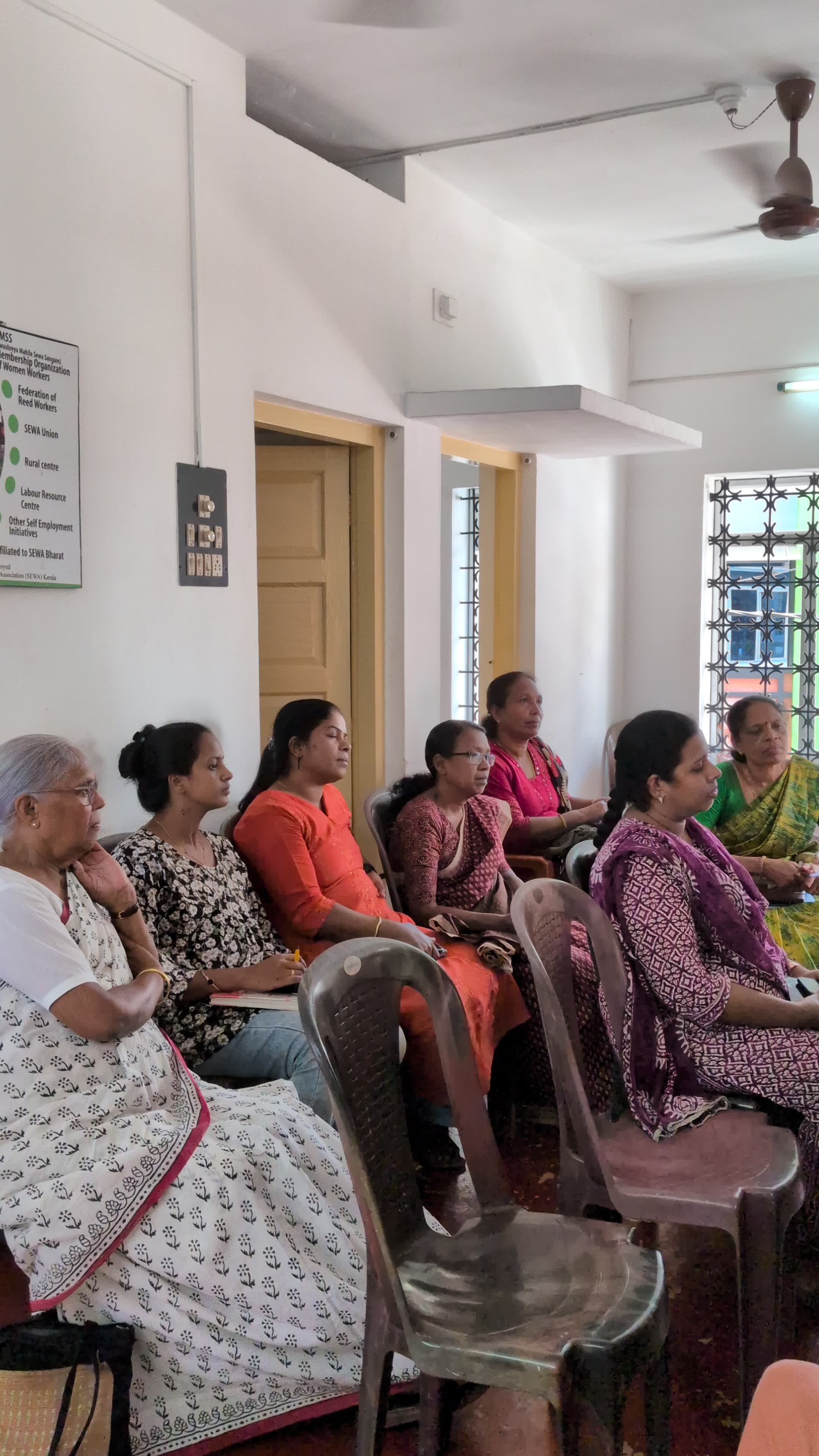
That, I think, is closer to what Laidlaw leadership actually asks of us than any of the workshops on vision-setting or public speaking. Collaboration isn't only the choreographed version of everyone present, everyone contributing evenly, everyone photographed for the reel. It's also what a team does when one member simply isn't there: whether the gap gets papered over with resentment, or absorbed with the quiet assumption that it's someone else's turn to carry the load, and that next time it might be reversed.
I didn't get to stand in front of SEWA and present a strategy deck. Yet, I can't help but think that this week was indispensable in other ways. I realised that collaboration isn't only a loud, visible togetherness. It is the quiet strength of a system built so strongly that a sudden absence doesn't sink the ship. Instead, it simply proves the strength of the crew.

Hello! I’m a Philosophy student at Durham University, with academic interests in applied ethics, decision-making and sustainability. My broader aim is to use interdisciplinary research to drive measurable, socially meaningful change.
My summer research explored barriers to public transport adoption, with a view toward long-term policy implementation. This project combined behavioural science, psychology, urban planning, and design to contribute to more sustainable and inclusive transport policies.
For my LiA, I will be travelling to Kerala for the central CraftHER project, where I will undertake four consulting projects with local female-led businesses and a research project.