Confidence is Key: Lessons Learned as a Laidlaw Scholar
My time as a Laidlaw Scholar have been absolutely foundational to my what I plan to do in my future. I began university as a mature student, and at first my one and only goal was to just stick it through and get my degree. I had always been plagued with doubts about my own capabilities. I had resigned myself to the fact that I was not clever enough to go to university, or to achieve my dream of getting a PhD. Coming from an academic family, it was hard to separate my worth from my academic achievements, or lack thereof. I finally plucked up the courage to apply to Trinity College Dublin, absolutely terrified I would lose interest and drop out. I was terrible in school, I rarely went in and had no real interest in any specific subject.
Once in Trinity I developed a passion unlike any other I had ever experienced. I chose geology because I thought it was interesting and relevant, and that there was the potential to make a lot of money. When I began my studies the thoughts of it being aa strategic choice melted away and I realised this is a subject I want to study for the rest of my life. Having survived first year, gotten good grades, and absolutely adored every minute, I realised there was no chance I was going to quit this. Thoughts quickly turned to the fact that postgrad was perhaps possible, maybe I have doubted myself too much? But still, what if I actually hated research? I had never done it before so how was I to know if this dream was actually something I could achieve.
In my second year of study I asked my geochemistry lecturer is there were any internship opportunities that he knew of. He said there weren’t many but he had heard of something called the Laidlaw Program. I thanked him and went about my day, googling it later and realising what an amazing opportunity it was. Though it pains me to admit it these thoughts were quickly forgotten as exam season approached and loss plagued my family. In the depths of a very difficult time I received an email from my geochemistry lecturer asking me if I was interested in applying to Laidlaw with him as my supervisor. I was delighted that he felt I was capable of taking part in such a program, though doubts quickly reared their heads again.
‘It’s only for the most exceptional students.’
‘There are so few places.’
‘You’re definitely not smart enough for it.’
We applied anyway. The project was one I was so excited about, albeit terrified because what did I know about actual research? What sort of positive changes can I actually bring about? I then received an email saying I had been shortlisted, and that I would be interviewed. I came out of the interview thinking it had neither gone well nor gone badly, I did however think how talented and charismatic everyone was, and how I don’t think I quite match up in those capacities.
Then the email came. I was accepted.
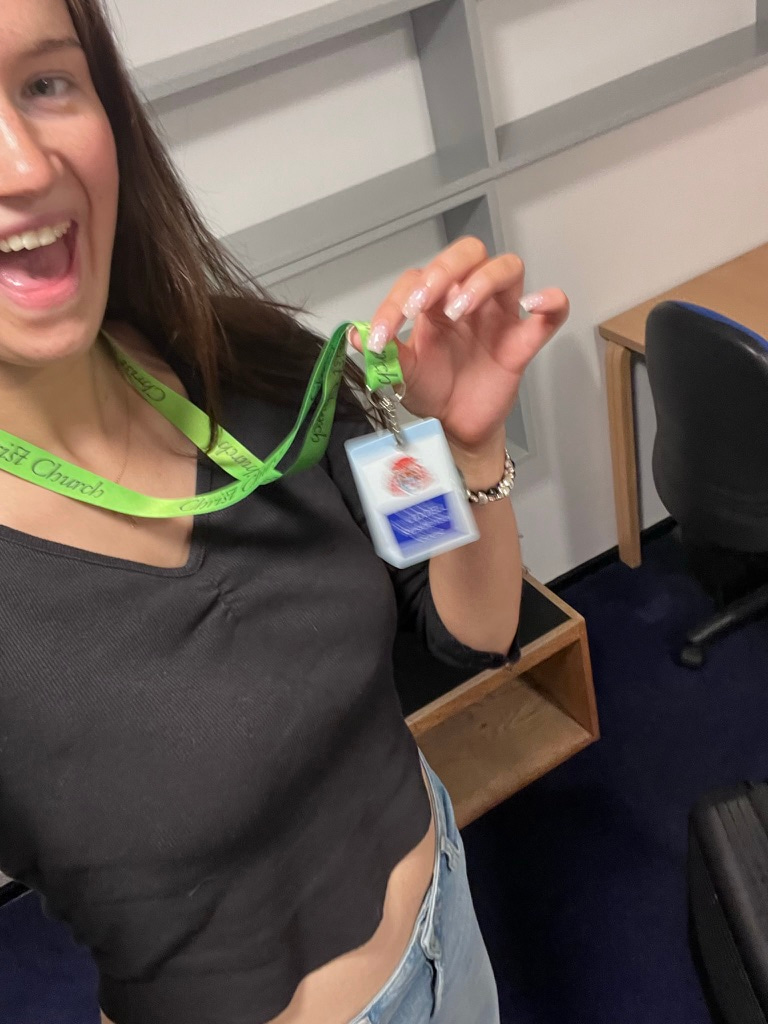
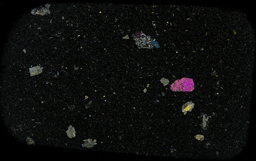
I began my summer 1 research that May. We began with fieldwork, totally different to that which I had done in my degree, and one million times better. Then came the sample preparation which took four weeks, and I loved every second. Analysis was next, hours spent in front of microscopes, my laptop, and in the lab, again loving every second. Lastly came the scary part, interpreting my results. What if I can’t understand what I’m seeing? What if I’m not clever enough? I was incredibly lucky that my supervisor’s PhD student helped me with my project, and any questions I had he answered, including any I had about my results. The results ended up being even better than expected, a new magma reservoir had been found, deeper than any other one in previous literature for the area.
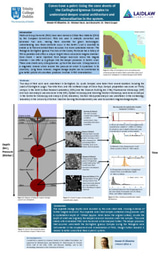
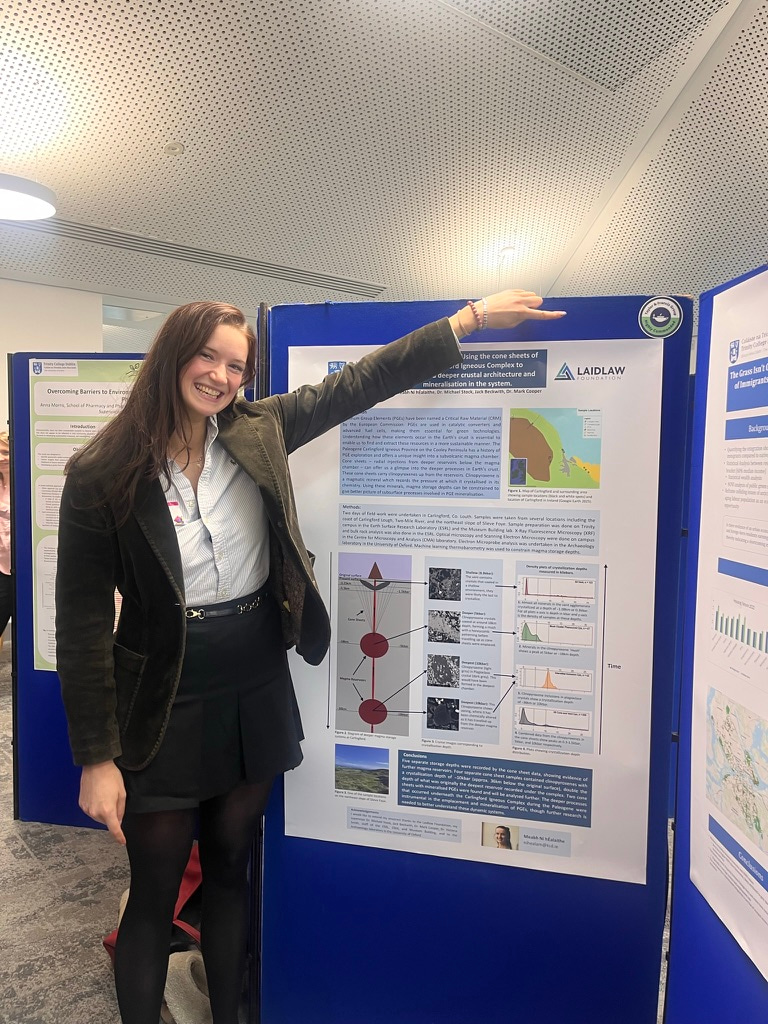
The next big thing was the Laidlaw Global Conference in Durham. I had spent ages on my research poster, and was actually quite proud of it. We were told that Taylor & Francis were going to be looking for posters to publish on their new platform. Again I thought about what a cool opportunity it was and I wondered who on my cohort would be chosen. The chosen few had received their emails later the first night, and there was much excitement about preparing to present them to the publishers. The next morning we headed back to our posters, I began talking to a fellow scholar from St. Andrews about my poster and she congratulated me on being shortlisted. I was baffled as she pointed to the ‘highly commended’ sticker above my poster. In my doubts about myself I hadn’t even bothered to check my emails, which surely enough contained the email saying I had been shortlisted. I had never been prouder of myself in my life. I knew it was a niche area of study, so after presenting it to the publishers I sat back happy in knowing I had at least been shortlisted. The final presentation of the conference was to announce the scholars who’s poster had been chosen for publishing. I looked up; Meabh Ní hÉalaithe. That moment is my absolute favourite memory. So many years of doubting if I was smart enough, or capable enough just washed away. And it would not have happened if it weren’t for Laidlaw.
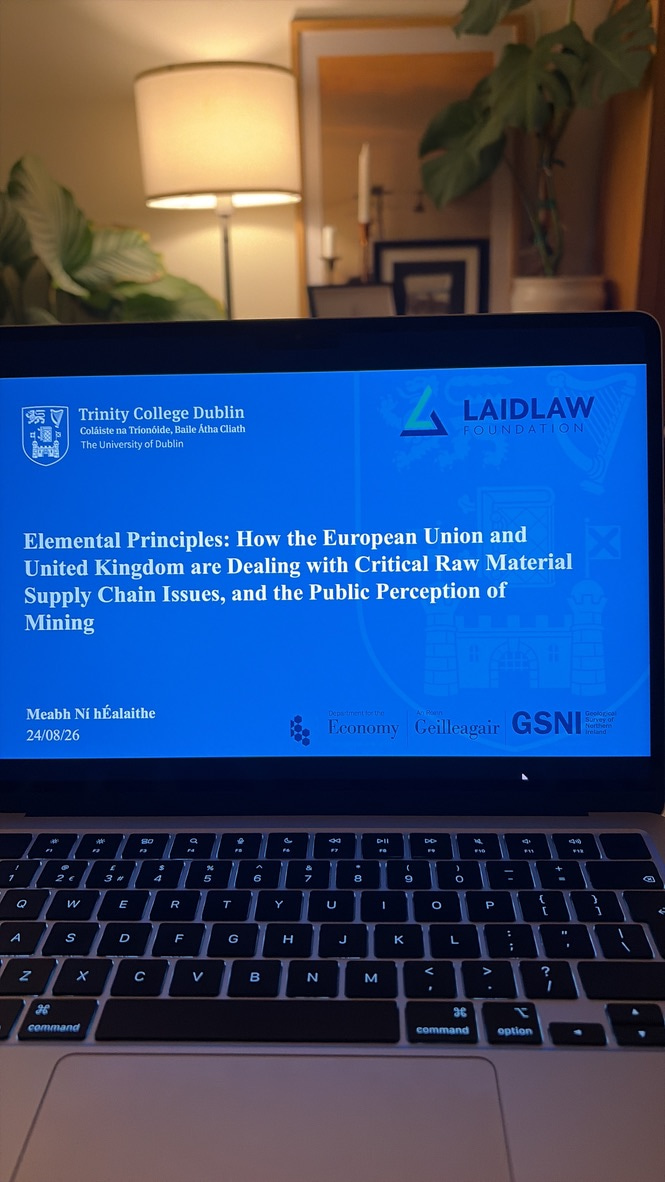
During my LiA I became solely responsible for my project, and had to find an effective way to communicate my findings with policymakers. I was out of my element, I don’t now anything about policy, how am I supposed to tell the policy makers how to improve things? Similarly I had no idea about social science, how on Earth am I supposed to be able to find common ground with communities affected by something as contentious as mining? In the end I realised I don’t need to have all of the answers, I just need to be willing to try to make a positive change, no matter how small. During my LiA I saw points from both sides, we absolutely need minerals for a green transition and to reach net-zero targets, but it can be overshadowed by the local damage mining causes. I know that there is no mining that does not have an impact, but there are ways these impacts can be reduced. The main solution I found for the problems arising between mining companies/policymakers and communities is communication. More transparent communication from both sides, where both listen to the others concerns and come up with a mutually agreeable solution is the only way forward. Having conducted and present my findings independently I again gained the confidence to realise I can make a difference.
This program has lifted me up and allowed me to prove to myself that I can do what I had always dreamed of. I know it’s cliché, but I really do mean it. The confidence it has given me has resonated through all aspects of my life. Laidlaw has fundamentally changed my character and has inspired me to continue on a path that I hope one day leaves a positive change in the world, leading with integrity, and passion. I will be eternally grateful to the Laidlaw Foundation for making this possible, for me and for all of the other scholars past, present, and future.
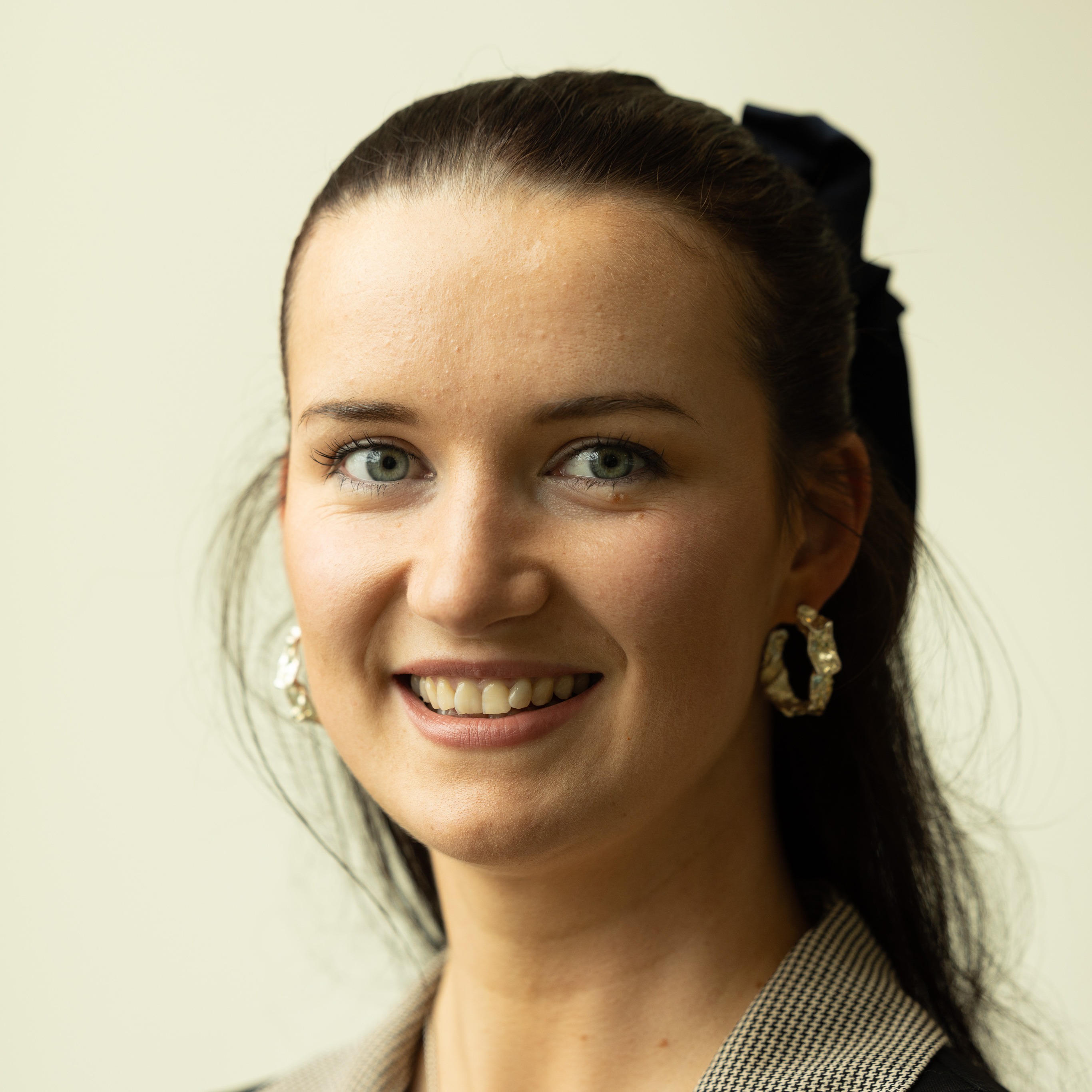
Hello! My name is Meabh, I'm a second year Geography and Geoscience student in Trinity College Dublin. My main interests are igneous petrology and critical raw materials for green technology!