Cambridge, Massachusetts to Cambridge, UK
A week after I finished my exams I boarded a flight from Cambridge, Massachusetts to Cambridge University. Just out of exams and jet-lagged, I was not at my best to say the least. At that point, everything new passed through the filter of Boston: Trinity Hall's resemblance to the Boston Public Library, what textbooks both my PI at Babraham and MIT had.
At some level, I think I was experiencing Dunkin' Donuts withdrawal, but in hindsight, this was the initial shock of the independence in guiding my own research. At MIT, I had a research position (or "UROP") in the DAL-LGG lab, which studies immunology and women's health. Although I am so grateful for that opportunity, it always had to take a backseat to academics, papers, and trying to navigate my first-year. I found I was limited in the amount of growth I could have in the lab, not by funding or teaching, but burnout.
In contrast, at the Epigenetics Department Babraham Institute where I am conducting my summer research, I found myself daunted by the freedom I have not constrained by class schedules. This flexibility has been invaluable, not just for my obsessives checks on whether or not my cells are alive, but meaningfully reflecting on my motivations in medical research. I have been an avid biology student and science fair competitor since 8th grade, but these months have been my first opportunity to dissect what I want my role to be in my field.
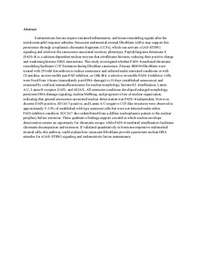
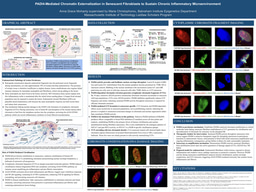
My current project is looking at whether when a type of immune cell called fibroblasts go into senescence, a state where they're not dead but have stopped a lot of their activity, will release webs of DNA. This inflammatory pathway may be important for the ability of early endometriosis lesions to evade the immune system. This project has opened my eyes to new areas of study thanks to Pubmed rabbit holes. Those rabbit holes have also made me more aware than ever of the dearth of funding in women's health research. So many papers I have read give the first step to understanding a new mechanism, a new treatment, but then the stream runs dry. Encountering this on a daily basis has motivated me to add whatever I can to our knowledge base in these 3 months, but also position my career at the intersection of advocacy and biology.
This sentiment was especially underlined for me at the Laidlaw Scholars retreat for the MIT cohort in Chester, which deserves its own belated blog. This retreat introduced me to Old Mout's cider (forever grateful), the other scholars (even more grateful). Beforehand, I hadn't met anyone in my cohort, except in passing. Suddenly though, I was mapping out my entire origin story from Kindergarten to MIT. (Literally, we drew maps.) This sounds awkward, but it all felt incredibly natural because I was with 13 other people who wanted to have productive conversations about our purpose in research. Maybe it was the nostalgia of the Crayola marker multipack, but it was a chance to recall the values and decisions that got me up to that point. On the last day, this self-reflection led me to circling Bravery and Extra-ordinary as my top Laidlaw profile values. It's a reduction of the amazing conversations I had this weekend, but I can articulate now that my fundamental outlook on science is that I want to do a lot with a little. That is, I don't want to find cures that are prohibitively expensive, but repurpose and rethink medical tools we have to better support marginalized populations. For example, when looking at future directions for my summer project, I am exploring how these of nets of DNA could be a useful endometriosis biomarker, detectable low-cost tests that are already widely available.
At the end of the day, all wet-lab looks almost identical: several white aisles of lab benches beneath shelves loaded with identical plastic bottles and assay kits. At a glance, my day-to-day in Cambridge looks identical to MIT. But this lab, this experience has truly given me the space to see the everyday media changes and microscopy in the context of my larger goals. It might be that I am on my second Americano at the Corner Shop in London (highly recommend!) while writing this, but I feel I have the energy to carry this mindset with me to MIT in the fall.
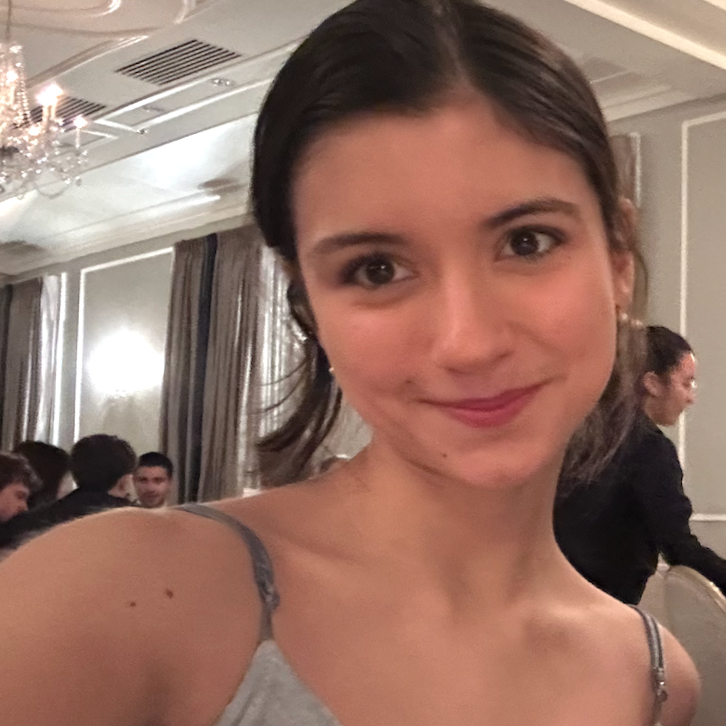
Hi, everyone! I'm a second-year student at MIT majoring in bioengineering and women/gender studies. I am a pre-med student, passionate about women's healthcare and accessibility. I am currently doing a research project on related to early endometriosis lesion formation at the Babraham Institute in Cambridge, UK.
Outside of the lab, I love fashion (even though I mainly wear sweatpants) and literature. I've been really into beading and embroidery this summer, and am currently reading Women Who Run with the Wolves by Clarissa Pinkola Estés.
I have loved getting to know the Laidlaw cohort at MIT and Cambridge University, so please reach out with any questions or to say hi!