At the End: Honing Skills and Finding Community
It is done. A very strange sentiment. It ends as it started: writing an output on the top floor of the library, looking out at the sea. But instead of being a nervous second year, I am now in my fourth year, approaching graduation with a new adventure on the horizon. I've completed modules, handed in outputs, and flown to a part of the world I never expected to visit. Thank God I had two friends in the cohort above me who convinced me to apply. Now, at the end of it all – in the classic, slightly overdone sense – it is time to ask: what have I learned?
In all honesty, I do not think Laidlaw teaches its scholars about leadership so much as hones traits already present in them. From what I have seen, there was already curiosity and empathy present in every scholar I have interacted with – the desire to do good and make a difference. But what has been achieved is a balancing of these tendencies, creating rounded, not simply passionate, characters. In that regard, Laidlaw has done a great deal for me, balancing my already present curiosity with a patience and self-awareness I lacked before.
As to the form of this reflection, I will follow the structuring format of the Three Cs, just as the prompt dictates. I’ve already used too informal a tone in most of my outputs over the past two years. So, I will begin with my Change Maker Values, why we lead, and how purpose has truly come to the fore in that. Then I will move to character, its traits, be they virtues and vices, and the considerations it has prompted in me. Finally, I will discuss capacities, how things are achieved. I will then end with a brief reflection on being a global citizen, and how I will go forth with this mindset. Ultimately, Laidlaw has been more than a handbook of dos and don’ts; you experience it through research or service, and that is where the reflections and changes are truly formed. It has been a privilege to be part of such a program where you are not so much lectured to as pushed out into the real world to see, reflect, and grow.
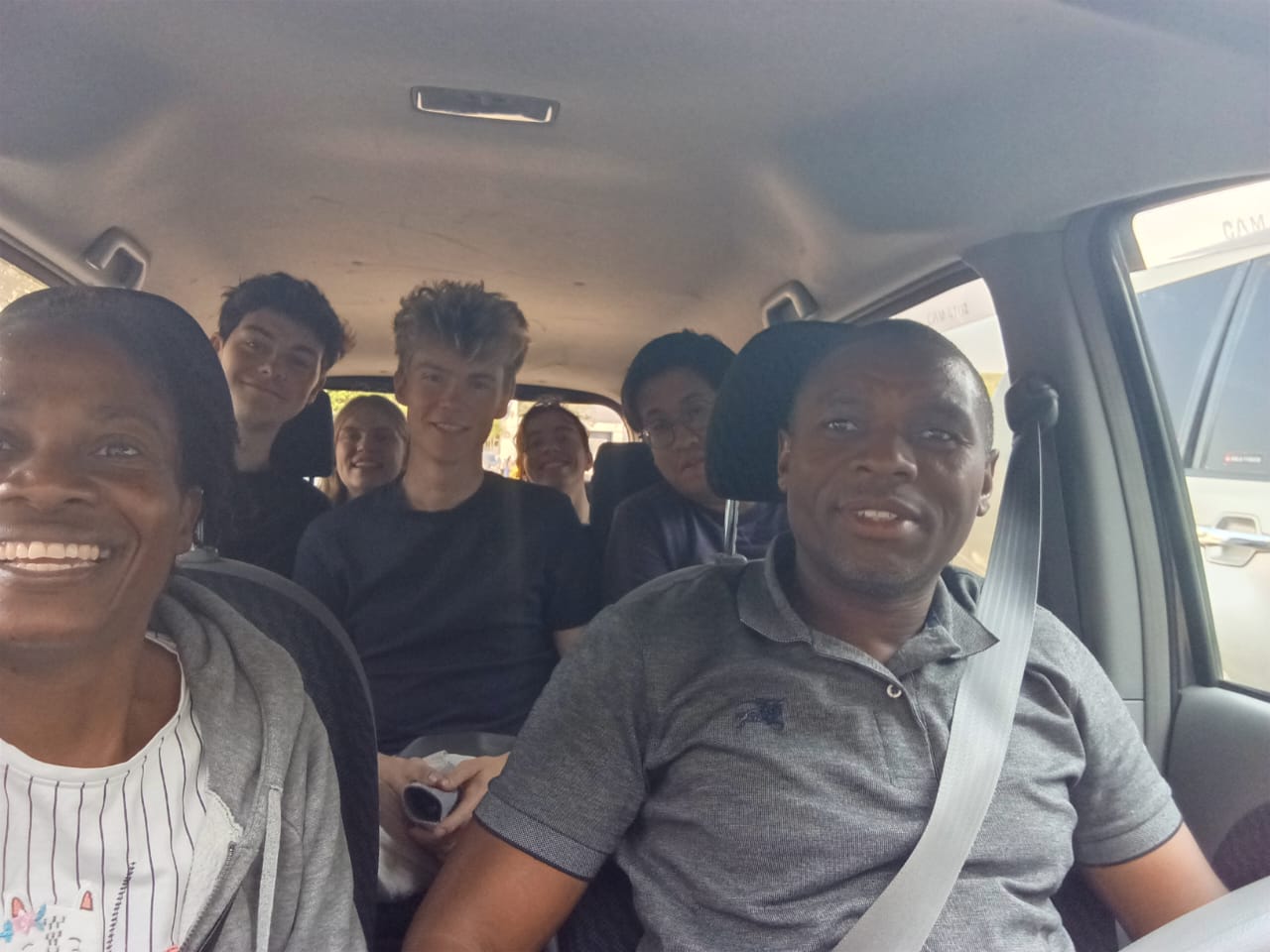
Sitting in a library in Scotland, attending one of the oldest Universities in the UK, is a very safe place from which to discuss Change Maker Values. I am safe and supported and can wax lackadaisically about the injustices and hardships around the world I want to see changed while sipping my coffee. Then you fly to Zambia and live in Ng’ombe for six weeks, helping at a community school led by one of the strongest people you have ever met, and suddenly that distance is shrunk. Your ignorance is no longer a safety net.
When I have volunteered before, whether helping teach children how to read in my local community at home or running dance classes at university, you know you are helping people. It is an impetus. But what Laidlaw has done is strengthen that sense of purpose tenfold. Volunteering where I did, it can only be about the people. Whatever curiosity, humility, or any other value you bring cannot detract from that. And, when discussing the ethicality of leadership, that consideration immediately fosters other valuable traits, such as empathy, patience, and self-reflection. The ‘you’ becomes secondary, and while previous efforts were never for me, here it truly became about them. That’s what I learned from my LIA; that’s where I found balance. The change isn't for you, and you will be far more effective at making it when you stop thinking you have let it go and truly have. A safety net will let you feign that assumption; a real situation will make you feel it.
This aspect of the program, among the others, has also encouraged development in the second C: Character – who you are under pressure. I thought I had this down at the start of the program. Resilience, not an issue. Unfortunately for me, that is not the only aspect of ethical leadership. What the Oxford Character Project really emphasised was balance. A blind resilience without the tempering of self-awareness is just as damaging as no resilience at all. How a trait manifests is where the focus really needs to lie. I had never really dissected this in such a way. Applying this to Zambia, when one of my SMART goals (creating a comprehension reader) obviously wasn't going to work, I didn’t try to fit a square peg into a circular hole. I used the patience and self-reflection the course encouraged to realise it wasn't the right path, and I chose a more suitable one: a grammar syllabus. It remained resilience, but one guided and balanced by other virtues. That enabled me to act ethically and sensitively in an unfamiliar situation, allowing me to lead effectively in my service to the school by addressing an absence in their textbooks.
The final C is capacity: how things are done. For this, I would like to go back to summer one, when the cohort sat, about to begin research, and my friends joined me in the café. You can consider capacity in many ways: management, hard skills, vision. But for me, a central component of capacity is support, empathy, and teamwork, not necessarily on the same project even. In those mutual writing sessions, we joked, we shared our projects, we said: “Yes, that sounds like a great idea”. That support, at the very least, enabled me to handle a fairly emotionally heavy research period, studying childhood indoctrination in the Third Reich, reading Jewish children’s letters about harassment, and seeing the weaponising of pedagogical apparatuses to create a truly hateful generation. It was community we found when we went to Zambia as well. The ritual of making tea with the family in the evening, singing, playing games. That helped everyone get up at dawn and work till the sun set. So for me, it was community. That is what Laidlaw taught me about capacity; it also means maintenance.
What of the Global Leadership in all of this? This has been implied, but for me, the development was a reminder that people are people. I knew this already, but then you go to Zambia and meet individuals who make you a part of their family, and you feel it. Grace and I were even given traditional Zambian dresses at the end (mine for my mum), and in that kindness, you remember why you are there. Because no matter where you are in the world, people can be incredible and are stronger when we help each other. It is too easy to be divisive and insular: our problems, us first, and so on. But that achieves nothing. I can travel 5000 miles and meet a new family, so why should some form of leadership and care stop at the door?
Moving forward in whatever I do – and at this point I do not know what that is – it will be done by placing community and purpose at the fore. In each stage, whether in the context of global or local leadership, that is what Laidlaw has taught me. Summer One was an unknown: 25 scholars who did not know each other yet. But within that group, I found friends who, through golf trips, pub nights, and coffees, made the work possible. Ethical leadership is not just what happens in the room; it is also everything that feeds into it: self-maintenance and care for the community. It is in that stead of empathy, listening before I act, and balancing resilience that I hope to continue, and that is the growth I have seen over these past two years.