Summer Research 2026 Poster & Abstract
Preview
Abstract
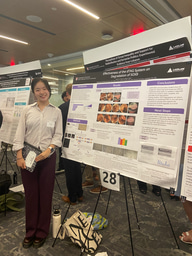
Colorectal cancer (CRC) is the second leading cause of cancer death within the United States with rates currently on the rise for young adults. The SRY-box transcription factor 9 (SOX9) is a central regulator that promotes CRC by blocking intestinal stem cell differentiation. As a key molecular mediator, observation of tumor response in its total absence is needed to further our understanding. We used the degradation tag (dTAG) system for SOX9-specific protein degradation. In the presence of a small molecule degrader, dTAG V1, SOX9 fusion protein fused with FKBP12 mutant is brought into close molecular proximity to the protein degradation machinery. Our project focuses on the viability of the general dTAG system and other mouse models for the degradation of SOX9. Organoids derived from the colon epithelium of transgenic Sox9-dTAG mice were cultured with or without treatment with dTAG V1, and their SOX9 expression levels were analyzed through Western blot and RT-qPCR. Previous evidence from transgenic mice have demonstrated that complete SOX9 knockout is difficult to achieve by in vivo tamoxifen injections. Preliminary immunofluorescence microscopy and flow cytometry data suggest that it is possible to transduce mouse colon organoids with knockout machinery in vitro followed by selection for a pure population. Whether or not the dTAG system can be more efficient or utilized for other proteins as well as if complete SOX9 knock out will not be malignant in it of itself is to be explored. The dTAG system has advantages in that it is more efficient, effective, and reversible. Using it with SOX9 opens up pathways to more definitive study of the effect of the protein’s loss for CRC therapeutic targeting.
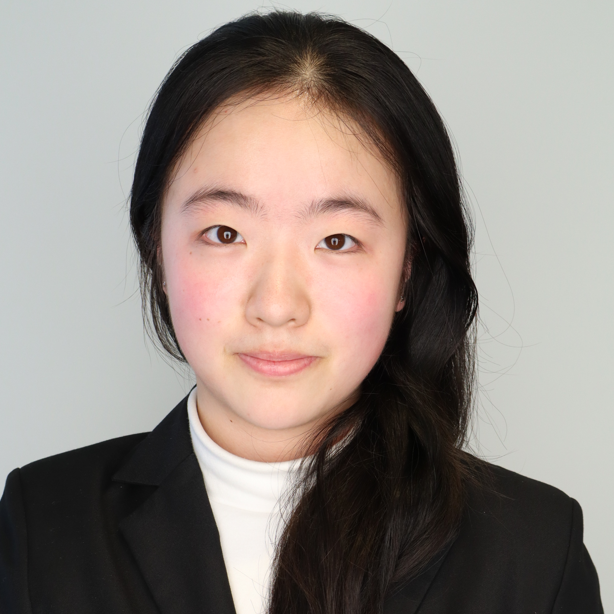
Emily Yu is a rising sophomore at Harvard College studying Chemistry with a secondary in Sociology. She calls Boston, Massachusetts her home and is proud to be part of the family that is the inaugural class of Laidlaw scholars at Harvard!
Before college, Emily was often knee-deep in case problems and Latin phrases as the captain of her mock trial team. As part of her love for public service, Emily interned in the office of the Honourable Patti B. Saris and MA's Executive Office of Labor and Workforce Development, gleaning wisdom from observing trials, reading opinions and Statehouse bills, and compiling and presenting a comparative study of workforce services across four states.
In addition to researching in college, Emily writes for The Harvard Crimson and is tapped into the many mentorship networks across campus as a Peer Advising Fellow and First-year Outdoor Program leader.
Through Laidlaw, Emily hopes to bring her research and understanding of colorectal cancer studies and treatment to new heights and depths. The intersections between law and new technology is something Emily is constantly exploring, whether it be through possible career paths or a casual conversation.
Outside of work, Emily loves trying out new styles of dance, playing around on the piano, dissecting movies, and wrapping her head around interesting would-you-rathers. She is always open to chat for anything at all!!