Research report: Mechanical Validation of a Patient-Derived Silicone Kidney Phantom for Nephroscope Access Testing
Preview
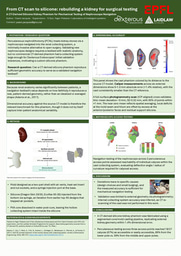
Over the past few months at Dexterous Endoscopes, an EPFL spin-off, I've been building a patient-derived silicone kidney phantom to put real numbers on something that's usually left to intuition: how well a nephroscope's curvature and deflection actually hold up inside a real, irregular kidney. Getting there was most of the work. I turned a real patient's collecting system into a printable mold, worked through a casting method until it reliably filled properly, and then spent a good chunk of time checking that the final cast was actually a faithful copy of the digital model before trusting anything that came after. Once I could trust the phantom, threading a real nephroscope through it was the most satisfying part: watching exactly where its mechanical limits showed up, and where they didn't. This report covers the full process from start to finish