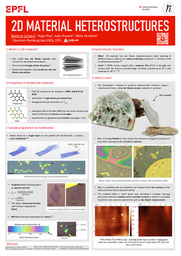
Quantum Plumbing Lab : internship report
Preview
A deeper dive into the internship, from first principles to final results.
It starts with the physics of van der Waals crystals themselves, why atoms bond tightly within a layer but barely at all between layers, and what that means for materials like graphene and hexagonal boron nitride.
From there it moves into the lab's two research threads: measuring how water slips along 2D material surfaces, and probing the ferroelectric domains that emerge when hBN layers are twisted or folded against each other. The bulk of the report is a hands-on account of building heterostructures, comparing two transfer methods side by side, the established PVC stamp and a newer, polymer-free approach using mica, tracing the trial and error behind getting the mica method to work reliably, and what the resulting samples reveal under the microscope about which method is actually worth the extra effort.