Can AI Still Learn When Data Cannot Be Shared?
Preview
Modern AI models benefit from large and diverse datasets. In many real-world settings, however, not all data come with the same privacy constraints.
Consider a hospital developing an AI model for medical diagnosis. It can benefit from large amounts of publicly available medical data, but it may also need to learn from its own patient records or medical images, which contain highly sensitive information. Training on only one of these sources means that the model misses part of the available information, which can reduce performance compared with learning from both.
Ideally, all training could be performed locally, keeping the data entirely within the hospital’s trusted environment. In practice, however, modern AI training can require computing resources that are incredibly expensive to own and maintain, making fully local training impractical for many organisations. Owning and operating such large-scale computing infrastructure locally can also come with a substantial energy and environmental footprint. Cloud platforms such as AWS address this limitation by providing large-scale computing power on demand. This makes advanced AI training far more accessible, but it comes with an important trade-off: once sensitive data are moved to external infrastructure, the hospital no longer has full control over the environment in which those data are stored and processed.
This loss of direct control raises both security and legal concerns. From a security perspective, the hospital must rely partly on the cloud provider’s infrastructure and safeguards to protect its data. From a legal perspective, the provider may also be subject to laws outside the hospital’s own jurisdiction. For providers subject to U.S. jurisdiction, for example, the CLOUD Act can require them, through valid legal process, to disclose data under their custody or control, regardless of where those data are stored.
This creates a fundamental challenge: how can we use powerful external compute for public data while still learning from private data that must remain local?
The poster presents the approach we explored and the results we obtained.
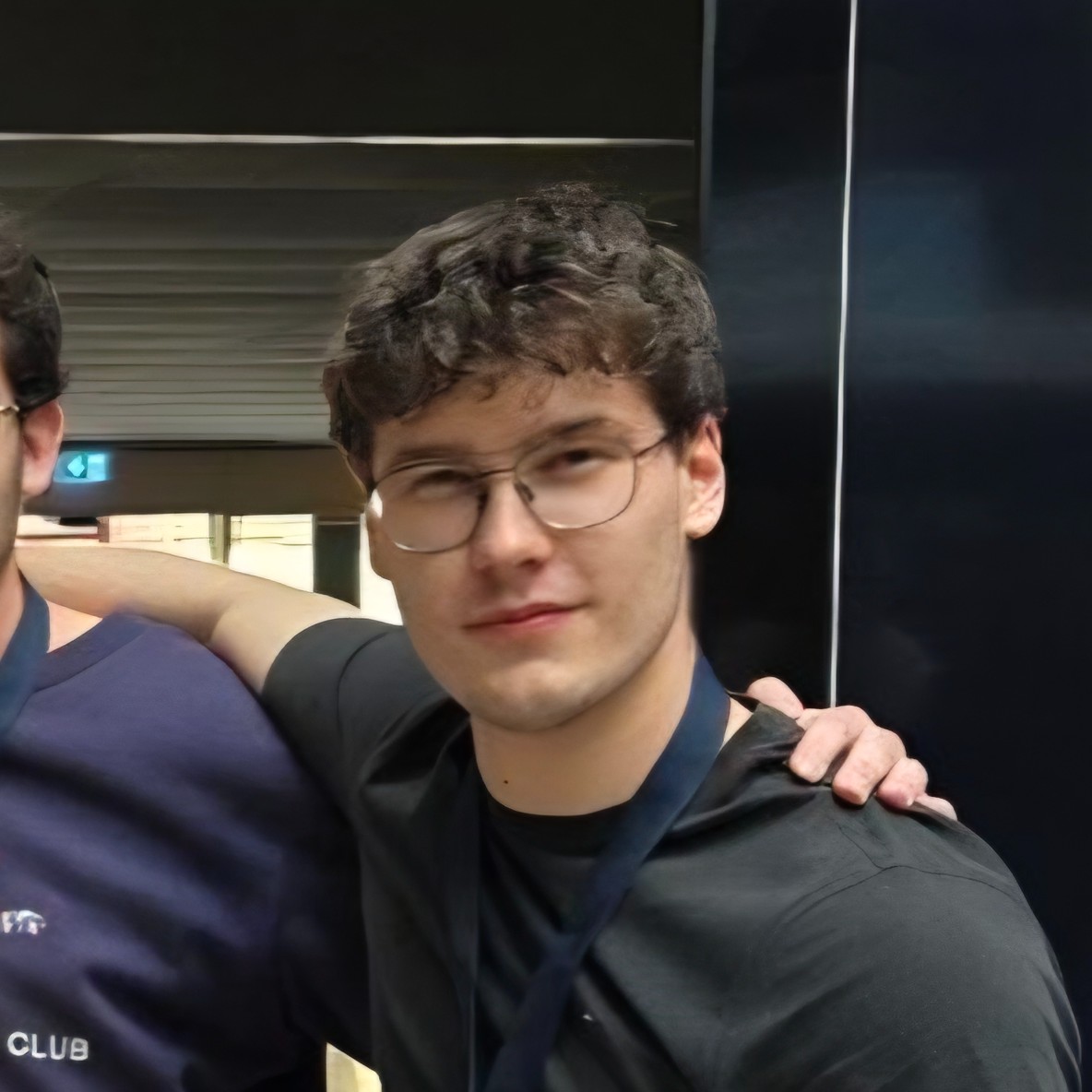
Hey! I'm Dimitri, a second-year Bachelor's student in Computer Science at EPFL. I love building useful things, especially tech projects. More generally, I’m driven by solving real problems and turning ideas into something concrete :)
My research focused on privacy-preserving machine learning. I developed a hybrid training framework that allows AI models to learn from data split across public and private environments, using external computing resources while keeping sensitive data local.