Why Good Intentions Keep Losing to Bad Economics: Will the World Ever Be Sustainable?
When scrolling on social media you occasionally stumble across videos of polar bears on melting ice caps, fish eating plastic, or detrimental forest fires. A walking-talking dichotomy laughing us straight in the face.
And yet, somewhere between the outrage and the share button, most people, myself included, go back to their lives more or less unchanged. Not because they don’t care. It’s because caring does not equate knowing what to do. And the businesses that promise to bridge that gap are running into problems that good intentions alone were never going to solve.
When I was sixteen, I started selling plants. “Special” variegated ones with marbled or streaked leaves that had become inexplicably fashionable during lockdown. I sourced them carefully, packaged them well, and tended carefully to every root. I took my fatherly duties serious. It was profitable and sustainable in the ways I cared about, which was everything that mattered to me.
But in hindsight running it put me in contact with a reality that knocked the naivety right through my front teeth: genuinely caring about something does not mean being able to do much about it. I don’t say this to be defeatist, I say it because that gap is worth taking seriously, and as a consumer you should start accepting it.
H&M won’t become a sustainable trillion dollar fast-fashion empire. Datacentres won’t stop contaminating essential water sources. And your favourite celebrities won’t start donating their fortunes to charity.

Let me paint the picture. The standard narrative goes something like this: companies have always externalised their environmental costs, consumers are waking up to it, and so a market has opened up for businesses willing to do things differently. Entrepreneurs ride that wave, business and planet align, everyone lives happily ever after.
There’s truth in this. But we both know that this rarely, if ever, happens. Sustainable production is more expensive, not always, but often enough that it shapes the economics of most green businesses in a fundamental way.
Ethical sourcing costs more. Lower-impact materials cost more. Slower, less extractive processes cost more. The green business passes these costs to consumers and finds, reliably, that the people willing to pay them are already reasonably comfortable. The mass market stays where it is.
This gets framed as a consumer problem, people say they care about the environment but won’t pay for it. This diagnosis is lazy at best. The issue is that the prices people pay for ordinary goods understate their actual cost. Carbon emissions, soil degradation, water use, these are real costs, but they fall on the atmosphere or on communities downstream, not on the company’s balance sheet or any measurable part of the consumer’s life. So the sustainable alternative isn’t competing on a level playing field. It’s absorbing costs that its competitors have quietly offloaded elsewhere.
A business can't fix that on its own. Which is an uncomfortable thing to admit. Especially if you've built your identity around the idea that business is where the solutions are.
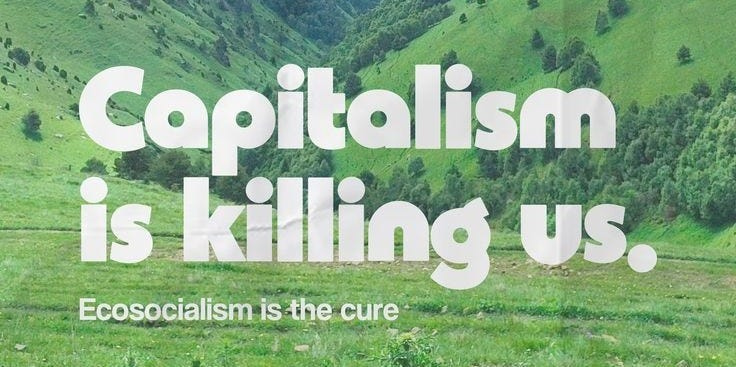
Then there’s the measurement problem, which is in some ways more corrosive. Impact is genuinely hard to quantify, meaning that green businesses reach for proxies: carbon offsets purchased, percentage of recycled content, supplier audits completed. These metrics are far from being inane, but they have a way of becoming the goal. You optimise for what you measure, and what you measure is rarely the thing you actually cared about to begin with. You end up with a company that hits every internal sustainability target while operating inside a supply chain that remains, structurally, extractive.
I did this too. I naturally tracked every shipment, agonised over packaging, chose suppliers with deliberateness. What I was less able to account for was the culture I was selling into, a consumer culture that treats plants, like most things, as objects to acquire rather than to tend. You can make careful decisions within a system. If the system itself is somewhere else entirely, it will be indifferent to careful decisions.
This is reason enough to be honest about what cautious decisions can and can’t do. The thing it sits inside might just be a totally different problem.
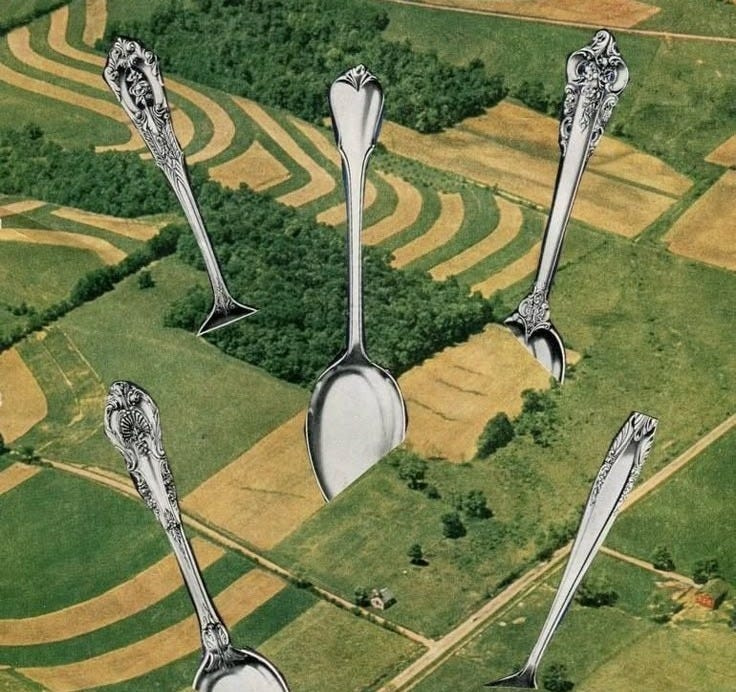
But what happens when you try to force-feed the system with a mission that inherently doesn’t align?
Take Pavegen for example, a business that by the books was meant to make it into the stratosphere. A British clean-tech startup that embedded kinetic energy tiles into pavements, converting footsteps into electricity. What a dream, right? On paper, yes, it was the kind of company that gets TED talks and government grants. And it did. Laurence Kemball-Cook, the founder, was relentless and ruthless. He believed in it just as much as Donald Trump believes in windmills causing cancer: completely, publicly, and at considerable personal cost.
The problem was the product. The tiles generated such tiny amounts of energy that one widely cited calculation found four hours of walking across Pavegen paving would generate roughly 0.02% of an average European's daily energy needs, a rounding error next to what conventional generation could produce for a fraction of the cost. But Kemball-Cook refused to pivot. He couldn't. The tile was the mission. Changing it would have meant admitting that the thing he'd built his identity around, the thing he'd pitched to cities, to investors, to the BBC, was an idealistic sustainability symbol that propagated hope rather than an actual solution.
The green entrepreneur is rarely just trying to build something that works. They’re trying to demonstrate that sustainable business is possible, to serve as proof of concept for an idea they believe in. That’s a different kind of pressure, and it can produce some strange incentives. It makes it harder to pivot away from things that aren’t working, harder to make unsentimental decisions, harder to separate the business from the belief system underneath it.
I’ve watched people hold onto jeans two sizes too small just as founders do to failing businesses, because giving them away felt like a betrayal of what they were supposed to be. There’s something ridiculously sympathetic about that. There’s also a point at which it stops being principled and starts being self-indulgent. A business that fails doesn’t prove anything except that it failed. The planet doesn’t benefit from noble collapses.
Now think about what message a failed green-tech startup with mighty potential sends. Tough life.
The businesses in this space that seem to actually work share some qualities worth noting.
They tend to treat sustainability as an engineering constraint rather than a virtue. The goal is not to be the option that consumers choose when they want to feel good about themselves. It’s to be the option that is simply better. Period. Cheaper, more convenient, more reliable, and happens to be made differently. The moral case for buying it is secondary to the practical one and always will be. We live in a tough economy.
They also tend to engage with policy in ways that many founders find innately uncomfortable. The price signals that would make sustainable business genuinely competitive, a carbon price, reformed subsidies, stricter environmental standards, can’t be created by individual companies. They have to come from somewhere else, perhaps from regulation or from politics. Businesses that treat this as outside their remit are hoping the world will restructure itself around their model without their involvement. I hear some of them are still waiting.
And they’re honest about trade-offs. No supply chain is clean. No company operating at scale is without compromise. The ones that acknowledge this, that show where they’ve made progress and where they haven’t, and why, tend to build more durable trust than the ones performing a kind of purity that doesn’t hold up to scrutiny.
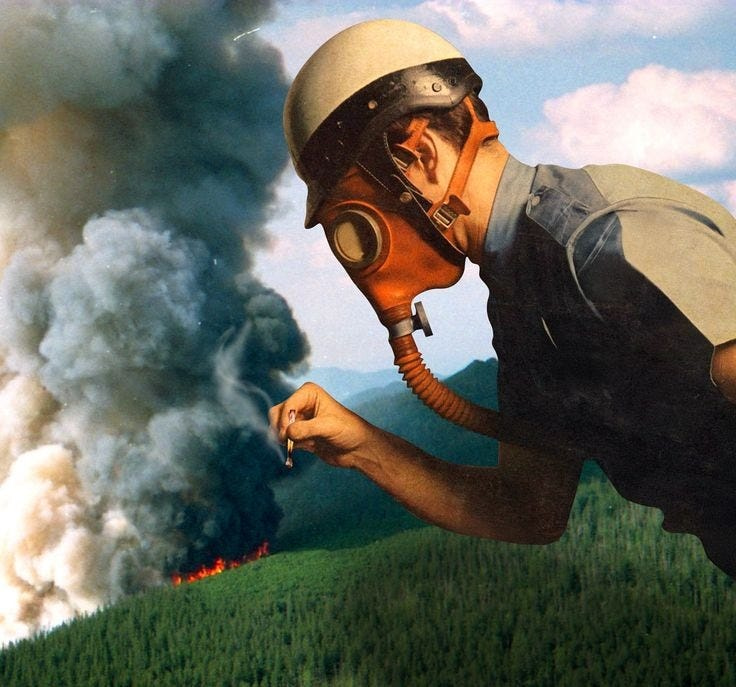
I don't think any of this is an argument for giving up, or in any way shows that the project is hopeless. I think it means it's harder than it looks from the outside, and that the difficulty is worth being clear-eyed about.
The version of green entrepreneurship that we want to find most believable shouldn't be the one where caring about the environment a great deal is sufficient. It should be the one where caring is the starting point, and everything that follows, the engineering constraints, the policy work, the honesty about trade-offs, is the disappointingly hard work.
That's a less satisfying story than the one we usually tell ourselves. But it's closer to the truth, and it's the only version that survives contact with an actual supply chain. The plants I sold weren't going to fix the culture that bought them. Pavegen's tiles weren't going to fix the grid. Neither failure was for lack of caring. What was missing, in both cases, was a plan for the part that caring doesn't cover.
Take from this article what you will, but see the incentive to read and explore. The incentive to understand. To pursue. And to try. Whether it be through innovation, exploration, or sheer determination.
If you made it this far, thank you for reading. I'd love to hear what your thoughts!
- Edward Ong-Mellor (Chemical Engineering student at Imperial College London)