When I landed in Brussels six weeks ago, I could have never imagined the impact that this internship and the people involved could've had on me. Of course I came into this experience knowing it would be transformative, as any solo trip and ambitious project in another continent would be on paper. However, the project far exceeded my expectations. Seventy people registered from across the world (not just Europe!), forty joined the Zoom, the speakers were extraordinary, and during the course of our plenary discussion, a Parkinson's patient typed something into the chat that will stay with me forever. This reflection will endeavour to recap this bittersweet last week without getting too emotional (no promises).
The workshop
Conversations worth having.
The HEREDITARY Advocacy workshop exceeded every expectation I had set for it at the beginning of my LiA, including the ones I had kept to myself because setting them out loud felt too presumptuous. The speakers were exceptional, generating exactly the kind of rich, cross-disciplinary dialogue between policy and science that the workshop was built to achieve; real conversation, moderated by the amazing executive director of EBC, about what needs to change in each stakeholder field for that dialogue to not just be possible but also sustained. Watching that unfold in real time was immensely rewarding, knowing I had designed the architecture that gave those conversations a space to develop into something meaningful.
The policy exercise, which I had put significant thought into, ended up running even better than I had planned. Some participants had to leave early due to overlapping commitments, and rather than diminishing the exercise, it deepened the value of it considerably. With fewer voices in the plenary, each participant had more space to inhabit their assigned stakeholder role fully, and the ethical nuances of the policy scenario were explored with much greater care and complexity than I could've ever anticipated when I was planning internally. Sometimes a smaller room truly does hold bigger conversations.
The feedback was overwhelming and positive across the board, and we received it from researchers, policymakers, patient advocates, and HEREDITARY consortium partners from all over the world. But the responses that resonated most deeply with me were from the Parkinson's patients who attended. My Laidlaw journey began with my grandfathers and their respective experiences with Parkinson's, with my personal conviction that awareness and advocacy in this space mattered and that I had something to contribute to it. To receive feedback from people actually living with the disease, telling me that the workshop had meant something to them, was a completely full circle moment for me not only in this programme but in my personal vocation.
The goodbye
A farewell gift I did not see coming!
At some point during my final week, my colleagues went behind my back and organized a farewell that I did not see coming at all and was not emotionally prepared to process in the slightest. They had a beautiful card, signed by everyone, filled with messages that were so warm and nostalgic I was fighting back tears. They also purchased me a gift: a Tintin-themed deck of playing cards, because my colleagues know that I always carry a deck of cards with me wherever I go. In that moment I felt so incredibly seen, and the fact that they went and found something so particular to Belgium and also so particular to me, said more about this team than anything I could write about them.
These people were my colleagues and, for six weeks, my only real community in a foreign country. They included me in their marathon, their lunch breaks, and most significantly, they trusted me with the entirety of the workshop which allowed me to apply myself creatively in a way I've never been able to in a professional space. Leaving the team was genuinely difficult, but I know the connections I fostered with everyone will last far beyond this summer.
What I learned
What six weeks alone actually teaches you.
I came to Brussels to work in policy advocacy for the first time, to bring skills I had developed in academia and communications into a new workspace and see what they could do there. What I did not fully anticipate was how much the experience would teach me about myself outside of work; about what I am capable of when the support structures I rely on are thousands of kilometres away, about how I move through discomfort and unfamiliarity, about the kind of person I am when nobody who has known me for a long time is watching.
The professional growth is tangible and I am so proud of it. But the thing I am carrying forward as I type this reflection in my family home back in Canada is the quieter knowledge that I can persevere through really challenging experiences alone, in unfamiliar places, without losing the essential parts of who I am. I greeted people warmly everywhere I went (even if not reciprocated), I stayed curious, and I was, through all of it, recognizably myself. In a six-week period that was personally and professionally demanding, staying true to my character is one of the things I am most proud to reflect on.
Closing
Brussels gave me much more experience than I prepared for, and in various lessons. A city I learned to navigate, then to love, then to leave. A deck of Tintin cards sitting in my bag next to my regular deck, which is proof of how Belgian I've become. :)
I am so happy to be home, and I am genuinely going to miss all of it. By now I know those two things do not need to resolve into one; they can simply both be true, and the lessons can travel with me into whatever door I open next.
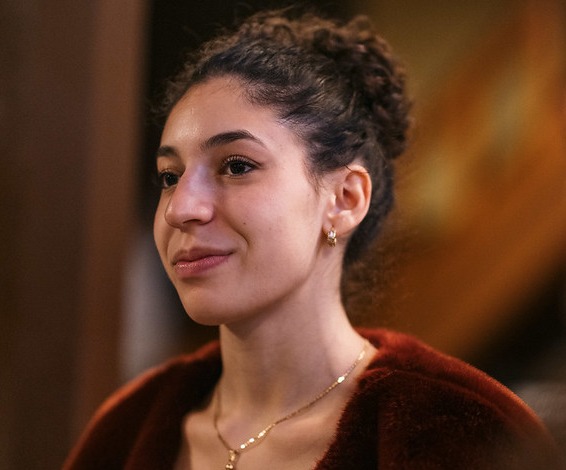
Hello! My name is Viktoria, and I’m a third year student at University of Toronto pursuing a Human Biology major and double minor in Immunology and Physiology. In my research, I'm investigating how immune dysfunction contributes to Parkinson’s Disease (PD) pathogenesis, a condition that has immensely impacted my family. My work integrates computational transcriptomic analysis of patient data with experimental validation in a preclinical mouse model. This integrative approach aims to uncover immune-related biomarkers that could inform precision-based, disease-modifying immunomodulatory therapies that slow or prevent PD progression.
My fascination with the immune system began with my own experience navigating everyday life with my anaphylactic allergies. Early exposure to the immune system’s complexity inspired my ongoing commitment to understanding how immune dysregulation underpins disease. PD is close to my heart, and I’m motivated to have my work contribute to better diagnostics and treatments for patients worldwide.
Looking ahead, I aspire to pursue graduate studies; either an MSc or PhD in immunology, neuroscience, or biomedical sciences. I’m passionate about translating academic research into real-world solutions and hope to build a venture that leverages immune insights for targeted, accessible therapies. I’m also a language enthusiast; I love learning new languages and immersing myself in different cultures, and I believe cross-cultural communication is essential for global health innovation and leadership.
When I’m not in the lab, you can find me studying in new cafes and trying new restaurants around Toronto, reading psychological thrillers or philosophical literature, hiking with my dog, or travelling abroad!
The Laidlaw Scholars Programme has been an incredibly meaningful part of my academic journey thus far, empowering me to ask bold questions, build hands-on research skills, and connect with a vibrant community of change-makers. If you’re curious about Parkinson’s research, immunology/neuroscience/biotech, or just want to connect, feel free to reach out on my LinkedIn. I’d love to hear from you!