The final week shifted from development to transition. A trial run on a staff laptop, a conversation about device risk, decisions about file storage, and finalizing five documents brought the project to a close. It also surfaced something that had been in the background all along: a system is only as useful as the person in front of it feels capable of using it.
What went well? The documentation held up under real conditions. When credential prompts appeared, when Power Query failed on a new machine's file path, and when questions arose about data sensitivity — the Technical Reference and Staff Guide could answer them without my involvement. That was the intended outcome, and it worked. The data sensitivity conversation also clarified something worth stating clearly: the workbook contains no client PII, and the communications data it tracks is drawn entirely from public posts and opted-in newsletters. The primary risk of device loss is operational continuity, not data exposure. Communicating that clearly to staff is as important as building the system correctly.
What could have been done differently? I built with a capable, engaged user in mind. I should have designed earlier for the transition moment — when the person who built the system hands it to someone who didn't, and that person eventually hands it to someone else. Nonprofits lose staff regularly. Projects get abandoned not because they were poorly built, but because the expertise was concentrated in one person and left when they did. Documentation should have been treated as a core deliverable from the beginning, not a final step.
What did I learn about myself when working with others? The decisions that felt smallest — where to store a file, whether to use a URL or a local path, how to phrase a callout box — turned out to matter most to the people actually using the system. Technical decisions have human consequences that are easy to underestimate when working alone.
What did I learn about leadership? The balance between technological sophistication and organizational sustainability is not a design constraint — it is a values question. A complex system that cannot survive a staff transition is not an asset. For a small nonprofit operating on limited resources and volunteer goodwill, simplicity and durability are not compromises. They are the right answer. This project reinforced that the most important thing to leave behind is not a system — it is a system that someone else can maintain, understand, and eventually hand off again.
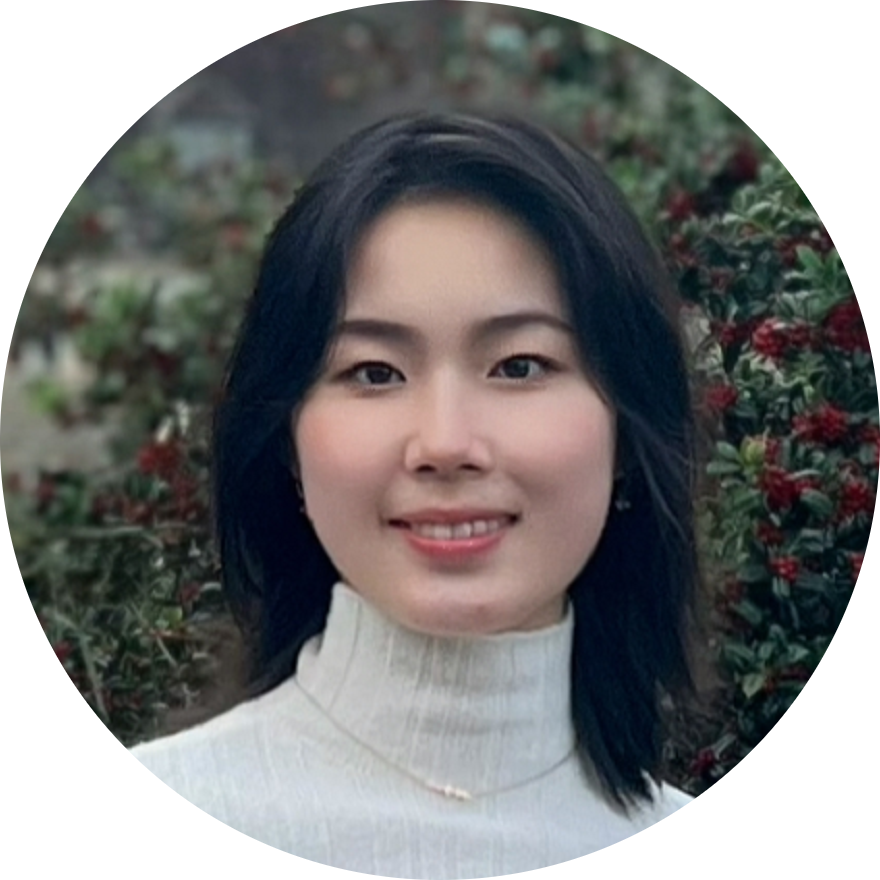
Hi There! I am Sharon, a rising junior studying Business and Global Affairs at Georgetown University. I am minoring in statistics and planning on pursuing a career in international development, with a specific focus on bridging the aid-development gap to mitigate protracted displacement around the world.
For my Laidlaw research project, I am working with Professor Christi Smith of Georgetown University's Institute for the Study of International Migration to study the phenomenon of increasing Consulting publications and work on migration and refugee integration-related issues. I aim to explore how the emergence of a new organizational form in the refugee services space might shift the course of refugee incorporation during a time of increasing forced migration and rising political polarization, and its potential policy implications.
Our study analyzes 24 publicly available consulting reports using mixed methods to identify prominent and distinguishable patterns and themes. We are also conducting interviews with consultants to explore the internal and external factors contributing to these themes. By contrasting these findings with those from the public sector and NGOs, we aim to highlight different approaches to migration and refugee issues.
In my free time, I like to dance (my faves are Chinese Folk and Classical Dances!), watch TV shows, and spend quality time with my siblings! I love food and are always excited to try out new cuisines! I believe that nonverbal and nonwritten communication, including all performance art and culinary practices, are powerful ways to build connections and enhance cross-cultural appreciation and dynamism.
One fun fact about me is that I am an identical twin. My sister, Susan (got our name from The Parent Trap lol) also attends Georgetown University and studies Human Science on the pre-med track.
Would love to connect with anyone interested in discussing anything in the realm of social and political science or on their journey exploring their faith as I am, so don't hesitate to reach out :)