Understanding Political Outsiders in Brazil
This summer, I’ll be in London at UCL, working with Dr. Malu A. C. Gatto, Associate Professor and Deputy Head of Department for UCL Institute of the Americas, on a project exploring political outsiders in Brazil—who they are, what they stand for, and how they may be reshaping democratic dynamics in the country.
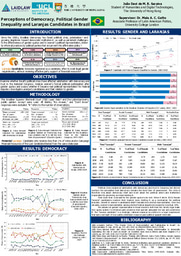
Focusing on Brazil, this research project examines the identities, ideological orientations, and policy preferences of legislators elected in this increasingly polarized environment. It seeks to answer two central questions: Who are these political outsiders, and what do they stand for? To address these questions, the project will conduct a series of original surveys with legislators at the national, state, and municipal levels. The surveys will be administered online. By generating an original dataset, the project will provide a systematic analysis of this emerging political class, mapping its ideological profiles, policy priorities, and potential implications for democratic representation and governance in Brazil.
This research comes at a particularly important moment, with Brazil entering an election year at both the federal and state levels. For me, it is even more important because my home state, Ceará, has become polarized in recent years and is once again in the national spotlight ahead of the 2026 elections with the return of traditional politicians such as Ciro Gomes. Through this research, I hope to contribute to a clearer understanding of this emerging political class and what it means for the future of Brazilian democracy.
.