
Academic research: how to be a more professional scholar
For my academic research, I have done a study on the usage of AI and its relationship with student assessment. What kind of assessments do undergraduate students like, what they dislike, and how may AI usage affect the outcome of their performance in their assessment?
This is a study topic suggested by Professor Carless from HKU Education Faculty, and I really like the topic. It's truly meaningful. It is a hot point that is worth discussing for the new AI era.
And the outcome not only suggests how students should behave facing assessment and AI, but it has more thought‑provoking insights. It suggests that teachers and instructors in universities should adjust the form of assessment to better motivate students, encouraging meaningful and productive learning and making students feel supported. In the AI era, educators need to take the initiative to make changes.
I have to admit it is not a very deep research project, and the scale is not large enough. I also believe that many people are conducting similar studies, as this is a widely interested topic in academia. Even so, this research is still extremely important to my growth. It has shaped and prepared me to become a more professional, mature, and responsible scholar.
Through this project, I picked up a full set of practical research skills from start to finish. Early on, I learned how to build a research structure and draft research plans. I also gained hands‑on experience designing semi‑structured interviews and making sure interviews are carried out ethically. After collecting material, I practiced time management, learned to organise and categorise research data, and performed qualitative analysis on my dataset.
More importantly, the project cultivated my research mindset. I learned to draw responsible, objective conclusions: results will not always align with my initial assumptions, and I must respect the real responses and authentic data I have collected instead of forcing findings to fit my expectations. On top of that, I understood that report writing is iterative. We need to reserve ample time for writing, editing, adjusting and rewriting, rather than treating it as a one‑off task.
Leadership courses and workshop: Leadership is about character.
Over this two‑year journey, I have joined many online leadership courses and offline workshops. My most important takeaway is that leadership is not merely a set of methodologies for managing others. Instead, leadership is a collection of personal character traits.
A leader in a team is not defined by a fixed position. There does not need to be only one or a few designated leaders. Everyone should be ready to step into a leadership role. Different situations bring forth different leaders, and this natural shift is critical for a team.
Actually, it does matter whether you view leadership as a position or as a set of character traits that everyone can possess. I have firsthand experiences from group work during my second year at university.
There was one ten‑person leaderless group. Everyone was caring and responsible. When facing different tasks, people who were more suitable and capable at that stage would step forward to lead. Other members would also demonstrate their leadership character, though often in supporting roles. As tasks shifted, other people would step up to take the lead. Everyone valued communication and teamwork. Whenever mistakes happened, there was little friction, and we could resolve problems effectively right away.
By contrast, another group was a typical single‑leader group. The leader did not believe in communication. She simply assigned tasks and expected everyone to obey, refusing to accept counter‑arguments. This made group members unhappy, and our final results suffered. She relied only on issuing assignments, which was not a healthy way to run a group.
In this difficult group activity, I put the character of courage into practice. As I learned from the Oxford leadership character courses, courage means not stepping back when others are heading in the wrong direction; instead, you try to guide the group toward a better path. Even though our appointed leader resisted collaboration and adequate communication, I fought for more space for group discussion and collective deliberation, and persisted to finish the project as a team.
These two contrasting group‑work experiences, one positive and one negative, have truly validated what I learned in leadership courses and workshops. Everyone should recognise that they can be a leader, and everyone should continuously cultivate their own leadership skills and character.
Leadership in action: Ideal workplace and group work.
Leadership in action is undoubtedly my favourite, most impressive and unforgettable part of this two‑year journey. I applied and was offered a central LIA project.
The project is in Boston, USA. It is led by an NGO called the Timothy Smith Network, TSN. The project name is BDA, Boston Design Academy. I was selected to be the assisting instructor in the Digital Design Intensive group. I would teach the interns how to use Blender. These interns are kids from technologically marginalised backgrounds. There were two other instructors in my group, responsible for game design and website design teaching respectively. Besides the DDI group, there were two other groups focusing on agriculture and technical health. Altogether, there were nine scholars and many TSN staff members.

This is one of the most smooth and rewarding group‑work experiences I have ever had. Everyone was so kind and supportive. We came from more than ten different countries with diverse cultural backgrounds, yet this turned out to be my best collaborative experience, which surprised me a great deal. Good teamwork is not heavily determined by cultural backgrounds. Instead, it depends on the leadership characters each person demonstrates, people’s willingness to support one another, their readiness to communicate, and how effectively they take action. Everyone was wonderful in this team. Naturally, we ran into plenty of mistakes and problems, such as some interns falling behind, numerous technical glitches, and errors in venue arrangements. Still, we addressed these issues right away. There was no blame directed at individuals; our only focus was solving problems. This represented an extremely healthy collaborative model, and it reinforced my belief in the importance of cultivating leadership‑related character traits.
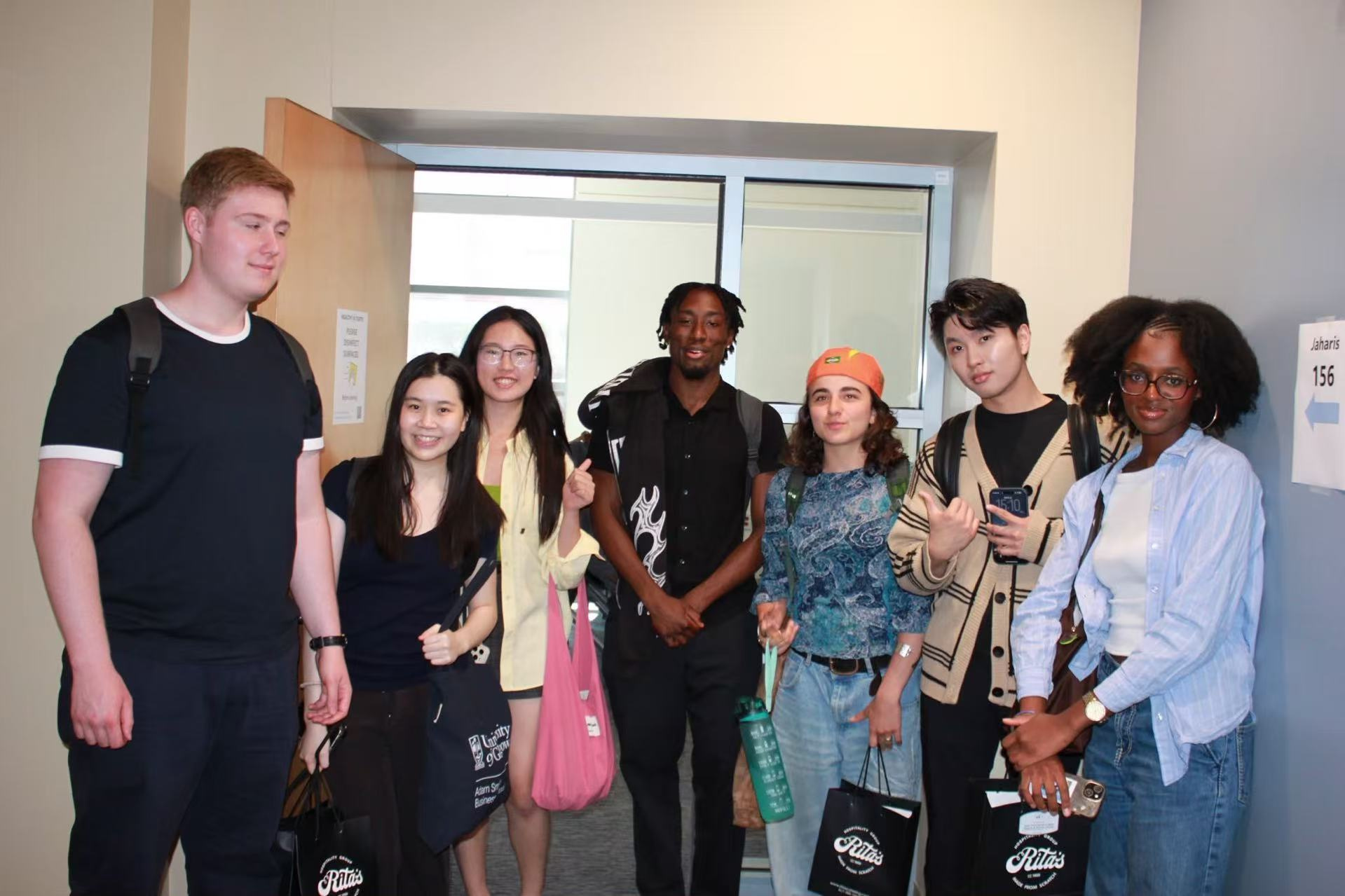
And also, as I mentioned, I was fully immersed in this cultural‑exchange experience. We shared our different cultural backgrounds and asked one another many questions about life. We really enjoyed learning each other’s languages. One scholar from England in the DDI group learned a lot of Cantonese and Mandarin from us. At the same time, he was very helpful and patient whenever he corrected my English mistakes. We also learned quite a bit of French from other scholars. We got to try foods from various cultures in Boston: Chinese dumplings, Cantonese dim sum, African dishes, Mexican food, and Spanish food. It was such an impressive journey for a foodie like me.
They even held a warm home party for my birthday during this program. I had always hoped to experience a genuine home birthday celebration, an uncommon tradition in Chinese culture, and this touching surprise meant a great deal to me. I am truly grateful to this group of kind, thoughtful people and this precious cultural exchange opportunity.
Despite our vast cultural differences, I was deeply touched to discover how many similarities we share in our inner worlds. We often lay on the grass at Boston Common Park, gazing at the clear sky and relaxing our minds. We realised that, regardless of our nationalities, we faced similar struggles regarding family expectations, personal independence, and future planning. Nevertheless, we all held the same courage to move forward. Our twenties are filled with confusion and uncertainty, yet every one of us retains creativity for life and romantic hope for the future.
This experience reminds me of a traditional Chinese philosophy: Harmony without uniformity. The world is vast and diverse, yet people can coexist peacefully, learn from one another, and thrive together. I truly believe that harmony amid diversity is the most beautiful and powerful essence of human civilisation.
Looking Ahead: Live and Share My Leadership Insights
I am very grateful to my two‑year‑ago self, for noticing the Laidlaw Scholarship programme, and for having the courage and patience to complete every step along the way, while constantly reflecting and learning. The growth it has brought me was something I never expected when I first joined.
I firmly believe that this two‑year journey has already sharpened my leadership characters and made me a better leader. In the future, I will strive to create more collaborative and supportive atmospheres during group work, and try to share these insights with everyone to build better co‑working spaces. This will be my lifelong pursuit and practice.