Technology & Community: A Reflection on My Time as a Laidlaw Scholar and a Leadership in Action Summer in Washington, D.C.
Being a Laidlaw Scholar has been pivotal to my undergraduate, ethical, intellectual, and personal development as a whole. I am so grateful for my time in this program and can’t believe the two years have already come to an end. I have learned not only a variety of practical leadership and development skills, but also a new way of thinking about life and leadership as a whole.
To retrace my journey as a Laidlaw Scholar, I began in the Duke Laidlaw Scholars Spring Colloquium class in January 2025. I had been struggling to figure out which extracurricular path felt most authentic to me during my time at Duke. Laidlaw was one of the first structured programs that felt concretely right to me, and the regular classes, where we had time to pause from the busyness of college life and debate big-picture ethical questions—like how you enter a community you are not a part of and attempt to help without causing more problems—were refreshing and grounding.
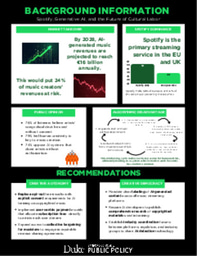
The most pivotal part of my Laidlaw journey was, without a doubt, the research summer. Spending six weeks in Brussels, Paris, and Oxford tackling fascinating questions about creativity, ownership, music, and generative AI was not only intellectually motivating, but also fun. I grew up playing music and singing, and I had felt like music was the missing piece of my college life. When I was given the opportunity to study music through a lens that matched my academic and preprofessional interests in technology policy, it reignited my love of music and gave me a new outlook on who I could be at Duke. I was inspired to plan a campus-wide music festival after visiting Paris’ Fête de la Musique for our research project. I also drew on the leadership lessons from our Laidlaw research summer meetings—the values-based leadership present at NATO and the way European offices and companies led their meetings—to start my own music organization at Duke.
Now, my music festival is in two weeks, officially endorsed by twelve student groups and three Duke departments in celebration of Duke Homecoming, and the vision I had as a new and unsure Laidlaw Scholar in the summer of 2025 is about to become a reality. The confidence to believe that I could be a leader and share my vision for a more unified and musical Duke with others came from the Laidlaw Scholars Program. It has quite literally changed my life and my perception of what I see as possible. Tangibly, I think this comes from the amount of reflection we are encouraged to do in this program. When we stop to audit our choices, our intentions, and the ethical and character implications of our decisions, we develop a set of skills transferable to any leadership initiative in life: the ability to pivot, discern weak spots, and have the conviction to rise to the occasion and make them stronger.
Then, I had the opportunity to attend the Laidlaw Scholars Conference at Durham University in the UK for the EU/UK Scholars Conference. I was so nervous to show up completely alone on behalf of Duke, but I was welcomed with open arms. I made lasting friends at the Universities of Leeds and Cambridge, and I saw just how powerful the Laidlaw network is, not only professionally but socially. How special is it to be connected with hundreds of driven, curious people across the world, all passionate about different things, but all passionate about having a passion? It was an incredibly formative and fun experience that I will always remember.
And now, I have just completed my LiA summer at the Brookings Institution in Washington, D.C., which inspired me by reminding me that I don’t have to choose between a career in the technology industry, the policy sector, or making an impact on people’s lives through nonprofit work. The most impactful change might just happen at the intersection of sectors, in jobs we cannot yet fully envision, but are instead defined by our every day actions. For example, on paper my boss was a research scholar, but she was also a community gatherer, a public speaker, a political influence, and a creative innovator.
I became really interested in the practical ways to create an AI-ready workforce. At an AI Equity workshop I helped lead for my LiA, I met people from all walks of life—some AI professors and some local D.C. residents who didn’t have working phones. The common denominator was the shared public space. I saw the power of a library to convene people from all walks of life and give them time to pause and discuss an issue changing their day-to-day lives. It was a reminder that the skills and opportunities we have within Laidlaw are not restricted to this program alone—we can implement that active reflection, community gathering, and collaborative conversation in real-world spaces, too.
I am so grateful to the Laidlaw Scholars Program for showing me the power of curiosity and of time focused on one narrow subject. The opportunity to pursue narrowly tailored research projects across two summers helped me interact with so many different people at the intersection of the same issues of technology and human connection that have always motivated me. Through Laidlaw, I have learned from members of the European Parliament, NATO, the OECD, Brookings, D.C. Public Libraries, everyday Americans, everyday Brits, and so many people in between. The gift of connection across industries, nations, and continents is not one I take lightly, and as I think through what global citizenship means to me in the future, the answer becomes evident: always being curious and open to the people around you. Not one of us can make an impact in our field of passion alone. Thank you to the Laidlaw Scholars Program for two years of leadership development, conviction, and unity.