Scholar Spotlight – Sara Vaccino


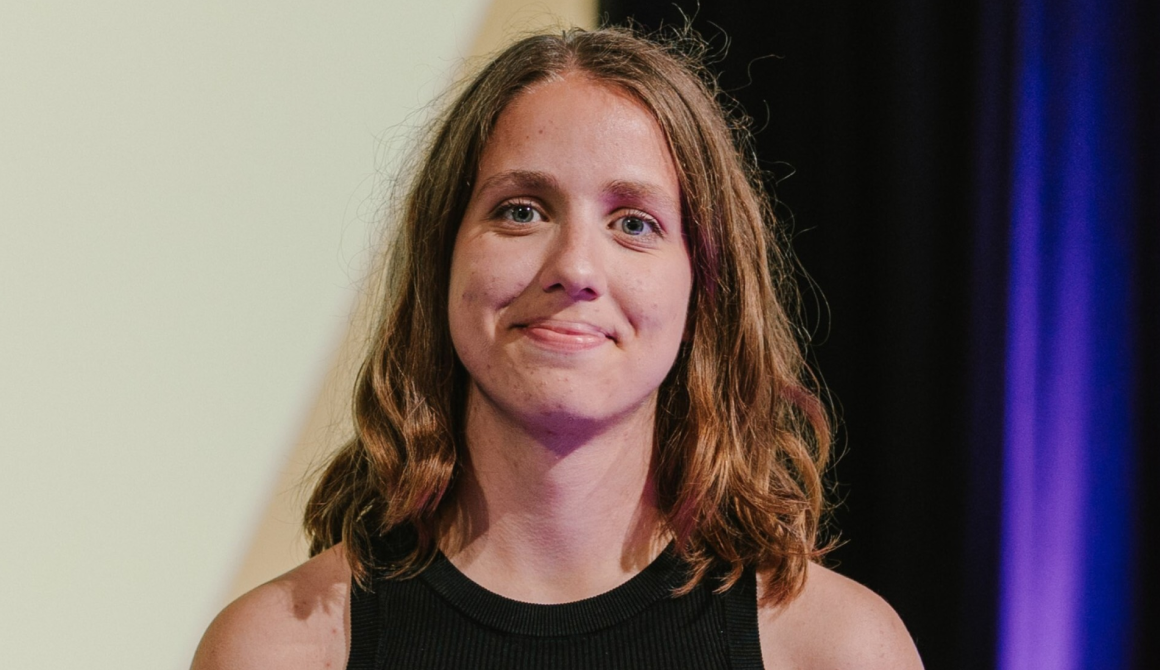
Sara Vaccino, a Laidlaw Scholar at EPFL, on making software bug-finding tools more trustworthy through Magma.
Research Title
Maintaining Magma: A Ground-Truth Fuzzing Benchmark
Please briefly outline what your research is about, and its potential real world impact.
With the rise of digitalization, software has now crept its way into our lives, be it on our phones, in our banks, or even in airport security systems. This omnipresence, however, suggests that one failure somewhere might have serious consequences, from financial errors to critical systems outages. To prevent such failures, commonly known as bugs, many tools have been developed to detect software bugs before they can cause harm. As a result, a whole industry of automated bug-finding tools has emerged, each claiming to be more effective than the last. Comparing these tools, however, turned out to be more difficult than expected - especially without agreed-upon markers.
My work this past summer was focused on Magma, a benchmark used to evaluate a specific type of bug-finding tool. The need for Magma arose from a lack of a fair and consistent way to compare these tools at a time when the market for such tools was rapidly growing. While Magma was not the first benchmark, it took a different approach by using real, previously existing (now fixed) bugs in its evaluations rather than artificially constructed ones. The catch, however, was that Magma never verified whether its bugs could still be triggered.
My work tried to address this issue by finding concrete proof indicating that each bug used by Magma could be triggered. By the end of the project, concrete proof had been established for 7 bugs. This helped make Magma’s evaluation more trustworthy, ensuring that comparisons are as fair and meaningful as possible. In the long run, this kind of rigour is what allows the best tools to rise to the top and, ultimately, what helps keep our software safer.
Where did your passion for this research originate? How does your personal story feed into it?
I have been interested in computers for as long as I can remember. One of my earliest memories is seeing my dad run a small program on his computer. I remember thinking he was doing some magic: by typing some simple commands, he could make the screen come alive. Now I know better, of course, but if I’m honest, what can be achieved through code does still feel surreal at times.
This curiosity is also what led me to join a club back in high school that allowed me to discover many branches of computer science, cybersecurity being among them. I remember finding it fascinating and being drawn to the idea that this work exists to protect people and users. Yet, cybersecurity always seemed to be a field driven purely by industry to me. For a long time, I struggled imagining what research in this space could look like.
This is why, when I stumbled upon the lab I have ended up working in while searching for a placement for the summer, I thought it to be the best opportunity to actually experience this world firsthand. I plan to specialize in cybersecurity at Master’s level, and this experience could confirm what I was already suspecting: that this is the direction I want to go. Moreover, it has also given me a clear idea of what a future in it might look like.
What is the most memorable moment from your Laidlaw scholarship experience so far?
The most memorable moment of my Laidlaw journey so far has to be the Laidlaw Scholars Annual Conference. Meeting and exchanging with scholars from various countries and universities was incredibly enriching. Coming from EPFL, a purely technical university, discussing with scholars from other fields felt like a breath of fresh air. These interactions inspired me to look into ways I could leverage my interest and passion for technology to address social challenges. It was also at this conference that I actually realized how incredibly diverse the Laidlaw community is in terms of experiences and interests. It was truly satisfying to finally meet the people behind the names on the screen and discuss our journeys.
What made this weekend even more rewarding was presenting my research. My research was so niche that finding interested people within the computer science community was already hard enough. I was thus not expecting much in terms of interest in my work. Nevertheless, I was able to have some nice exchanges with people, and even had the opportunity to present my work to an editor from Taylor and Francis. Being selected as a poster for publication was an absolute honor.
What is the biggest challenge you came across in your research and leadership journeys so far, and what did you learn from it?
The biggest challenge I had was dealing with the mental toll research can have on you. Research can be incredibly isolating at times. Unlike coursework, where struggles are shared and the work to do is clear, in research, there is no fixed path: one day you make a huge step forward, only to be stuck for weeks. Each project can look completely different and demand other things, making it complicated to share with others. This has often made me reluctant to ask for help, as I did not want to seem lost.
This unpredictability has also made me experience self-doubt, especially when I felt like fellow interns were contributing more to the lab. Watching others appear to thrive while I felt stuck made me forget that our backgrounds were not the same. It made me question whether I truly belonged there.
All this has taught me patience. I stopped expecting immediate results and got comfortable with uncertainty. I also learnt to ask for help earlier: holding back only costs time, and knowing your limits is never a sign of weakness. Most importantly, I have learnt to recognize when I start comparing myself to others, and I now try to refocus on my own progress instead.
What does it mean for you to be a Laidlaw Scholar?
To me, being a Laidlaw Scholar means being part of a global community of curious and driven people. The people I have met through this programme constantly make me want to push myself further, be it academically or even personally. Only with fellow scholars could I have walked hours through a downpour or spontaneously planned a trip to London after all.
Becoming a Laidlaw Scholar was one of the best things that could have happened to me at university. I have always wanted to use what I learnt to give back to the community, but I never truly knew how to. I now realize that it was fear holding me back. Through this programme, I was able to acquire the tools and, most importantly, the confidence to take action.
Which particular leaders inspire you the most and why?
The leader who inspires me most is Julio Velasco, current head coach of the Italian Women’s Volleyball team, and the man who led Italy to its first Olympic gold medal. In 2024, he took a team that, despite its incredibly talented players, failed to secure a spot in the Olympics, and went on to win everything. What sets him apart from other world-class coaches, however, is how he wins games: with patience, stability and trust in his players.
His philosophy is also what inspires me the most. He does not believe in winners and losers in the conventional sense. To him, hard work will always be more important than victory, and therefore, a player who gives their all is always a winner to him. This mentality separates the person from the outcome, and in a world where people are too often reduced to their results, it is exactly the leadership that we need. The trust and compassion he shows towards the players creates an environment where people feel safe to try, fail, and grow.
Briefly describe a scene from the future you are striving to create.
While this might not sound like the most ambitious life goal, when I think of where I see myself a few years from now, I picture a nice summer evening. I am with friends from back home, whom I still try to see regularly, despite everyone having moved all over the world. Besides my full-time job, I work with an organization bringing science and technology closer to everyone regardless of background, gender, and social status. I do not know where I will end up yet, but I know I want to keep doing this, having had the chance to see the benefits of such work firsthand.
Quick-fire Questions
📺 Currently Binging:
The Big Bang Theory (mandatory end-of-semester sitcom rewatch).

🎧Current Podcast Obsession:

🎶 My anthem:
📚 My top book recommendation:
The Midnight Library - Matt Haig

🌈 Something that made me feel joy recently:
Playing beach volleyball by the lake and going on a hike with my friends
🔦 Discover more Scholar Spotlights:
⚡️ Harshita Jain, a Laidlaw Scholar at Oxford Saïd Business School, on closing the gap between impact and investment for women-led enterprises.
⚡️Brandon Julio Hadisaputro, a Laidlaw Scholar at The University of Hong Kong, on turning nitrogen pollution into fertiliser using electrocatalysis.
⚡️ Ishna Tripathi, a Laidlaw Scholar at Trinity College Dublin, on searching for hidden moons in the cosmos using machine learning and data from the James Webb Space Telescope.