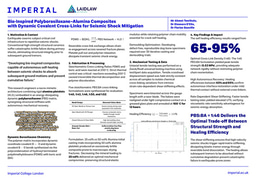
The 2023 Kahramanmaras earthquakes revealed a catastrophic blind spot in modern civil infrastructure: standard building materials survive the first blow only to shatter during subsequent aftershocks. By mimicking marine nacre and deploying dynamic borosiloxane chemistry, we can build materials that absorb seismic kinetic energy and heal between tremors.
The Tragedy of the First Survivor: Lessons from Kahramanmaras
On the cold morning of 6 February 2023, the East Anatolian Fault ruptured with unimaginable violence. At 04:17 local time, a magnitude 7.8 earthquake struck southern and central Türkiye and northern Syria, ripping through towns, cities, and regional transportation arteries. While emergency rescue teams were scrambling to pull families from collapsed apartment towers, the earth convulsed again. Just nine hours later, a second, separate earthquake of magnitude 7.7 struck sixty miles to the north along the Çardak fault.
Over the next three months, more than 30,000 recorded aftershocks reverberated through the damaged provinces. Crucially, over 540 of those tremors exceeded magnitude 4.0, shocks energetic enough on their own to damage structures. United Nations development experts estimated that over 1.5 million people were left homeless in a matter of days. Tens of thousands of residential apartment complexes, municipal hospitals, schools, and transit bridges collapsed.
Yet, when structural engineers, forensic investigators, and disaster relief teams surveyed the rubble across Antakya, Maraş, and Adıyaman, they documented a consistent, haunting failure pattern. Thousands of multi-story residential blocks had not fallen during the initial 7.8 main shock. They had withstood the opening ground motion, protecting the families inside. But those buildings collapsed hours or days later during moderate aftershocks that an intact structure would have survived with minimal cosmetic damage.
This phenomenon exposes a structural vulnerability at the heart of modern earthquake engineering. Conventional structural materials, high-strength concrete, masonry mortar, and load-bearing ceramics, are designed around a philosophy of static strength and stiffness. They are engineered to hold up immense vertical loads and resist lateral sway through sheer brute force.
However, these materials possess an unavoidable physical flaw: extreme brittleness. When subjected to the severe ground accelerations of a major earthquake, they absorb energy by forming millions of microscopic cracks throughout their internal matrices. The material survives the initial tremor, but its internal structural integrity is severely compromised.
In conventional construction materials, microcracks cannot heal. Instead, they remain embedded within critical joints, column collars, and foundation interfaces as permanent, microscopic stress concentrators. When an earthquake swarm strikes, bringing hundreds of cyclic tremors over days and weeks, ground energy concentrates directly at the sharp tips of those internal flaws. With each subsequent tremor, the cracks rip further through the bulk material, eventually causing catastrophic structural collapse without warning.
The United Nations Sustainable Development Goal 11 sets an urgent global mandate: to make cities inclusive, safe, resilient, and sustainable. Yet, as massive reconstruction campaigns begin across southern Türkiye, standard building plans continue to rely on the exact same material systems: traditional concrete and unyielding cementitious mortars. We are rebuilding active earthquake zones with materials that accumulate microstructural trauma until they fail.
If we are to construct truly resilient cities, we must move beyond passive resistance. We need structural materials that behave like living biological tissue, materials capable of instantly stiffening to absorb violent ground motion, and then autonomously healing their internal microcracks in the calm intervals between seismic shocks.
The Physics of Fragility: Concrete and the Flat R-Curve
To understand why conventional infrastructure fails during earthquake swarms, we must look at the mechanics of how materials fracture. In materials science, crack propagation resistance is described by a property known as the Crack Resistance Curve, or R-curve.
The R-curve plots a material’s fracture resistance against the physical length of an advancing crack:
- Flat R-Curve Behaviour (Brittle Materials): Traditional unreinforced concrete, standard ceramics, and brittle mortars display a fundamentally flat R-curve. This means that the amount of energy required to drive a crack forward remains completely flat as the crack grows. Once an initial seismic tremor generates enough tensile stress to pop a microscopic flaw open, the material provides no extra resistance. If that level of stress is applied again during an aftershock, the crack zips through the entire component unstably, traveling at acoustic velocities until the structural element shears in two.
- Rising R-Curve Behaviour (Tough, Resilient Materials): In contrast, highly tough materials exhibit a rising R-curve. As a crack attempts to travel through the microstructure, the material activates physical shielding mechanisms behind and ahead of the crack tip. As the crack grows longer, it encounters exponentially greater resistance. Driving the crack further requires ever-increasing amounts of external energy, effectively stalling crack growth and preventing unstable failure.
The primary goal of our research was to replace the flat, brittle fracture behaviour of traditional building binders with a bio-inspired, rising R-curve composite capable of autonomous mechanical recovery between tremors.
Nature's Architectural Masterpiece: The Nacre Blueprint
To design a material that reconciles the classic engineering trade-off between stiffness and toughness, we looked to nature's masterclass in impact resistance: nacre, commonly known as mother-of-pearl.
Found lining the interior shells of marine molluscs like abalones and oysters, nacre endures continuous physical pummelling from wave-tumbled rocks and predatory crab claws. Remarkably, nacre is composed of 95% aragonite by volume, a crystalline form of calcium carbonate chemically identical to ordinary, fragile school blackboard chalk. Drop a stick of chalk onto a pavement, and it shatters. Yet, mother-of-pearl is roughly 3,000 times tougher than the mineral from which it is built.
Nature achieves this mechanical triumph through an ordered "brick-and-mortar" micro-architecture:
- The Bricks: Microscopic, polygonal aragonite tablets approximately half a micron thick are stacked in layered, overlapping tiers.
- The Mortar: An ultra-thin, continuous layer of elastic biopolymer proteins fills the narrow gaps between the mineral bricks.
When an external impact strikes the shell, nacre prevents cracks from propagating straight through:
- Tortuous Crack Deflection: When a crack initiates, it cannot slice through the rigid mineral bricks. Instead, it is forced to deflect along the compliant polymer boundaries, travelling a meandering path that drastically increases the energy needed for propagation.
- Interfacial Friction: Microscopic bumps and mineral asperities on the platelet surfaces interlock as tablets slide past one another, dissipating kinetic energy directly as heat.
- Extrinsic Toughening and Bridging: Behind the advancing crack tip, unruptured polymer chains stretch across the opening gap, forming sacrificial viscoelastic bridges that hold the opening crack shut. This mechanism directly generates a steep, rising R-curve.
- Platelet Pull-Out: Energy is absorbed as platelets are pulled out against the frictional resistance of the surrounding organic matrix.
In our laboratory at Imperial College London, we sought to translate this biological design into a synthetic structural composite engineered for seismic shock mitigation. In place of brittle calcium carbonate, we used microscopic alumina platelets (Al2O3) measuring roughly 10 micrometers across. Alumina is an advanced technical ceramic celebrated for its hardness, thermal resistance, and compressive strength, providing our composite with the structural scaffolding required to carry building loads.
However, duplicating the brick-and-mortar architecture is only half the battle. In typical synthetic nacre composites, researchers use standard epoxies or polyurethanes as the mortar. These traditional resins contain permanent, static covalent bonds. Once sheared by an earthquake, those bonds break forever. The material might survive the primary tremor, but its mortar is permanently ruined. To survive thousands of aftershocks, our mortar needed to heal itself autonomously.
Molecular Velcro: Dynamic Polyborosiloxane Chemistry
To create an active, self-healing mortar, we turned to the frontier of supramolecular polymer networks: polyborosiloxanes (PBS).
Polyborosiloxanes are hybrid organic-inorganic polymers synthesized via the high-temperature condensation reaction of hydroxyl-terminated polydimethylsiloxane (PDMS), a flexible, silicone-based oil, with boric acid (BA, B(OH)3):
The reaction is conducted at 200°C, driving off water vapor and weaving a three-dimensional polymer network. Strict temperature control is vital throughout: heating beyond 200°C triggers irreversible thermal decomposition, marked by polymer discolouration, beaker scorching, and loss of dynamic functionality.
What sets polyborosiloxanes apart from conventional rubbers and resins is their dynamic, reversible chemical bonds:
- Dynamic Covalent Boron-Oxygen (B−O) Bonds: Reversible chemical linkages that can undergo associative exchange reactions.
- Dynamic Coordinate Covalent (B←O) Bonds: Dative interactions resulting from the electronic structure of boron. Because boron has an empty p-orbital, it acts as an electron-deficient Lewis acid, readily accepting lone-pair electrons donated by neighbouring Lewis-basic oxygen atoms along the siloxane chains.
These dual-mode dynamic bonds function like molecular Velcro. Unlike static covalent bonds, they do not require high activation energies or external curing agents to reform. Under ambient conditions, they undergo continuous thermodynamic exchange, breaking, shifting, and reconnecting with neighbouring sites across severed interfaces.
Under slow, quasi-static conditions: The dynamic cross-links have ample time to unbind and re-engage. The polymer chains slide past each other smoothly, allowing the material to relax, flow, and self-heal like a viscous fluid.
Under rapid, dynamic impact: When struck by high-frequency seismic shockwaves, deformation occurs much faster than the molecular relaxation rate. The dynamic bonds cannot untangle in time; they lock rigidly in place, instantly transforming the polymer into a stiff, impact-resistant solid.
This rate-dependent behavior provides an ideal protective response for seismic engineering. When an earthquake's high-velocity shear waves strike a structure, the mortar instantly stiffens, securing the alumina platelets to form a protective barrier. Kinetic energy is dissipated through sacrificial coordinate bond breaking, micro-scale friction, and tortuous crack deflection.
Then, as ground motion subsides, the polymer returns to its relaxed, dynamic state. Over the quiet hours following the main shock, thermal motion drives the flexible siloxane chains across any internal microcracks, reforming their dynamic bonds and stitching the material back together before the next aftershock arrives.
The Reality of the Lab: Thirty Iterations of Failure
Academic papers often present scientific research as a tidy, predictable progression: a hypothesis is proposed, an experiment is run, and clear data emerges. In reality, experimental materials science is messy, unpredictable, and defined by relentless troubleshooting.
Our first challenge was optimising the mineral loading. In natural nacre, mineral content reaches 95% by volume. In our initial experiments, we attempted to maximise stiffness by casting composites containing 50% alumina platelets by volume (50 vol%) using ethanol as a processing solvent.
The result was unusable. The 50 vol% slurry formed a thick, chalky paste that contracted unevenly during solvent evaporation, forming macroscopic drying cracks before testing could even begin. More critically, packing 50 vol% ceramic platelets into the matrix trapped the polyborosiloxane chains. Restricted by the rigid alumina walls, the polymer molecules lost the mobility needed to diffuse across crack faces and self-heal.
Through systematic formulation adjustments, we lowered the mineral loading to 25 vol% alumina. This 25 vol% formulation proved to be the golden mean: it provided enough ceramic content to maintain elastic stiffness and crack deflection, while preserving the polymer chain mobility required for dynamic self-healing.
The next obstacle was fabricating reliable, defect-free tensile test specimens. To evaluate mechanical properties on an industrial universal testing machine, samples must be formed into standardised "dog-bone" geometries. These specimens feature wide shoulder tabs for machine grips that taper into a narrow central gauge length, ensuring that mechanical stress concentrates uniformly in the center.
Producing reproducible dog-bone samples from our viscous, ethanol-solvated alumina-PBS mixture proved to be a major hurdle. Over thirty casting and remoulding setups failed in sequence:
| Mould Architecture & Substrate | Observed Failure Mode | Root Mechanism |
|---|---|---|
| 3D Open Mould on Porous Cast | Severe sample tearing during mechanical separation. | Slurry soaked into the micro-porous cast during drying. Interlocking forces tore the fragile composite during demoulding. |
| Open Mould with 3D Plunger System | Slurry leakage and irregular sample cross-sections. | Light consolidation pressure forced the low-viscosity slurry through clearance tolerances, producing severe flashing. |
| Smooth Plastic & Glass Substrates | Capillary leakage beneath mould margins. | The low surface tension of ethanol allowed the solution to seep beneath the unbonded mould edges, distorting specimen dimensions. |
| Grease-Sealed Mould Cavities | Chemical contamination and phase separation. | Vacuum grease successfully blocked fluid leaks, but partially dissolved into the ethanol solvent, introducing impurities into the polymer matrix. |
| Closed Silicone & Glass Wells | Demoulding shear stresses and edge micro-cracks. | Adhesion between the borosiloxane matrix and mould walls induced peeling stresses during demoulding, creating micro-notches along the gauge length. |
| Greased Circular Discs + Razor Profiling | None (Method Successful) | Slurry was cast into a shallow circular outdent on greased glass, dried at 100°C for 12 hours, peeled cleanly, and hand-cut into dog-bones using a precision razor template. |
In fracture mechanics, failure stress is inversely proportional to the square root of flaw size. In tensile testing, even a microscopic edge tear along the narrow gauge length causes premature failure, invalidating stress-strain measurements.
The breakthrough came when we abandoned the idea of casting the composite directly into its final dog-bone shape. Instead of forcing an adhesive slurry into tight, complex mould walls, we developed a two-stage subtractive method. We poured the alumina-PBS solution onto a flat glass plate engineered with a shallow circular out-dent, pre-treated with a micro-thin layer of release grease. The cast was dried in an oven at 100°C for 12 hours, allowing the ethanol to evaporate slowly without forming vapour bubbles or internal voids.
This approach yielded uniform, defect-free circular composite discs. Once cooled, the discs were peeled cleanly from the glass substrate without de-moulding stress. We then used a surgical razor and a custom template to hand-cut standardised dog-bone specimens from the discs. After more than thirty failed attempts, this method gave us the defect-free specimens required for reliable mechanical testing.
Mechanical Interrogation: The 1:46 Sweet Spot
With a repeatable manufacturing protocol established, we set out to answer our core research question: How does polymer cross-linking density affect the mechanical strength and self-healing efficiency of this bio-inspired composite?
In dynamic polymer networks, cross-linking density governs the balance between structural strength and molecular mobility. If a polymer network has too few cross-links, its chains slide past one another under light loads, behaving as a weak fluid incapable of carrying structural weight. Conversely, if a network is over-crosslinked, the chains are locked in place, making the material brittle and preventing the molecular diffusion necessary for crack healing.
To find the optimal balance, we synthesised five distinct stoichiometric formulations of polydimethylsiloxane to boric acid: PBS:BA molar ratios of 1:40, 1:43, 1:46, 1:50, and 1:52. Across these formulations, 23 standardised dog-bone specimens were produced from six master discs.
Tensile characterisation was conducted on a Zwick/Roell universal testing frame running testXpert software. Because polyborosiloxanes exhibit viscoelastic shear-stiffening, cross-head displacement speed was held strictly constant across every run. Pulling samples at different speeds would have altered the measured Ultimate Tensile Strength (UTS), obscuring the chemical effects of the cross-linking ratios.
To evaluate autonomous self-healing, specimens underwent a definitive destructive test:
- Pristine dog-bones were bisected completely across their narrow central gauge length with a razor blade, severing both the ceramic reinforcement and polymer matrix into two separate pieces.
- The halves were realigned under light compressive contact on a greased glass plate to ensure intimate interface contact.
- The samples were placed in an oven at 100°C for 12 hours. This mild thermal input stimulated polymer chain diffusion across the boundary, enabling dynamic trans-esterification exchange reactions between severed boron and oxygen groups.
- Healed specimens were returned to the Zwick/Roell machine and pulled to failure under the exact same parameters as the pristine samples.
Raw force-displacement datasets were exported and processed using custom Python pipelines built with NumPy and Matplotlib, automating the extraction of stress-strain curves, UTS, strain at failure, and healing efficiency:
"Across all formulations, self-healing efficiencies ranged from 65% to 95%. Recovering up to 95% of pristine tensile strength after complete bisection, without fresh glue, chemical catalysts, or high-pressure curing, demonstrated the recovery potential of the dynamic borosiloxane network."
Tensile strength showed a clear non-linear relationship with cross-linking density, forming an inverted-U curve that peaked sharply at the 1:46 PBS:BA formulation:
- The Over-Crosslinked Regime (1:40 and 1:43): Formulations with high boric acid content produced an over-crosslinked network. While individual cross-links were dense, the polymer chains were immobilised. Under tension, stress could not be redistributed through chain relaxation; the material suffered localised brittle fracture, yielding low tensile strengths (around 0.20 to 0.35 MPa). During healing, restricted chain mobility hindered thermal diffusion across the cut interface, resulting in wide scatter in healing efficiency.
- The Under-Crosslinked Regime (1:50 and 1:52): Formulations with low boric acid content had too few cross-links to anchor the alumina platelets firmly. Under uniaxial tension, the matrix yielded prematurely via viscous chain slippage, registering lower tensile strengths (0.22 to 0.28 MPa) and failing to transfer load effectively across the ceramic reinforcements.
- The Optimal Threshold (1:46): The 1:46 PBS:BA formulation achieved the ideal mechanical compromise. It delivered the highest ultimate tensile strength of the entire study at approximately 0.53 MPa. This cross-linking density provided a robust network capable of anchoring the rigid alumina platelets and bearing mechanical loads, while preserving the macromolecular flexibility necessary for dynamic bond exchange and autonomous self-healing.
From the Laboratory to Resilient Cities: Feasibility in Türkiye
Developing a self-healing material in an academic laboratory is an important scientific milestone. However, if that material cannot leave the bench to protect vulnerable communities in real earthquake zones, its practical impact remains unrealised. Translating this research into real-world civil engineering in post-2023 Türkiye requires examining local feasibility, supply chains, economics, and policy implementation.
1. Strategic Raw Material Sourcing: The Anatolian Boron Advantage
Advanced composite materials often fail to gain widespread adoption because they rely on expensive, exotic chemical precursors. Polyborosiloxane-alumina composites present a compelling counterexample, particularly for the Republic of Türkiye.
Türkiye holds more than 70% of the world’s known boron reserves, managed primarily by the state-owned enterprise Eti Maden. Refined boric acid, the fundamental cross-linking agent in our dynamic polymer synthesis, is an abundant, domestically produced industrial commodity in Türkiye. Rather than relying on expensive, imported speciality polymers, dynamic borosiloxane mortars can be manufactured using local raw materials. Sourcing chemical precursors domestically lowers material costs, protects supply chains from international shipping disruptions, and supports local economic development during large-scale urban reconstruction.
2. Targeted Structural Implementation
Replacing every cubic meter of concrete in a twelve-story residential tower with bio-inspired ceramic composites is neither economically feasible nor mechanically necessary. Instead, these materials are designed for targeted, strategic placement where cyclic stress concentrations are highest during earthquakes:
- Beam-Column Seismic Joints: During ground shaking, severe shear stresses concentrate at the structural connections between vertical columns and horizontal floor beams. Integrating nacre-mimetic composite collars at these joints provides dynamic energy dissipation during the main shock, followed by autonomous microcrack healing before aftershocks arrive.
- Base-Isolation Damping Pads: Modern base-isolated buildings sit atop specialised flexible bearings designed to decouple the superstructure from ground motion. Self-healing, shear-stiffening composites can be incorporated into these isolation pads, serving as passive shock absorbers that stiffen during high-velocity tremors and self-repair during rest periods.
- Seismic Retrofitting Sleeves: Millions of existing buildings across Istanbul and Anatolia do not meet modern earthquake codes, yet cannot be demolished immediately. Wrapping vulnerable ground-floor columns in prefabricated, bio-inspired composite jackets offers a non-destructive retrofitting method that provides both external confinement and autonomous crack-healing capability.
3. Overcoming the Practical Skills and Construction Gap
A recurring factor identified in the forensic investigations following the 2023 disaster was the variance in on-site construction quality, concrete pouring practices, and rebar installation. Advanced structural technologies must not require fragile, highly sensitive on-site chemistry that can be compromised by local weather or inconsistent mixing.
Our two-stage fabrication process, casting pre-consolidated composite elements under controlled factory conditions, addresses this issue directly. By manufacturing prefabricated seismic collars, elastomeric bearing pads, and modular joint liners in certified off-site production facilities, structural components can be quality-tested before delivery. On-site construction crews can then install these elements using standard mechanical connections without needing specialised polymer chemistry training.
4. Policy Integration and Building Codes
For self-healing materials to transition from academic prototypes to widespread construction, they must be recognised by civil engineering standards and municipal building regulations. Modern seismic codes, such as the Turkish Seismic Design Code (TBDY 2018) and Eurocode 8, evaluate structures based on static strength parameters, displacement ductility, and damping ratios.
Adopting dynamic, self-healing materials requires establishing updated testing standards that quantify multi-cycle performance and healing efficiency over time. Demonstrating that a material can recover 95% of its tensile strength between cyclic loading events provides the empirical foundation needed to draft updated standards for swarm-resistant structural components.
Reflections on Scientific Research and Leadership
Stepping into the laboratory as an undergraduate researcher under the Laidlaw Foundation was an exercise in scientific humility. In university lecture halls, engineering is often experienced as an orderly discipline: formulas are introduced, known parameters are plugged in, and unambiguous answers appear at the back of the textbook.
Real experimental research is fundamentally different. It is an open-ended dialogue with the physical world, where materials regularly defy expectations.
Completing this project required developing comprehensive laboratory discipline:
- Rigorous Chemical Safety: Authoring detailed Control of Substances Hazardous to Health (COSHH) risk assessments, managing high-temperature condensation reactions at 200°C, handling flammable solvents like ethanol, manipulating sub-micron powders inside fume hoods, and properly segregating chemical waste streams.
- Practical Problem Solving: Learning to view experimental failure not as a personal setback, but as essential data. Working through over thirty failed 3D-printed mould iterations, refining release systems, and redesigning our manufacturing approach taught me that engineering persistence is just as important as theoretical insight.
- Data Automation: Writing custom Python scripts with NumPy and Matplotlib to process raw sensor data from the Zwick/Roell universal testing frame, automate stress-strain analysis, and extract tensile strength and healing efficiency metrics across dozens of experimental runs.
Scientific leadership is not about claiming to have immediate answers to complex challenges. It is about having the curiosity to ask meaningful questions, the humility to learn from practical failures, and the determination to keep iterating until you uncover repeatable, reliable results.
As our global climate presents more severe environmental hazards and tectonic faults continue their natural cycles of strain and release, our built environment cannot remain static and brittle. We must learn from the resilience engineered into living biological systems. By uniting the microscopic architecture of seashells with the dynamic possibilities of polymer chemistry, we can help build cities that do not crack under pressure, but heal, adapt, and endure.