Research Abstract: Bank versus Non-Bank Lending and MSME Growth Outcomes in India - Kritvi Kalani
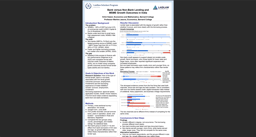
Although India’s micro, small, and medium enterprises (MSMEs) contribute about ~30% of GDP, they account for only 6.3% of all commercial credit. This gap has led to a rapid growth of non-bank lenders, including NBFCs and FinTech companies. Their share of outstanding MSME credit increased from 9% in FY2018 to 39% in FY 2023. Even then, banks continue to be the primary source of MSME credit. This makes it important to understand whether the source of credit, bank or non-bank, is associated with the growth outcomes (including turnover, employment, and investment) of MSMEs. This study argues that while non-bank lenders provide credit access for smaller and younger MSMEs for initial revenue growth, bank lenders support broader development. The study conducts primary surveys of Indian MSMEs to compare bank borrowers and non-bank borrowers in terms of approval speed, application burden, the reasons for lender choice, and three growth outcomes. Lender type showed clear differences in the borrowing process. Non-bank borrowers reported faster approval speeds, lower application burden, and chose non-bank lenders mainly due to speed and limited paperwork. On the other hand, bank borrowers chose trust and lower interest rates as their main reasons for lender choice. Growth outcomes did not differ as clearly: both groups reported turnover growth and new investment, but all non-bank borrowers reported moderate instead of significant turnover growth and less employment growth. The two types are found to serve different enterprises, not compete for the same ones. The findings have implications for government initiatives and RBI policy on co-lending and digital lending regulation.

Hi! I'm Kritvi, currently a rising sophomore at Barnard College of Columbia University intending to major in Economics and Mathematics. Having experienced educational and economic systems in India, the UK, and the United States, I've become fascinated by the factors that drive economic development. My interests lie in development economics, particularly how technology can address inequality and support sustainable growth in developing countries. I enjoy exploring questions at the intersection of economics, data, and social impact.