Research Abstract
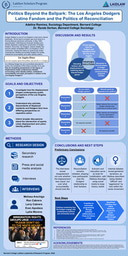
This study examines how the forced displacement of Mexican-American families in 1959 from Palo Verde, La Loma, and Bishop for the construction of Dodger Stadium is recontextualized through contemporary political discourse. Utilizing five oral history interviews with stakeholders and descendants of displaced families, this research examines different perspectives influencing competing visions of community repair. Additionally, the research analyzes social media posts and historical photographs documenting the displacement and efforts to revisit this history. Particular attention is given to how the grassroots organization Buried Under the Blue engages with the Los Ángeles Dodgers' social media presence and how the public comments on Dodgers posts by sharing the displacement's history. The research also analyzes press coverage surrounding recent events and differing reactions to proposed remedies- including Assembly Bill 1950, as well as investigating how different stakeholders define justice and reconciliation and the Dodgers' role in addressing historical harm. The findings reveal a shared acknowledgment of the displacement and its lasting consequences, but significant disagreement regarding appropriate paths forward- from erecting commemorative monuments to providing reparations to the descendants of displaced families. The research also highlights gendered dynamics within these debates, as women advocates are frequently characterized as aggressive in their reparative action demands. This research contributes to broader discussions of displacement entailing not only the loss of land but also the erosion of community belonging, highlighting how Latino identity is deeply tied to place. Ultimately, the study explores the tension between the Los Ángeles Dodgers as a symbol of Latino community pride and the franchise's unresolved connection to a history of displacement, demonstrating how historical injustice shapes debates over recognition, accountability, and belonging.

Born and raised in San Diego, California, Adelina is a pre-law student majoring in Sociology with interests in education policy, immigration law and the intersections of race and political representation. As a Chicana scholar committed to utilizing well-informed research as a pathway to meaningful action, she believes in uplifting overlooked histories as pathways to empowerment. Her Laidlaw research investigates how the forced displacement of Mexican American families from Chávez Ravine to construct Dodger Stadium shapes the relationship between the L.A. Dodgers and Latino communities.
Outside of being a Laidlaw Scholar, Adelina remains committed to public service by continuing to advocate for youth-centered policy initiatives as Governor Gavin Newsom's appointee to the California Youth Empowerment Commission. She has also worked with New York City's Project Rousseau as an Immigration Legal Services Intern and conducted research with the Columbia University Policy Institute, further developing her interests in civic engagement, educational equity and policy reform. As a Barnard pre-law student, Adelina is committed to pursuing a legal career dedicated to advancing representation and justice for historically marginalized communities.