Introduction
For my Leadership in Action project, I spent six weeks in Mexico City volunteering with Genera Territorios, a charity that strives to strengthen communities in Mexico through regenerative solutions, local knowledge, social justice and socio-environmental sustainability. Specifically, I worked alongside three other scholars to develop an offline record-keeping and diagnostic tool focussed on the daily economic lives of women living in rural areas. This involved building an AI-powered chatbot on WhatsApp to deliver a four-module course on financial literacy, alongside accompanying documentation. In this report, I will reflect on how I integrated SMART (specific, measurable, achievable, relevant and time-bound) goals into this process and assess the extent to which this approach was successful.
Specific
During the first week of working with Genera Territorios, the charity assigned us a set of specific 'deliverables' to break down its abstract mission into concrete tasks that we could understand and produce. Initially, our deliverables consisted of a field-ready diagnostic tool, an offline record-keeping and communication tool and visual narrative pieces communicating the project's methodology and impact. This provided a useful structure of what we were expected to achieve, while allowing us flexibility in deciding how to approach each task.
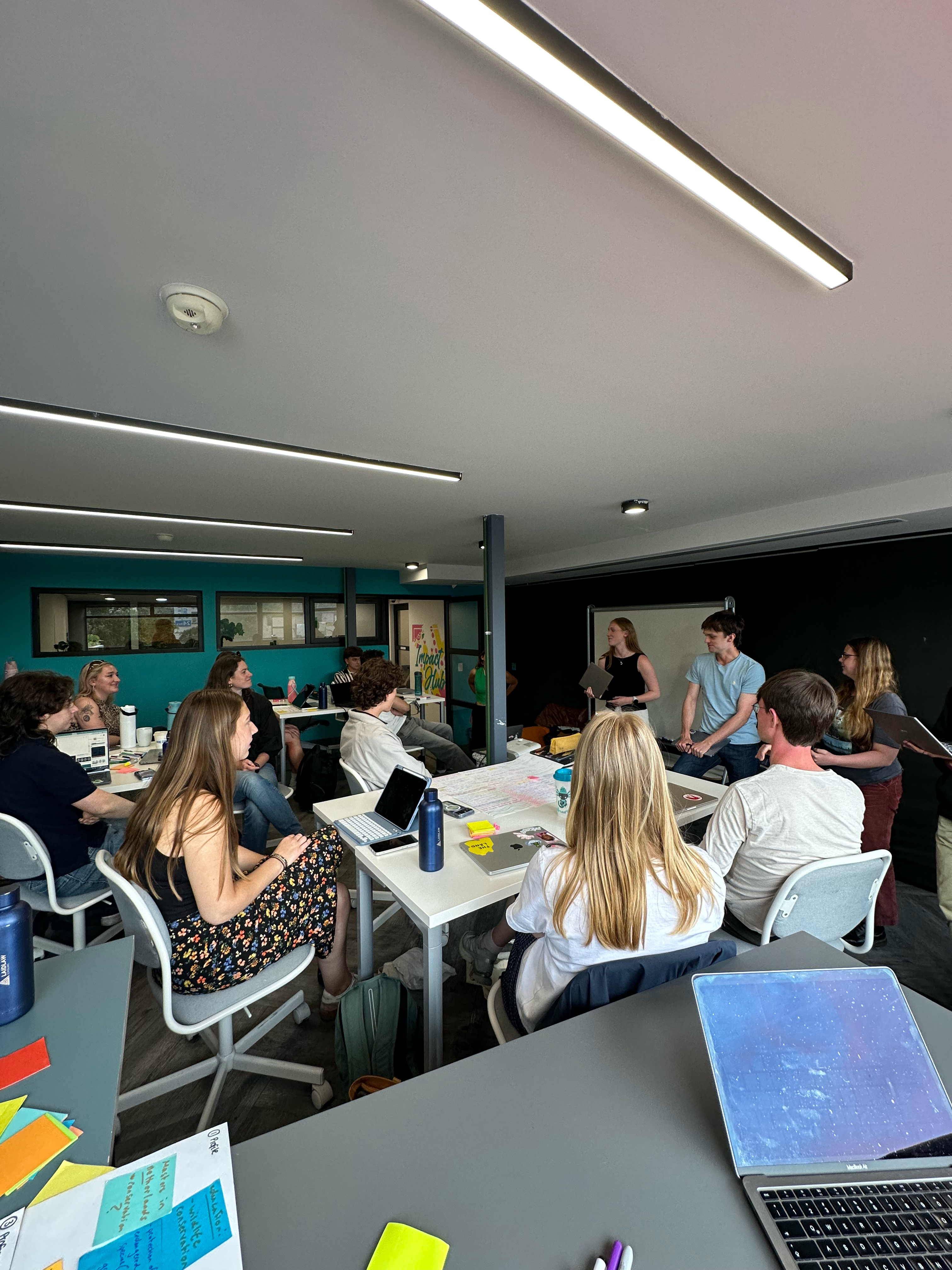
However, as the project developed, Genera Territorios unexpectedly introduced a number of additional deliverables, including an educational curriculum, capsules of questions and exercises, an exit survey, transfer and user guides, a brand profile and a selling pitch. Although these additions ultimately strengthened the project, their last-minute nature made it more difficult to pursue our original goals in a structured way. However, we managed to continue progressing through effective delegation, which granted each of us specific tasks based on our individual skill sets and allowed us to develop a degree of specialisation. For example, I focused on producing the user and transfer guides and the brand profile, which allowed me to develop my ability to convey information clearly and adapt it to specific audiences, while also ensuring that these elements of the project were completed effectively.
Overall, we managed to set specific goals, both for the team as a whole and for individual members, even in the face of challenges in communicating with Genera Territorios and understanding the charity's evolving expectations.
Measurable
The project's most measurable element was the progress and final outcome of our expected deliverables. This could be assessed in two ways: first, whether we managed to complete all of the required outputs; and second, whether these outputs were ultimately approved by Genera Territorios.
In terms of completion, we were pleased to finish almost all aspects of every deliverable. The only exception was that we did not fully integrate the chatbot into WhatsApp. However, this was a conscious decision, as we realised that it would be much easier for Genera Territorios to make final edits and adaptations to the software and code before it was embedded into the messaging platform.
Gaining the final approval of Genera Territorios proved somewhat more challenging. Throughout the project, we worked under the supervision of various members of the charity, with the understanding that we were on the right track. However, towards the end of week five, the CEO reviewed our work herself and expressed reservations about the suitability of some of our outputs. She also provided feedback that dramatically altered expectations and introduced several new deliverables. Following this, we felt apprehensive about our ability to implement these changes and present the revised outputs in the final pitch presentation. However, we worked together to incorporate the feedback and were ultimately very pleased when our final outputs were fully and enthusiastically approved, by not only the CEO of Genera Territorios, but also by colleagues from the wider sector, including the regional head of a branch of Oxfam and the leader of a governmental organisation dedicated to family and community initiatives.
Therefore, I consider our goals to have been measurably successful. Although we did not complete every element exactly as originally anticipated, we worked flexibly when faced with various challenges to produce deliverables that ultimately gained a seal of approval from our partner organisation.
Achievable
In the end, we were able to achieve all of the deliverables set for us by Genera Territorios at the beginning of the project, as well as several additional outputs introduced along the way. In fact, the charity was incredibly impressed and pleased with our final work.
However, throughout the process, we experienced considerable doubts about the project's feasibility. This was due to two main factors. First, changing goalposts, unclear expectations and miscommunication meant that we were rarely confident that we were pursuing the right approach until we received feedback from the charity. At several points, this resulted in us having to return to much earlier stages of the project and reconsider our approach, making our goals feel much less achievable than they had initially seemed. At the same time, this made the final outcome of being able to create functioning deliverables even more rewarding. It was especially gratifying to learn that Genera Territorios was impressed by our chatbot and intended to incorporate the software into its work across different regions of Mexico. Knowing that our work had potential applications beyond the immediate project demonstrated the value of persevering despite the uncertainty we experienced throughout the process.
Another aspect of the project that initially made it seem less achievable was that all of our outputs had to be produced in Spanish. Although another member of our team and I had studied Spanish at school, the other two members had not, and none of us had any experience working in Mexican Spanish. This meant that we relied heavily on AI translation tools, which we were never fully confident in and which added another layer of complexity to an already demanding process. However, over time, we developed an efficient approach to managing this challenge: we used AI translation tools to complete the bulk of the translation, specifying the neutral and Mexican Spanish style and tone that we wanted, before having the final text reviewed by a native speaker. This allowed us to balance efficiency with accuracy and gave us greater confidence in the quality of our final outputs.
Overall, while the project often felt difficult to achieve, particularly because of its changing requirements and linguistic demands, we overcame these challenges through adaptability, effective use of available tools and collaboration, ultimately completing the project to a high standard.
Relevant
The project's goals were incredibly relevant to the context in which Genera Territorios works, because they were designed to respond to the specific needs and circumstances of the target audience. This was particularly evident in the format of our main deliverable, the AI-powered chatbot: WhatsApp and similar messaging platforms are widely used and accessible within the community, making it a practical way of delivering the programme without requiring users to learn how to navigate a new and unfamiliar platform.
In addition, we adapted the chatbot's content in three main ways to make it better suited to its intended audience. First, recognising that some users may have low levels of literacy or limited knowledge of Spanish (due to the presence of indigenous languages), we used clear and simple language and kept sentences short. Second, as financial matters are often considered a male-dominated domain, we adopted an encouraging and empowering tone to support women in engaging confidently with the programme. Third, as financial difficulties can be a source of stress or shame, we ensured that the chatbot remained explicitly non-judgemental and avoided asking for unnecessary personal information. These adaptations helped to ensure that the project was not only theoretically relevant to its intended users, but also practically accessible and sensitive to their experiences.
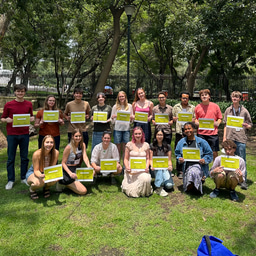
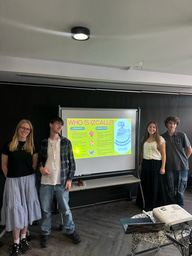
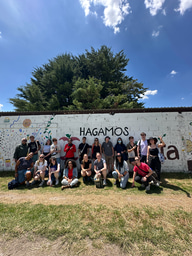
Our visit to the community of San Miguel Teotongo in Iztapalapa, where we delivered a workshop to over 30 attendees based on the methodological pillars of our project, made our project's relevance especially clear. Before the workshop, I had been concerned that we might lack the contextual knowledge, skills and experience necessary to make a genuinely positive contribution to the community. I was also apprehensive about the possibility of coming across as as out-of-touch or patronising. It was therefore particularly rewarding to receive positive feedback from participants and learn that they felt they had gained something meaningful from the workshop. Seeing the ideas and materials we had spent weeks developing translate into a practical activity with members of the community provided a tangible sense of the project's impact and reassured me that our work had been genuinely relevant to the context in which it was intended to operate.
Timebound
In terms of being bound to a six-week programme, our group successfully completed all of our goals within the required timeframe. This sometimes required working outside of traditional working hours, for example in the evening or at the weekend. However, it remained a broadly manageable amount of work. I am particularly impressed that we effectively managed our time to ensure that our final outputs were ready by the end of the programme, especially given the ever-evolving nature of the project, the introduction of additional outputs and the challenges we faced in coordinating our work with Genera Territorios.
In addition, I am pleased that the project will continue beyond the six-week programme, as Genera Territorios plans to further develop our work and roll it out across different regions of Mexico. This will involve translation into regional dialects and Indigenous languages, adapting them to reflect the different economic models present in particular regions, and potentially modifying them to account for varying levels of internet access and connectivity. This possibility gives our work a longer-term relevance and potential impact beyond the timeframe in which we worked on it. It is rewarding to know that our work will not simply remain as a completed project with an impact confined to a six-week period, but will instead provide a foundation that Genera Territorios can build upon in its future work.
I therefore believe that we were successful in making our goals both time-bound and sustainable: we met the demands of the six-week programme, while also producing work that can continue to develop beyond the timeframe of our stay in Mexico City.
Conclusion
Overall, I believe that our group successfully applied the philosophy of SMART goals throughout our project. Despite challenging expectations, unclear communication and the pressure of completing a complex project within just six weeks, we managed to complete all of our deliverables to a high standard and adapt effectively when our original plans had to change.
Reflecting on the project through the SMART framework, I can see how we followed the structure even without consciously being aware of doing so. This allowed us to turn a broad and sometimes ambiguous project into specific, measurable and achievable objectives, while ensuring that our work remained relevant to the needs of the community and achievable within the time available. Therefore, I am happy with how we applied SMART goals in practice. Although the process did not always follow a clear or linear path, I learned that effective goal-setting is not necessarily about rigidly following an initial plan. Instead, it is about establishing clear objectives while remaining flexible enough to respond to changing circumstances, feedback and challenges. This balance between structure and adaptability was ultimately one of the most valuable lessons I took from the project.
Hi! I'm Eve and I recently graduated from Trinity College Dublin with a degree in Middle Eastern and European Languages and Cultures (with German and Turkish). My Laidlaw research project focussed on the challenges facing Vergangenheitsbewältigung in modern Germany, including rising antisemitism, the 2015 migratory wave, subsequent refugee integration and developments in the Israel-Palestine conflict. I investigated how to tackle this issue in a way that appropriately condemns antisemitism and safeguards the wellbeing and integration of Germany's Muslim community. In addition, I considered wider questions surrounding migrant assimilation and national identity.
In my spare time, I enjoy spending time with my friends, sea-swimming, hiking and reading. I also love to travel and am very interested in learning languages and connecting with people from across the world, so please feel free to reach out - I would love to chat about anything project (or otherwise) related!