Project Outline: Telling the stories of Colonial Populations in the French Resistance through self-guided heritage walking tours
Telling the stories of Colonial Populations in the French Resistance through self-guided heritage walking tours
Research Supervisor: Professor Nina Wardleworth.
Aims and Objectives:
Through the creation of self-guided heritage walking tours, this project aims to help the public discover the places where the men and women of France's Internal Resistance lived, worked, socialised and undertook resistance activities. My project will examine how the multiple facets of their identities (such as race, religion, citizenship status) underwrote various decisions: their motivation to join a Resistance group or movement, the roles they were given or assumed, and their interactions with both their comrades and the enemy (French and German). These tours will illuminate the lives of colonial subjects and citizens, whose narratives have been overlooked or discarded, through recorded and written content, photographs and archival images available via the web. My goal is to highlight the eco-systems of colonial populations during World War Two, undoubtedly shedding light on their physical acts of resistance, but more importantly their individual lived experiences too.
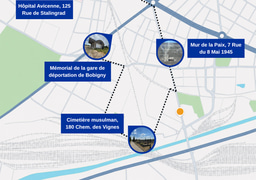
My work will begin by examining pre-gathered materials about the lives and resistance activities of these men and women. These existing materials will be used to construct an engaging and cohesive narrative which will then form the basis for the tour. Having established my narrative, halfway through the research period, I will then travel to Paris where I will gather additional audio-visual and archival material required for the tours. This trip also allows me to test my ideas on-site, visit previous resistance hubs, and therefore begin to map potential routes. I will construct the final output and record audio content on my return to Leeds, using the app Echoes to develop the tours.
Impact:
This project makes an important contribution to the commemoration of the Second World War in France, by diversifying the range of stories depicted. By uncovering a range of narratives, I hope to challenge preconceptions of what the French (Internal) Resistance looks like and emphasise the indispensable role of colonial subjects and citizens. Equally, my research ties in with wider efforts to decolonise knowledge. My specific focus on colonial populations acknowledges their undeniable contribution to France's liberation and seeks to memorialise their experiences.
Collaboration:
I am fortunate that my work this summer will be conducted alongside my fellow scholar, Jamiel Bakari (@Jamiel Bakari). Our project forms part of Nina Wardleworth's ongoing research project to identify members of the French Internal Resistance (in World War Two) who came from the French Empire. I am delighted to build upon the research of previous Laidlaw Scholars who have also worked towards the commemoration and memory of colonial subjects and citizens in the French Resistance, by way of podcasts and digital mapping.
Motivations:
As an undergraduate who studies Modern Languages (French) and English, I have encountered a range of Francophone literature, history and texts during my time at university. As a result, I became increasingly aware of the underrepresentation of colonial subjects, and have since been drawn to this project. I was particularly inspired by the walking-tour element of the project, due to its public-facing and accessible nature, which repositions these overlooked narratives and allocates them a voice in their communities.
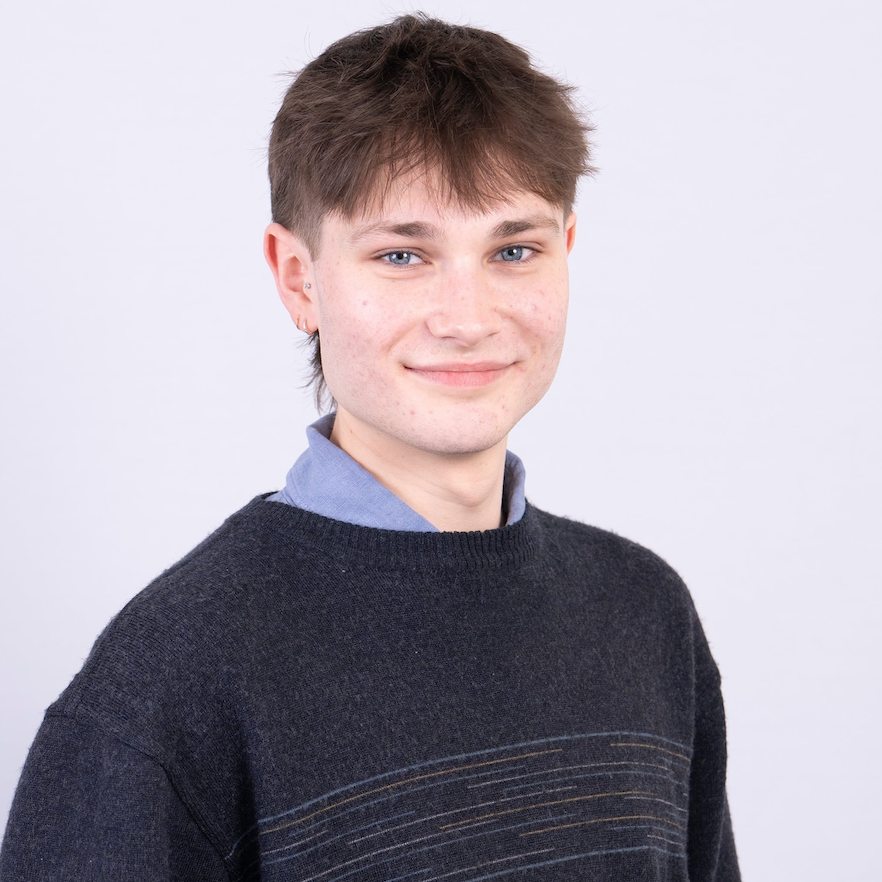
Hello! I'm Thomas, a student of Modern Languages (French) and English at the University of Leeds.
I have just carried out my Summer Research Period on Professor Nina Wardleworth's project: 'Telling the Stories of Colonial Populations in the French Resistance through Self-Guided Heritage Walking Tours'. Having completed this project, I am increasingly interested in a career in government or the civil service, particularly in areas related to culture, heritage, and social inclusion.
As of now, I'm currently on my year abroad in the Loire-Atlantique, France, working as an English Language Assistant with the British Council. My other academic interests include language pedagogy, educational equity and French literature. Outside of my studies, I enjoy running, reading and travelling!
Feel free to reach out if any of this resonates with your own research or interests :)