Project Outline: Designing Educational Experiences to Support the Future Employability of Gen Z and Gen Alpha
Designing Educational Experiences to Support the Future Employability of Gen Z and Gen Alpha
Supervisor: Karen Burland Clark | University of Leeds
The scale of the challenge is significant. In 2023-24 the ISE reported, 1.2 million applications were submitted for just 17,000 UK graduate roles.
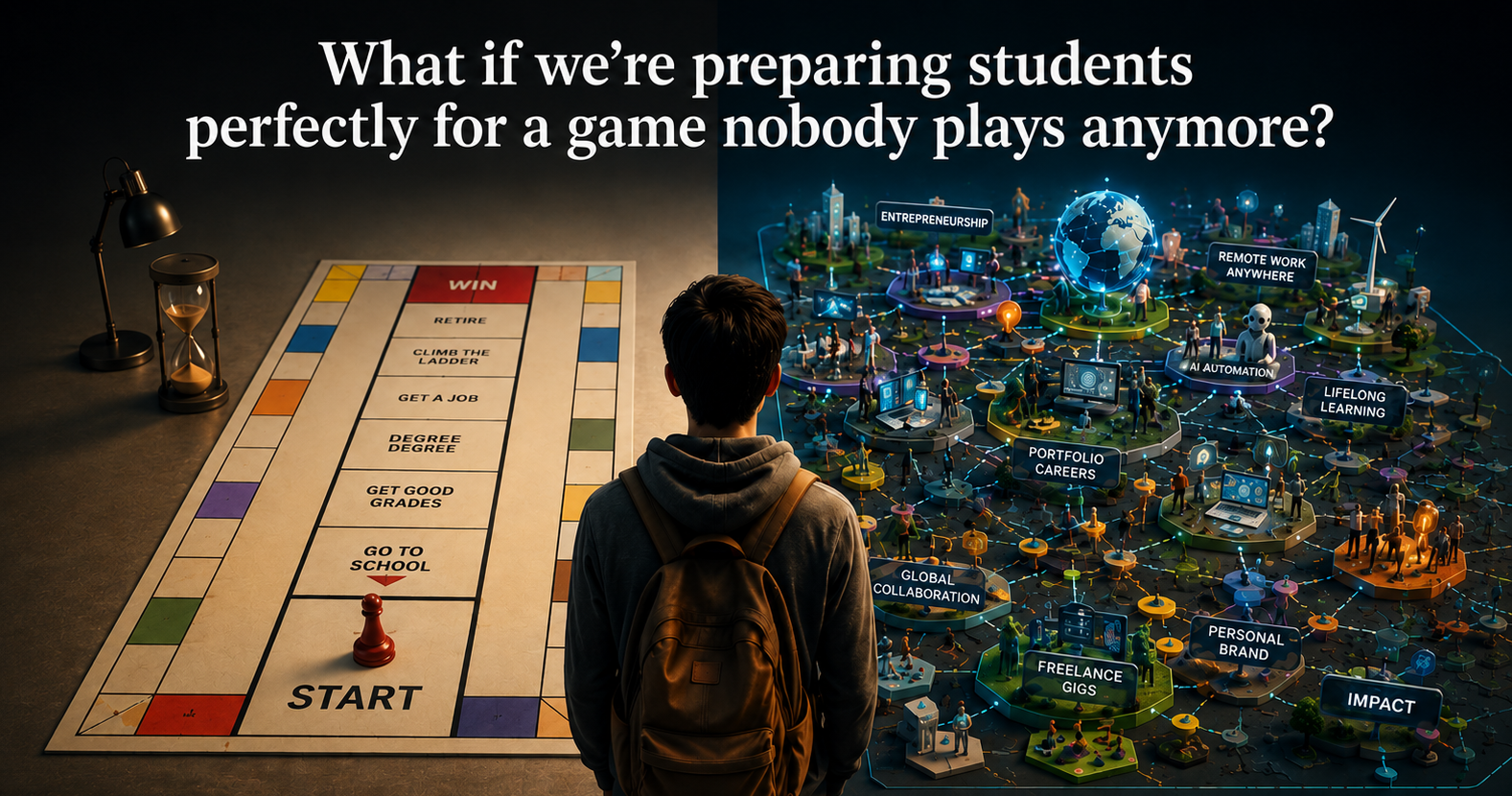
Clearly, the UK labour market is changing fast - faster than education is keeping up. The skills, experiences and ways of working that defined graduate employability a decade ago are not the same ones that will define it now - let alone by 2030 and beyond - and yet the educational experiences available to young people have been slow to respond.
This summer, as a Scholar at the University of Leeds, I'll be researching exactly that gap. My project - Designing Educational Experiences to Support the Future Employability of Gen Z and Gen Alpha - starts deliberately and crucially as an open question: what do these two generations actually need from education to thrive in a rapidly changing world of work? Before drawing any conclusions, it is pertinent to understand what the evidence genuinely says.
Motivations:
What drew me to this project specifically is the inequality dimension. Access to the experiences that build employability: internships, careers coaching, professional networks - is far from evenly distributed. Where you grew up, what school you went to, and your family's socioeconomic connections all shape your chances in ways that are well-documented - but insufficiently addressed. I want to understand those gaps properly, and explore whether there are scalable, equitable ways to begin to close them.
Impact:
The research will combine a structured literature review with primary research at Leeds - via surveys and interviews with students and employers - to build an evidence base that is grounded in reality rather than assumption. The goal is to produce concrete design recommendations that educators, universities and policymakers can actually use.
I'm excited to get started and to connect with fellow scholars doing similarly meaningful work this summer. If your research touches on education, employability, inequality or the future of work, I'd love to hear from you!

Hello! I'm Charlie, an Economics student at the University of Leeds. I'm drawn to questions at the intersection of technology, opportunity, and fairness within employment - and what it actually takes to level the playing field.
My research explores what employability gaps and challenges future generations [Gen Z and Gen Alpha] will actually face, and what educational experiences need to look like to address them. The central question within my research is what various tools could be deliberately designed to close this gap between advantaged and disadvantaged students - given that access to the internships, coaching, and networking that build professional capital remains deeply unequal. Having seen that inequality firsthand, I want this research to produce something actionable - concrete design recommendations for educators and institutions preparing young people for a rapidly evolving world of work.
Outside of research, I'm most myself when I'm playing and connecting - whether that's through football, padel, or a long chess game. I love travelling and new experiences. If you'd like to talk about educational equity, AI in education, or just swap travel recommendations, I'd love to connect.