One of the most important lessons I have learned throughout the Scholarship has been the importance of continuously learning from people with as wide an array of perspectives as possible. My time in Frankfurt Oder really pushed me to expand my knowledge and perception of Russia’s full-scale invasion of Ukraine beyond what I entered the experience with as an American. Conversations with colleagues, whether it was my German co-worker excitedly and assuredly talking about Ukraine’s future EU accession or my Ukrainian colleague talking about his experience trying to see family members over the last four years, were the most valuable part of my LiA experience this summer.
I also came away from my LiA experience with a new appreciation for the impact and value of quiet leadership. Much of my summer, and the summers of my colleagues, was spent quietly working at the computer in front of me, finding, translating, and organizing evidence of Russian atrocities in Ukraine. A room full of people quietly hunched over laptops would not have been my personal first example of what leadership looks like before this summer. That said, every scholar in my office was working on their own project, meant to further the depth of knowledge of Ukrainian studies at a global level. In many ways, their work is a direct counter to the “logic” upon which Putin began the full-scale invasion: these scholars’ work is direct evidence of the distinctiveness of Ukrainian culture and heritage. Every article they write, workshop they run, and talk they give is a protest against the full-scale invasion and the harm it has caused. While leadership can certainly take the form of loudly leading a group toward a goal, this summer showed me that it can equally exist in the form of a room full of quiet PhD students chipping away at a dictator’s lie.
One of the other lessons this Scholarship gave me was the importance of finding a balance in the different positive attributes of a leader. Leaders practice courage and justice and accountability and drive, and they work quickly but are also highly accurate and organized. In a time-crunched environment, those values can feel difficult to maintain in tandem. This summer has helped me understand the importance of being able to identify when a project needs to be slowed down in order to continue executing it at the necessary level of quality. Moreover, this summer has helped me understand the importance of maintaining accountability with myself: I know when my data needs to be more organized or when I need to switch gears on a project, and I have become better at acting on those instincts quickly and effectively this summer.
My summer project also has me thinking deeply about the notion of justice in post-conflict settings. I spent a long time documenting strikes that were life-ending, strikes that sent people to hospitals, strikes that damaged homes and cultural heritage and the notion of safety in a space more broadly. After six weeks of sifting through distinct strike dates and the irrevocable damage each one caused, I still have no idea what “justice” looks like after this war. Justice in the traditional sense, a trial with a perpetrator who goes to jail at the end, may not be an option in this case if the perpetrators cannot be extradited from Russia. Even if they could be, that form of justice would not restore the damage caused. There is certain to be justice in reconstruction, compensation, and, if possible, criminal accountability. But that justice is not promised to restore the communities damaged in this conflict. I think the process of seeking progress is going to be heavily grounded in the programs established to heal communities and the services offered to those who need them, like returning veterans, after the war. Seeing the incredible resilience of my colleagues and of the officials whose posts I documented all summer, I have no doubt that this is achievable.
As an outsider though, I am interested in learning more about what international collaboration to this end will look like. I am particularly interested in this given my German colleagues’ EU accession belief and the recent changes to the U.S. aid and reconstruction apparatus. Particularly as an American, I wonder what our role in post-war justice and progress will be and what steps we can take now to ensure that we have the opportunity to contribute meaningfully. All in all, I am incredibly grateful for this opportunity and everything I learned through this Scholarship.
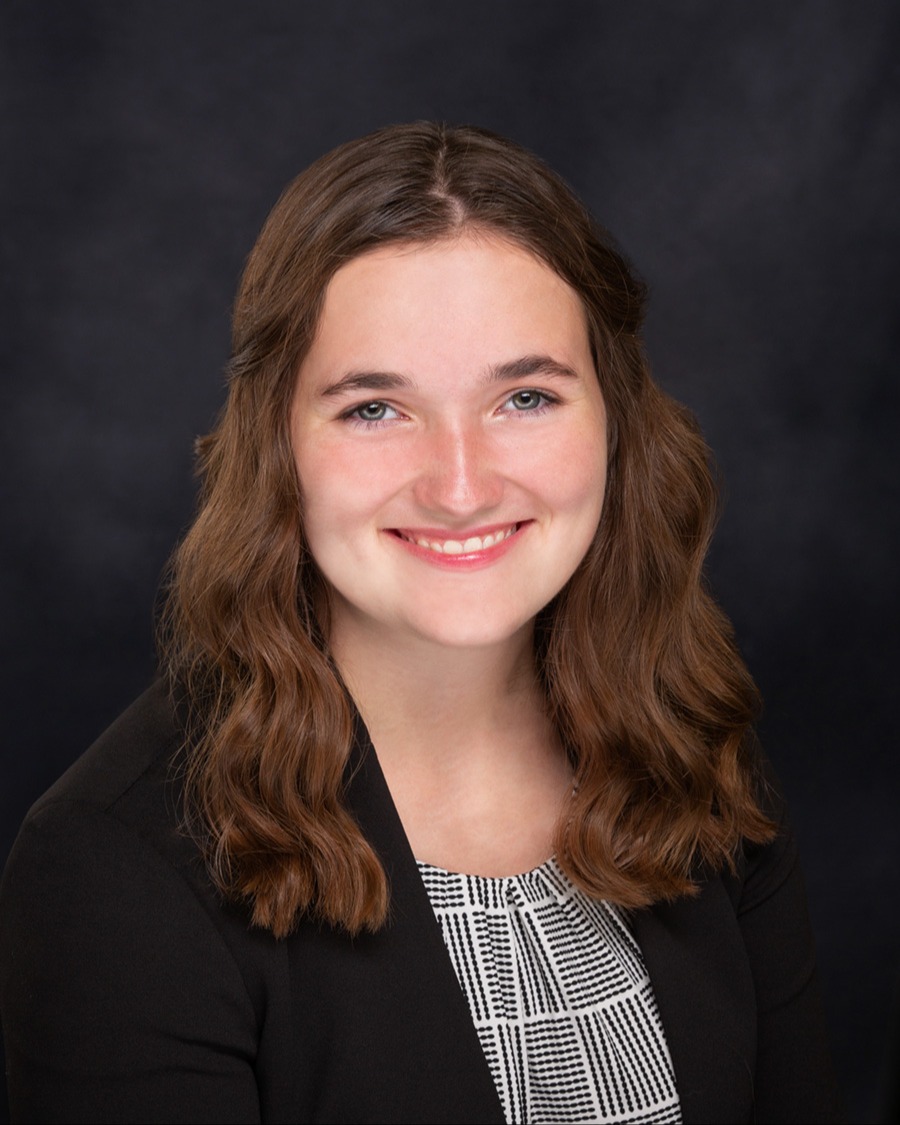
Hi all! My name is Rachel, and I am a junior in the Walsh School of Foreign Service at Georgetown University. I am majoring in International Politics with a concentration in Security Studies. I am also pursuing a minor in Justice and Peace Studies and a certificate in Diplomatic Studies. Originally, I am from Michigan, and in my free time I enjoy painting, swimming, and reading.
This summer my faculty mentored project is titled Geopolitical Analysis for Maps of the Modern World, and I have conducted my research under the supervision of Mark Giordano, who is a Professor of Geography and the Vice Dean for Undergraduate Affairs at Georgetown. The project focuses on Central Asia, and the ways in which the region is increasingly becoming a center of international politics and trade. It explores this phenomenon by investigating increasing foreign interest in the region through mapping. Ultimately, this project seeks to understand the causes, signs, and impacts of increasing foreign influence in Central Asia.