This week, I kept thinking about a question that sounds simple at first: who does water belong to?
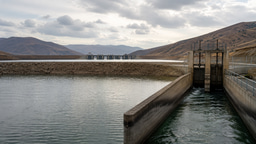
I had a conversation with an agricultural engineer who specializes in agricultural economics, and we talked a lot about transboundary waters. I knew before that rivers like the Euphrates and Tigris crossed national borders, but I had never really stopped to think about what that means in practice. A river can begin in one country, irrigate fields in another, produce electricity somewhere else, support fish farms downstream, and eventually become the subject of an international disagreement.
Water does not really care about the borders we draw.
What made this even more interesting to me was realizing that the same problem exists at a much smaller scale too. Even within one country, water cannot be separated neatly from everything around it. We talked about irrigation, soil, fertilizers, crop choice, energy production, wastewater reuse, and livestock, and somehow every conversation circled back to water.
One example that really stayed with me was irrigation. Many people assume that giving a plant more water could only help up to a certain point and then simply become wasteful. But excessive irrigation can actually increase soil salinity and damage the land itself. And even before thinking about how much water to use, you have to think about the soil texture and the type of roots a plant has. Then you have to think about what was planted there before. Sugar beet, for example, takes nitrogen from the soil, while chickpeas can help put nitrogen back into it. And after all of that, there is still another question: is there even a market for what you are growing?
That part made me smile a little because it felt like we had somehow gone from talking about rivers to talking about whether a farmer could actually make money from chickpeas. But I think that is exactly the point.
This also connected more directly to what I had planned for this stage of my project. According to my original timeline, this week was supposed to focus on analyzing water-use and agricultural data and identifying inefficiencies. But before even getting very far into the numbers, these conversations made me realize how careful I have to be about what I call “inefficient.” High water use by itself does not tell me much if I do not also understand the crop being grown, the soil, the irrigation method, or even the economic reason that crop was planted in the first place. In a way, this week gave me more questions to take into the data rather than immediate answers.
The same thing happened when we talked about hydroelectricity. Producing renewable energy sounds like an obvious good. But rivers also need enough water left in them for fish and other living things. If too much water is diverted for energy production, the consequence can eventually show up somewhere completely different: in food production, ecosystems, or the livelihood of someone downstream.
I think this week changed the way I understand the word “water management.” Before, I pictured it mostly as managing a resource: how much water there is, where it goes, and how efficiently we use it. Now it feels much closer to managing a chain of consequences.
Maybe the better question is not who does water belong to?
Maybe it is how many things belong to the water?
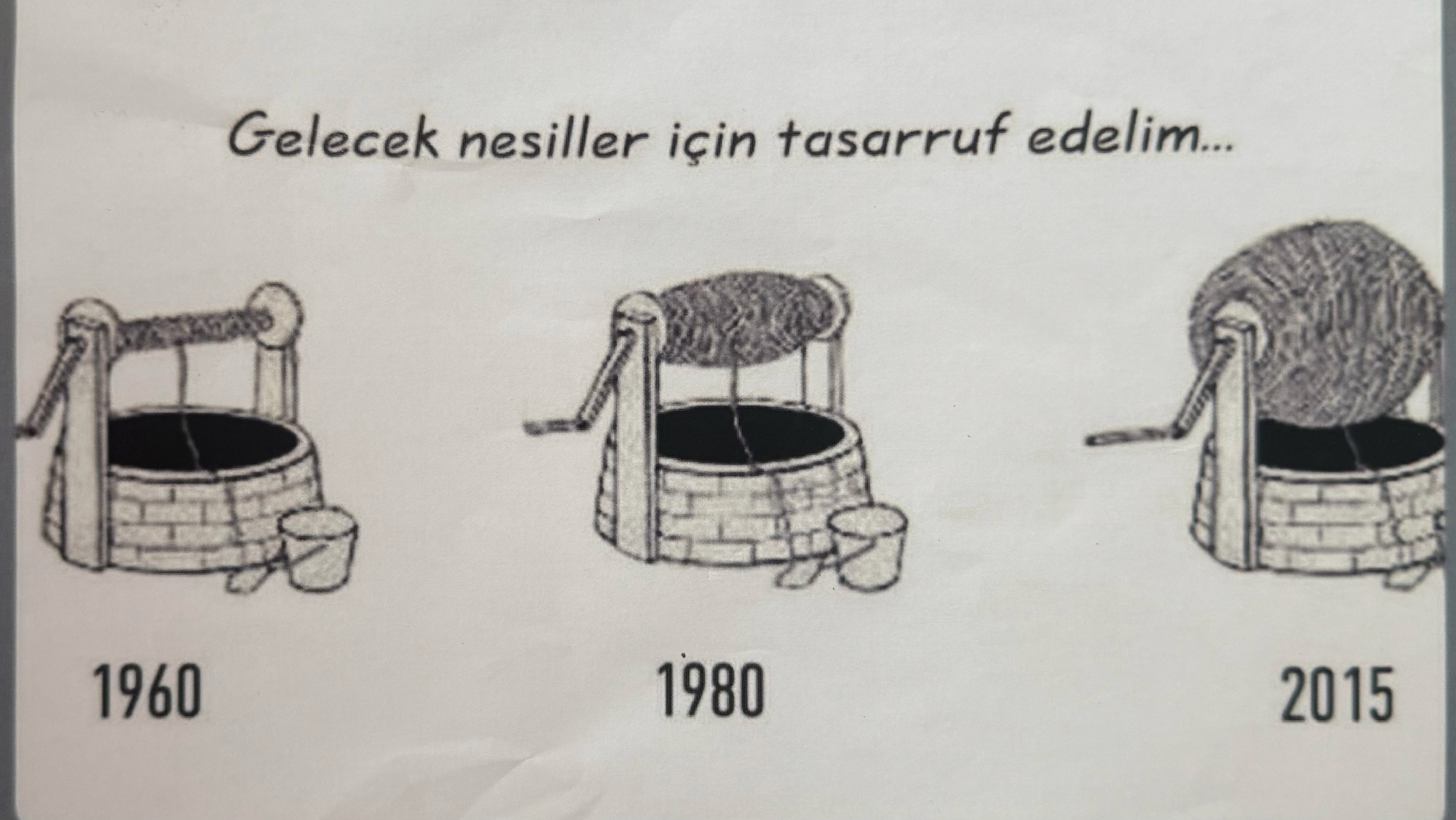
*the poster above, illustrating how the length of rope needed to reach water in a well has changed over time, was given to me by an agricultural engineer.