
I once understood leadership primarily as the ability to take initiative: to identify a need, develop a solution, and bring others together to act. My two summers as a Laidlaw Scholar expanded that definition. Through research with people facing significant communication and mental-health challenges, I learned that ethical leadership is equally about listening carefully, exercising sound judgment, and recognizing the limits of one’s role. It requires the integrity to take responsibility for what is within our control—and the humility to entrust what is not to those better equipped to respond.
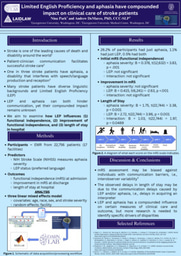
During my first research summer, I studied how limited English proficiency and aphasia can interact to affect stroke care. I also worked directly with stroke survivors in a clinical research setting. Communication, which can easily be taken for granted, was often the central challenge. I had to anticipate barriers without making assumptions about a participant’s abilities and communicate in ways that were both accessible and respectful. This experience taught me that research is not only an intellectual pursuit. Every observation represents a person who has trusted researchers with their time, experiences, and vulnerability. Leading responsibly in that setting meant treating communication not as a procedural detail, but as an ethical obligation.
I carried that lesson into my Leadership-in-Action summer at a youth suicide prevention center in Connecticut. As a research trainee, I contributed to approximately five projects addressing topics including nonsuicidal self-injury among young adults in South Korea, suicide-related disclosure, and the importance of parent–child synchrony in adolescent mental health. Moving between projects strengthened my organization, adaptability, and ability to contribute across different stages of the research process. More importantly, it showed me that leadership is embedded throughout research: in how questions are framed, how teams communicate, how evidence is interpreted, and how the people represented by the data are treated.
My work as a research interviewer made that responsibility especially immediate. Speaking with adolescents experiencing high suicide risk required empathy, composure, and careful attention. I wanted each participant to feel that they could speak honestly without being judged. At the same time, empathy did not mean assuming that I could personally resolve what they were experiencing. When a participant’s responses required clinical attention, the ethical course of action was to involve the on-call clinician, who had the training and authority to respond appropriately. Asking for that support was not a failure of leadership. It was leadership grounded in practical wisdom: understanding the seriousness of the moment, the boundaries of my role, and the responsibility to place a young person’s safety above my desire to be individually helpful.
These interviews also taught me that sustaining service requires boundaries. I sometimes left conversations carrying a profound awareness of a participant’s hopelessness. I learned to acknowledge the emotional weight of that work while protecting my own well-being through reflection, support, and a clearer separation between compassion and personal responsibility. Integrity, for me, came to mean doing everything I could within my sphere of responsibility while accepting that I could not control every outcome. This was not a lesson in detachment; it was a lesson in how to remain present and effective over time.
The summer also strengthened my global mindset. As a bilingual Korean and English speaker, I helped translate a Korean-language questionnaire used in our study of nonsuicidal self-injury. Translation required more than replacing words across languages. It required attention to cultural meaning, emotional nuance, and whether a question would be understood as intended. My multicultural background became a research strength, but the experience also reminded me that cultural familiarity does not eliminate the need for humility. Ethical global research requires collaboration with people who understand the communities being studied and a willingness to question whether our measures carry the same meaning across contexts.
Beyond Laidlaw, I hope to continue working with populations whose experiences are too often overlooked in research and healthcare. As I pursue a career as a physician–scientist, I want to use research as a tool of empowerment: developing questions with communities rather than merely about them, communicating findings accessibly, and ensuring that evidence serves the people who made it possible. I will carry forward a model of leadership rooted not in having every answer, but in integrity, empathy, practical wisdom, and the courage to remain accountable. To act as a global citizen is to recognize that our work crosses languages, cultures, and systems—and to lead with the humility necessary to make that work worthy of trust.
Please sign in
If you are a registered user on Laidlaw Scholars Network, please sign in