LiA Reflection: The Psychology of Your 20’s Podcast
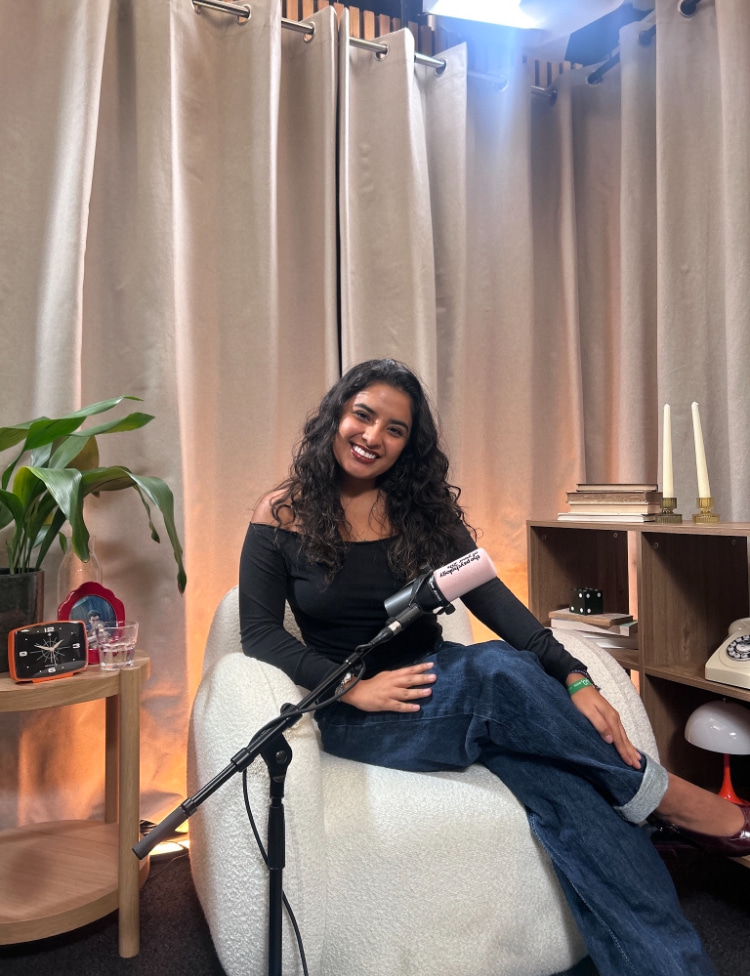
This summer, I had the opportunity to go to London and work with Jemma Sbeg, owner, founder, and host of the Psychology of Your 20s podcast. As an avid listener of the podcast and someone who is extremely passionate about combatting epistemic injustice, I feel extremely fulfilled with the time I spent in London and everything I was able to learn.
Before my LiA began, I thought about the United Nations Sustainable Development Goals that were going to set the stage for my time in London. Upon identifying good health and well being and quality education as the two main goals I wanted to hone in on, I was able to complete projects with that at the forefront of my mind.
The two main projects I completed over my time working with the Psychology of Your 20’s podcast were organizing a listener party for 80-100 people and pitching, researching, and writing a script for a future episode. The listener party was a mode of building community for London’s podcast listeners and presenting an opportunity for the exchange of ideas, shared lived experiences, and celebration of the podcast. I had never planned an event of this magnitude, let alone in a foreign country where I had no idea how regulations or anything of that nature worked. With this came many obstacles, one of the first being the difficulty of finding and securing a venue within the budget. I researched, reached out to, and visited venues all across London talking to various people about logistics and general plans. When many organizers asked me questions I did not know the answers to, I called upon accountability to admit the things I did not know and work with people to find solutions and answers. Although this was incredibly difficult, it built a sense of courage within myself and my communication skills that proved to be vital when arranging other logistics such as book sponsorships and other collaborations. Accountability was a large part of my leadership development as I took ownership for oversight regarding delivery for a sign; I had put the wrong delivery address! After speaking with Jemma and actively problem solving by researching same-day printing options that fit in the budget, I was able to secure the sign in time for the event. In the end, I was able to see my hard work come to fruition as I connected with listeners as they shared their favorite episodes and most remembered research studies. While this was a short-term impact because the event passed, I believe the event was successful not only through its smooth operation, but also in the long-term bonds that were built between listeners/attendees.
As for the second project, the episode for the podcast, I worked with Jemma over the six weeks to brainstorm ideas for the episode and workshop the outline. She supported me in structuring the episode and molding my idea into something that not only reflected my own interests and passions, but adhered to the podcasts’ mission to center research around a common experience and walk listeners through it. I knew I wanted to discuss modes of time and how time is experienced across one’s 20’s but as I researched, I found a myriad of different voices and approaches to the topic- I was overwhelmed and unsure of my direction. I overcame this obstacle by returning to shared experiences and taking accountability for how time plays a role in the lives of me and my peers. I recalled the all too common experience of planning to spend X amount of time on a social media/digital platform only to lose track of time and spend much longer than anticipated. This led me to conduct further research on modes of time distortion and its relation to memory-making in the context of neuroscience and social psychology. I also aimed to diversify my sources by highlighting non-Western thinkers that present distinct frameworks on conceptualizing time in regard to productivity, tenses, and perceptions (John Mbiti!). Working with Jemma to convey research results in simple, relatable language that invited listeners to connect and think beyond Western conceptions of time culminated in a 20 page script and 56 minute podcast episode titled “Why does time start flying in our 20’s?” This project’s long term impact is rooted in its digital presence as it is now available for listening on Spotify and Netflix!
In addition to helping with podcast production tasks, learning about research and writing processes, and getting an inside look to how the podcast navigates international listener/audience interaction, I was also able to attend many events with Jemma. Some of the most notable events include the Australia-United Kingdom Chamber of Commerce’s Young Professionals Reception, live podcast recordings and collaborations with Grace Beverly (owner and host of Working Hard Podcast), and the Crossed Wires festival in Sheffield. In attending these events, I was able to learn how Jemma navigates presenting research through collective lessons and experiences in one’s 20’s to large, in person audiences. Seeing how Jemma exhibited courage when preparing for these events, speaking at them, and interacting with listeners inspired me to hold courage as one of the core tenants of my leadership.
Overall, my summer LiA experience was pivotal to my leadership development and only exacerbated my passion and dedication for combatting epistemic injustice. Working with Jemma and the Psychology of Your 20’s podcast to produce accessible modes of knowledge and contribute to interpersonal connections through digital and in-person means was a deeply fulfilling experience that I will continue to learn from as I grow in my career as an academic and professional. From the fear of sending a cold email to the happy tears that came from my experience, I could not be more thankful to Jemma, the Psychology of Your 20’s podcast, and the Laidlaw Foundation for making this experience possible.