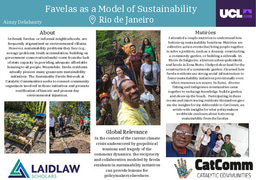
For my LiA project, I went to Rio de Janeiro to volunteer at Catalytic Communities, a local NGO to assist in their work on promoting favelas, or informal urban settlements as a model of sustainability. Despite their stigma as ecologically destructive as they are often built on government protected areas, it may come as a surprise to some that favelas are quite sustainable, and have lots to teach the rest of the world about sustainability through social collaboration. Favela sustainability takes many forms: from gambiarras, everyday makeshift solutions that repurpose existing materials, to mutirões, collective actions that bring the community together to improve environmental conditions. Underpinning these are a strong social fabric and a vibrant culture that keep creative, sustainable solutions in circulation — often out of necessity, due to grueling material conditions and neglect by the formal state.
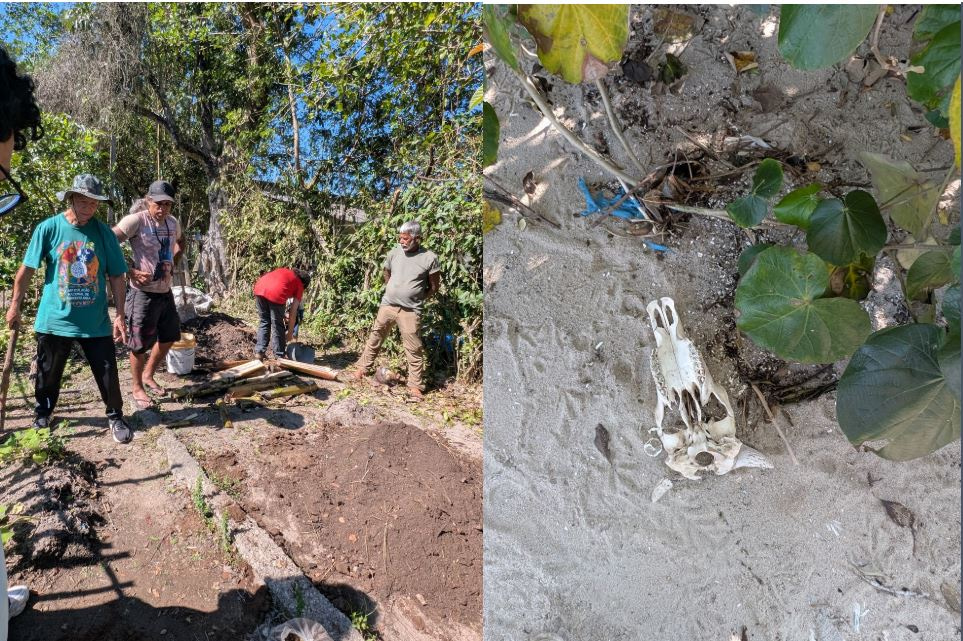
In Morro do Salgueiro, a favela in the North Zone and one of the earliest urban quilombolas, I was fortunate to participate in a mutirão to clear land for a community garden. It was my first time in a favela, and the other volunteers from Salgueiro as well as other favelas warmly welcomed me as I attempted to communicate in broken Portuguese. Ascending near-vertical climbs up irregularly-angled streets of the informal city, the ad-hoc construction of the favela was illuminating. Before this internship, I was unaware that roughly a fourth of the world is living in informal settlements. Approximately a quarter of Rio's population likewise lives in favelas. The sheer scale of people living in precarious conditions is dizzying. Interviewing favela residents, there were problems and strengths unfamiliar to me: the demands of militias, neglect by the government, but also stronger community than I have seen in many parts of the cities I've lived in. It was so different, yet the same recurrences, archetypes of all too human personalities, challenges, and joys. The warmth and friendship offered by the volunteers from the mutirão helped sustain me through the otherwise grueling work of excavating invasive plant growth with heavy garden tools. From the residents from the favelas, I learned that joy in the process of working toward a goal, rather than just the outcome itself, is what makes change truly sustainable.
Leaders of sustainability initiatives in favelas were truly inspiring. They often begin projects on their own time without external resources or support, and gradually gain momentum through neighbors and friends joining. They acted out of what was best for their community and made sacrifices to improve the conditions of the people and environment around them, even if it was necessarily make-shift. Flower pots out of old tires, cleaning out polluted rivers, repairing with leftover “trash” rather than buying new. Creating meaningful change can be unglamorous and taxing, but it has to start somewhere.
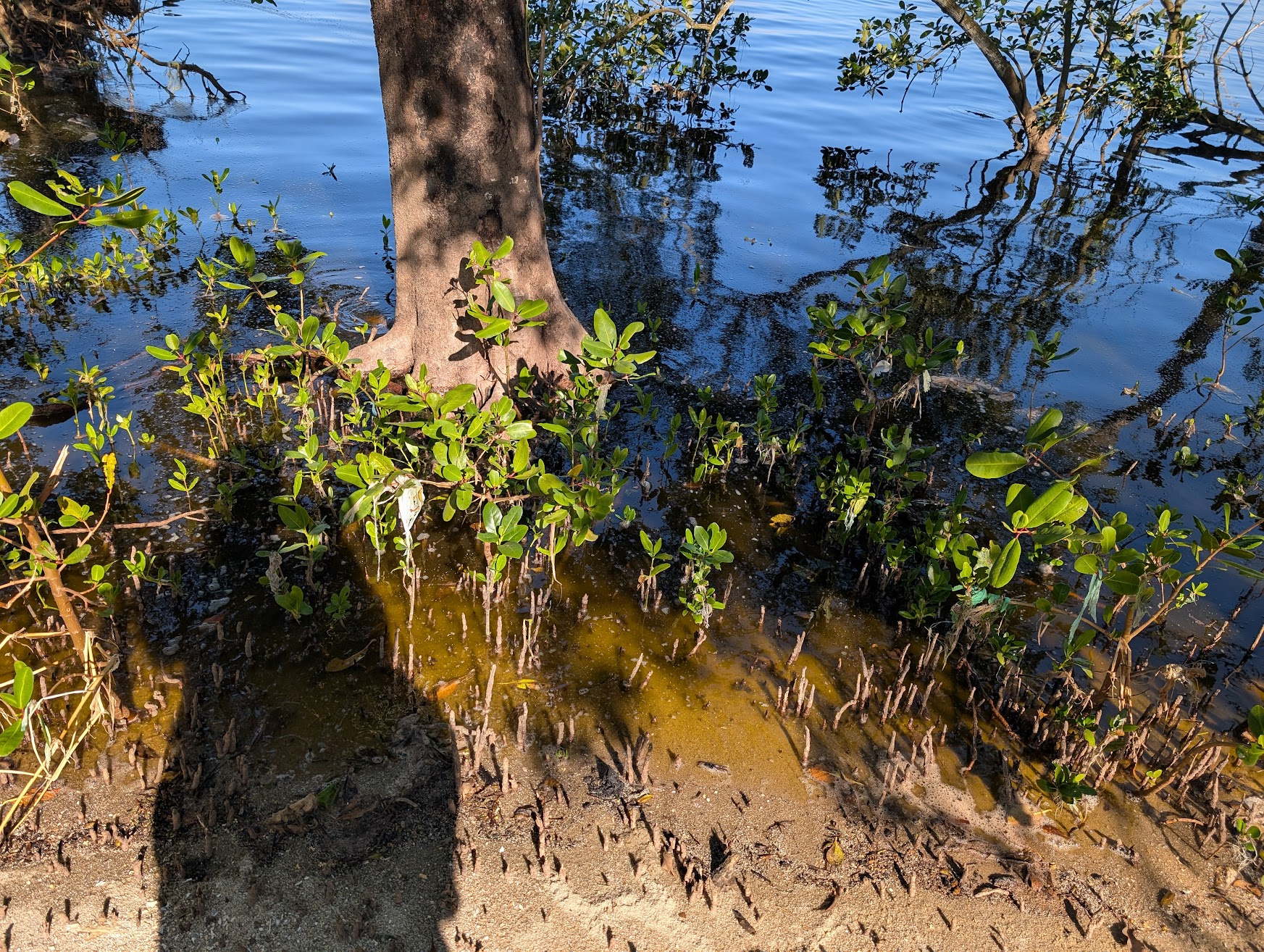
A conversation with a community organizer from an indigenous fishing community really shifted my perspective on creating change. Trying to understand the obstacles to creating change through collective action, I asked him what drives people to show up and dedicate time to mutirões when they themselves may not be benefited by the event. His answer was that beyond people showing up who sympathize with the cause, that due to the interconnected nature of all things, when you improve one area (e.g., cleaning up the mangroves or planting a garden) you are also taking care of other parts of a system. I love this outlook, and it was an important reminder for how I approach things in my own life. On a broader level, I believe many problems we face today are caused by second and third-order effects of other choices, predictable or unforeseen, but typically those that are self-serving or involve cutting some kind of corner to maximize profit. However, this reinforced the idea that the same works in the opposite direction toward solutions or win-win cooperation.
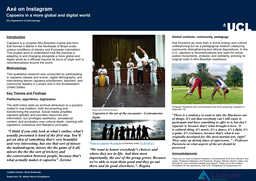
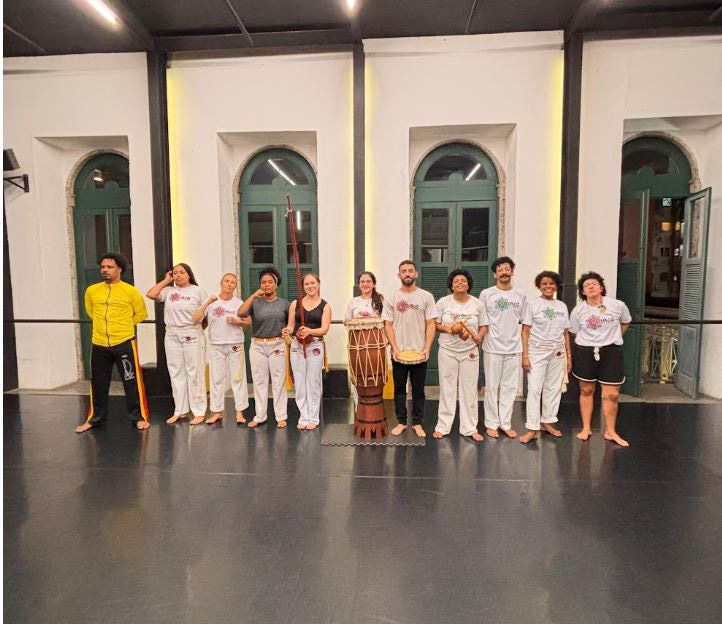
The capoeira community in Rio was another major highlight of my experience in Brazil. I joined Grupo Tribos, who were all very welcoming and kind, as well as attending other events and rodas from various groups across the city. While each group had their own styles and rituals, they were underpinned by the same collective amity, dynamism, and respect. Capoeira also has a code of ethics, one that I believe can bring insights into good leadership: mutual respect, respecting the history of the martial art, contributing to the energy of the roda (circle in which capoeira takes place), and moving in accordance with the flow of the game rather than acting from pure aggression. At the end of my time, it felt like a home I was reticent to leave. Saudades.
Some groups like the Capoeira Angola group I participated in even got involved in the local community, giving out drinks and hot meals to the unhoused population that resided in the park square where we trained. It was beautiful to witness a practice with roots in political resistance extend help to marginalized people failed by the systems that exist around them. There were even instances when someone under the influence of substances made repeated efforts to enter the roda, which was precarious as capoeira is after all a martial arts form. Where many people would have panicked, the capoeiristas maneuvered the situation impressively well, allowing them to enter and play with people who knew how to handle this situation and offered grace despite the unorthodox entrances into the circle. At the end of the night, they explained that this is an open roda for the entire community, and although circumstances can sometimes be difficult in an unequal society and in an area with a large unhoused population, we were, after all, practicing in their home. I thought this perspective was incredibly kind, clear-eyed, and rarely truly extended to people in this enacted and embodied way, even when it is understood intellectually. Especially as a politics student, I think distance policymakers and parts of their constituencies have from the reality of conditions that people wrestle with day-to-day is a central source of disconnect obstructing effective legislation. An essential part of leadership is understanding and further, grappling with the realities of the people in your community, and playing a real, reciprocal and co-creative role in ameliorating it rather than just dictating from above.
This unforgettable trip to Brazil taught me so much, ranging from sustainability and politics in the favelas, to being process-oriented and expanding the boundaries of who we consider as a part of our community. It is only the beginning of my journey, but this experience will continue to inform how I act, lead, and my orientation toward the world.