When I first joined the Laidlaw Scholars Programme at HKU, I used to think of leadership as an innate title—something you either possessed naturally or didn't. Two summers later, after working in a molecular lab in London and managing clinical triage at a grassroots medical center in Sri Lanka, my perception has completely shifted.
Reflecting on these experiences through the Laidlaw 3Cs Leadership Model—Change Maker Values, Character, and Capacities—has helped me understand that leadership is not a static role. It is a tangible set of behaviors that we choose to practice every single day.
1. Change Maker Values: Driven by Purpose and Curiosity
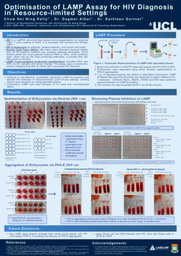
My journey began at University College London (UCL), where I focused on the Optimisation of a Diagnostic LAMP Assay for HIV Monitoring. In the lab, "Change Maker Values" meant pushing beyond baseline academic curiosity to think about real-world equity.
By working to simplify HIV testing using the LAMP technique, our goal was to strip away the requirement for high-cost, complex laboratory infrastructure. We wanted to design a diagnostic solution that could feasibly be deployed in low-resource settings. This taught me that being an ethical leader in science means choosing research questions that directly address systemic inequalities and prioritize human lives.
2. Character: Integrity, Humility, and Leading Without Authority
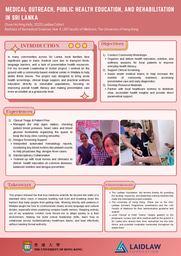
If the lab bench at UCL taught me precision, my six-week Leadership in Action (LiA) project in Wattala, Sri Lanka, built my character. Working on the ground with a community-based medical clinic, I was suddenly dropped into a fast-paced environment where local families faced massive healthcare disparities due to language barriers, isolation, and limited transport.
As a visiting student, I had no formal power or title. This is where true character development happened. I quickly realized that leading effectively in a vulnerable community requires radical humility. It means listening first, respecting the local clinical infrastructure, and learning how to earn patient trust across steep cultural divides. Managing the chaotic patient flow at the vital signs station or translating complex automated hematology reports to screen for acute dengue fever required me to show up with absolute integrity and patience every day.
3. Capacities: Translating Science into Collaborative Impact
The final piece of the framework is "Capacities"—the concrete skills required to turn ambitious ideas into lasting impact. My Laidlaw experience forced me to bridge the gap between "bench and bedside," expanding my capacities in two major areas
• Cross-Cultural Communication - Learning how to explain vital signs, blood glucose levels, and preventative wellness metrics to patients through a language barrier.
• Interdisciplinary Collaboration - Teamwork was essential. I partnered directly with local clinicians and nurses to co-construct and deliver grassroots public health workshops covering common diseases, nutrition, and dengue prevention.