Leadership-in-Action Experience Final Reflections - Hayden Gonzales
This post serves as a final report and reflection for my Leadership-in-Action (LiA) experience, a 6-week internship with Offene Arme, which I completed in Summer 2026 in accordance with the Laidlaw Scholars Program.
When I arrived in sunny Chios, Greece, in late May 2026, I was both excited and nervous for what the next six weeks would hold. Living and working abroad was new for me and I knew that it might be challenging. I was also eager to find out what I would learn and how I would grow. Below are my reflections and takeaways from the time I spent working with Offene Arme, a non-governmental organization dedicated to serving and supporting the refugee population on the island of Chios, and the lessons I learned while residing in an international location.
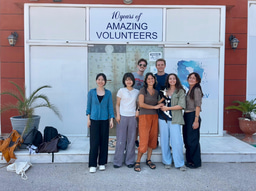
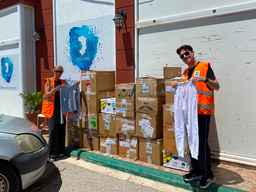
Prior to deciding where and with whom I would conduct my Leadership-in-Action (LiA) experience, I was determined to collaborate with an organization that worked with disadvantaged populations, valued equity, justice, and sustainability, and would offer hands-on and real-world experiences. Through all the cold emailing and interviews, Offene Arme continuously stood out to me because I sensed that working there would build off of my education and previous research experiences through direct action and advocacy. My three years as an undergraduate have incorporated a rigorous study of migration, human rights, and sociology, but a majority of that work was done through discussing, analyzing, and theorizing about these topics. As a volunteer at Offene Arme, my role consisted of working at the Free Shop, Local Shop, and conducting distributions at the Vial Camp, all of which provided hands-on experience and work with vulnerable populations.
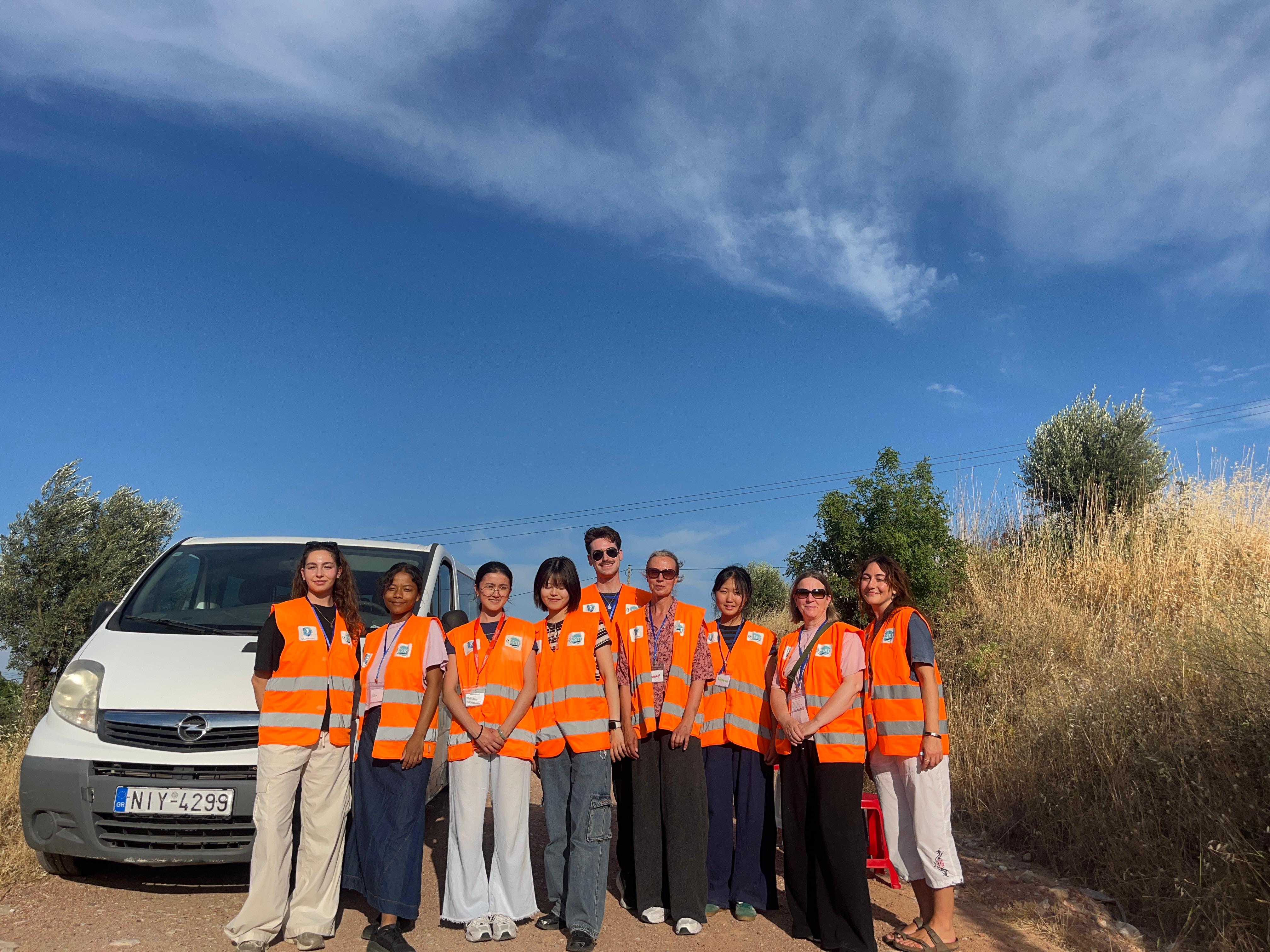
Offene Arme’s journey began in 2015, during the peak of the European Migration Crisis, when local resident and Field Coordinator of Offene Arme, Pothiti Kitromilidi (Toula), heard the cries of children on a beach near her home. With the support of other residents, she formed CESRT (Chios Eastern Shore Response Team), which provided food, water, and clothing to arriving refugees. Over the next few years, as more people arrived on the island, the organization formed a central warehouse to handle donations and distributions, and initiated more community projects. In 2018, CESRT transformed into Offene Arme, with expanded governance and a focus on increasing sustainability and reach. Today, the work continues in an ever-changing political and environmental landscape, and Offene Arme is the only remaining NGO on Chios which continually provides non-food items (NFIs) to asylum seekers and refugees. Offene Arme aims to support two United Nations Sustainable Development Goals, including “Reduced Inequalities” (Goal 10) and supporting “Peace, Justice and Strong Institutions” (Goal 16) through its mission and daily operations. Working at Offene Arme proved to be deeply meaningful because I witnessed the realities of the refugee crisis on the ground. This validated the academic work and research I had done relating to migration such as the many types of push-factors that lead people to move and leave their homes. This humanitarian work also gave me insight about the realities of being a refugee, such as learning the economic and psychological cost of migrating to Greece, and the livelihoods, relationships, and professions that people leave behind to start a new life.
Additionally, my time at Offene Arme involved supporting and expanding other projects, such as sorting the winter and summer clothing stocks, organizing and taking inventory of existing supplies, as well as updating signage and refugee information across the shops. One of the most challenging aspects of this experience was maintaining professionalism when working with vulnerable populations. On a human level, I often found myself wanting to give extra items to people or simply ask them about their life and experiences, but this would be inappropriate and deter from our mission. As an organization, we abide by the principle of “do no harm” which serves to minimize unintended negative impacts in order to not re-traumitize someone and ensure equity and fairness in our services. For example, while one may want to give an extra pair of shorts to a customer, deviating from our item limits might seem like we are favoring certain people, races, religions, or ethnic groups. Privacy and sensitivity are also imperative in this work as openly discussing or inquiring about someone’s life can be triggering. In these situations, I was able to apply my learning from the Oxford Character Project Leadership Training, particularly the “Humanity” and “Justice” pillars of strong leadership. Finding the balance between the empathetic desire to serve refugee populations and the desire to be fair and equitable can be difficult. This was an area I knew I had to develop my leadership. I found that simply explaining why we have our rules to our customers made me more confident in my ability to navigate ethical dilemmas like these, and discern when discomfort or confusion was present between parties.
Similarly, one of the most central dynamics within the Offene Arme team is clear and honest communication. The organization’s roles are structured through field coordinators, free shop/warehouse coordinators, and volunteer roles but in practice we work through horizontal communication. Every morning and afternoon, we had team meetings and debriefs, where we discussed how our days were and any concerns, issues, or suggestions we had. This ensured that everyone was aware of our team goals and any hurdles we might have to work through. One time, I was sorting through a clothing donation and I was given mixed communication by two different coordinators. This was one of those moments in which I learned to self-advocate and ask for clarification so that we did not waste time or sort through the same box twice. I learned that this is a valuable skill for effective teamwork and although it can feel uncomfortable or confrontational, it is crucial for developing confidence as a leader.
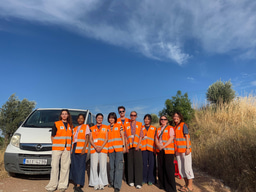
Through working with an international team, I strengthened my collaboration and communication skills alongside a commitment to cultural sensitivity and humility. I enjoyed learning about the backgrounds and stories of my colleagues, who had different understandings and experiences of the migration crises in our world today. Working with a diverse group of volunteers was one of the most valuable takeaways from my LiA, as I made sure to approach this opportunity with curiosity and an inquisitive spirit. I knew that many of my colleagues, especially the older ones, would have wisdom and experiences about human rights work and valuable perspectives that I could learn from. Another unique feature of Offene Arme is that volunteers arrive from all over the world on a sporadic basis, meaning that our coordinators are constantly training new volunteers. When new volunteers arrived a few weeks after I did, I took it upon myself to demonstrate the expectations of the job and even mentor them through their training. As a result, I strengthened my own self-confidence by demonstrating certain skills or on-site tasks. I was able to identify moments when others might need assistance, and have some authority on the team without overstepping the roles of the coordinators.
I also experienced growth in other areas of my leadership. For example, I learned new skills for navigating language barriers and cultural differences. In order to receive clothing, shoes, and hygiene products, refugees and asylum seekers living on Chios set up appointments with us through WhatsApp. While we communicate through English, many of our customers speak little or no English, so I learned skills and strategies to effectively communicate with them, such as using hand signs and body language. Moreover, there was one week in which we had very few appointments due to recent changes in EU migration and refugee policies, which required us to adapt our operations and find other avenues to support the camp’s population. After some group discussion, we decided to hold a distribution for the current residents of the camp to receive additional summer clothes. This reinforced the idea that ground-level crisis responses are essential in the wake of slow-moving and complicated macro-level policy work. Given the complexity and volatility of international migration policy, the flexibility and even creativity of non-profit organizations is crucial for ensuring care and resources are provided to those that need it. The work we do is highly dependent on external forces and polities, but we also must harness the knowledge we have and physical proximity to the crisis to serve and support refugees and asylum seekers.
As previously stated, this experience working in the humanitarian sector provided an opportunity to do hands-on work, close to both the refugee crisis and the impacted populations. Volunteering with Offene Arme requires immense empathy and humility, and I believe that I was able to support refugees and asylum seekers in Chios in a positive and meaningful way. I hope that through this experience I am able to demonstrate to my peers and fellow Americans that refugees and asylum seekers are so much more like us than they may realize. This LiA was important for affirming this perspective and being able to do work that matters and improves people's lives. While it was sometimes tiring, emotional, and demanding, in my opinion, that is something to be treasured and valued because it is often required when working with vulnerable populations. As my flight departed from Chios , I looked down at the open sea below me and thought about how lucky I was to have come here, far away from home, and made close friends who were once complete strangers. I gained new perspectives and also a deeper understanding of human migration.
I would like to send my sincere thanks to the wonderful team at Offene Arme, including Toula and Léna for being so welcoming and kind throughout my time in Chios. I would like to extend my appreciation and gratitude to the Laidlaw Scholars Foundation for their generosity and support, and the Brown University Laidlaw Scholars Program, especially to Grace and K for their guidance and support of my research and leadership development training. Becoming a Laidlaw Scholar has been an amazing opportunity, and I am very grateful for the growth and learning I have experienced in the past two years.
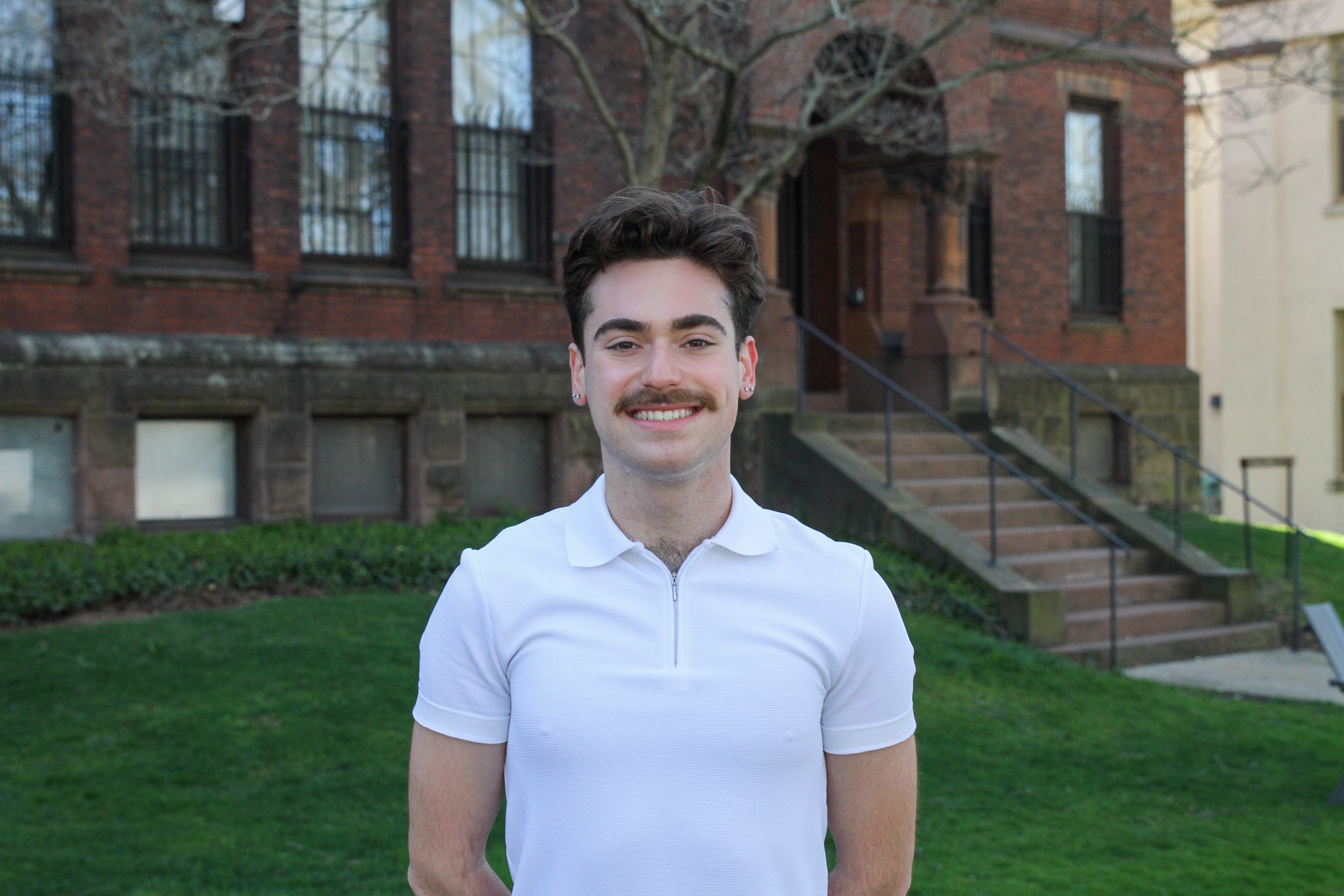
I am a senior at Brown University who aspires to learn and grow as a student and person. Through completing an Urban Studies and International & Public Affairs double concentration, I aim to pursue a fulfilling career that works with people and has a positive effect on the global community. Throughout my time at Brown, I have worked with a variety of community organizations, conducted extensive research projects in the humanities and social sciences, and served as a leader in student spaces that mean a lot to me. These experiences have strengthened my communication, critical thinking, and collaboration skills, while also allowing me to apply my academic learning to real world scenarios and communities. My interests extend across cities and development broadly, and include human rights, transportation, and cross-cultural relations. I am also passionate about migration, affordable housing, and environmental science. I am an intentional leader who values connecting with and learning from others.