Land Is More Than Property
"That is Misha. I talk to her every day. Today she is sad, hidden behind clouds. But, tomorrow, she is going to shine bright," said Mama Cariopo, pointing to this enormous mountain.
"How do you know?" I asked.
"She told me. Through feeling," said Mama Cariopo.
Mama Cariopo is an Xamã that I had an amazing opportunity to talk to. I loved hearing her beliefs and connections to land, and the above is one of my favorite memories I have from my summer.
One of the ideas I kept returning to during my summer was the meaning of land itself. In many legal and economic systems, land is primarily understood as property: something that can be owned, transferred, developed, or assigned a monetary value.
For many Indigenous peoples, however, the relationship with land cannot be reduced to ownership. Territory is connected to culture, spirituality, ancestry, community, political autonomy, and collective identity. Protecting Indigenous land rights is therefore not simply about protecting a physical piece of territory. It can also mean protecting ways of life and systems of knowledge that have existed for generations.
This helped me understand why disputes over mining, infrastructure, agriculture, and natural resources can have consequences far beyond their immediate economic impact. When Indigenous peoples lose control over their territories, they may also lose access to sacred sites, traditional practices, food systems, and relationships that connect generations.
My experience with Indigenous Life made me question how often development is discussed in terms of numbers such as investment, jobs, production, and economic growth, without asking what cannot be easily quantified. Development may produce measurable economic benefits while simultaneously creating losses that no financial calculation can adequately capture or restore.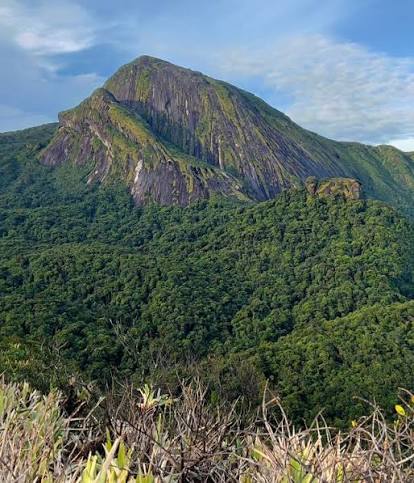

Hi everyone! I'm a rising junior at Barnard College of Columbia University, where I am double majoring in Political Science and Human Rights, and minoring in French. This summer I'm researching about art reinstitution and its ethical and legal components. Some of my other interests include social work, human rights, and law. Please feel free to reach me at cd3442@barnard.edu