Before joining the Laidlaw Scholars Programme, my idea of leadership was quite generic, commonly associated with creating a proactive position or impression, having the ability to work within teams and at the same time manage them, taking risks, leading by example and learning from mistakes. In most cases, this vision or image of the successful leader relied on external perspective and analysis - how well did I contribute to the specific team interaction, what did others think about my performance and the coherence of the specific product or a system I am part of. The focus of great leadership was mainly placed on external ‘we’ and my association with it rather than putting direct attention on myself.
My journey within the Laidlaw Programme helped me to develop and complement the aspect of ‘me’ within a framework of ethical leadership, foremost encouraging the development of my own interests and creation of many various uncomfortable and unnatural contexts where new personal fears and their overcoming were initiated. Being a team player and reflection on my own influence on others were still a big part of my involvement in the programme, however I felt that I expanded my understanding of self-awareness and self-commitment. In particular, I became more integral and attentive to my values, observing them in a constant change and learning how differently they may adapt to various scenarios and how to react to that. Furthermore, I realised the importance of consistency within projects I undertook, learning to be patient and dedicate regularly to observing long-term results. And as a major factor, I became more vulnerable to the self and the world around me, experiencing different cultural frameworks and reflecting on my reactions to them and my own part and presence in representing myself and my cultural essence.
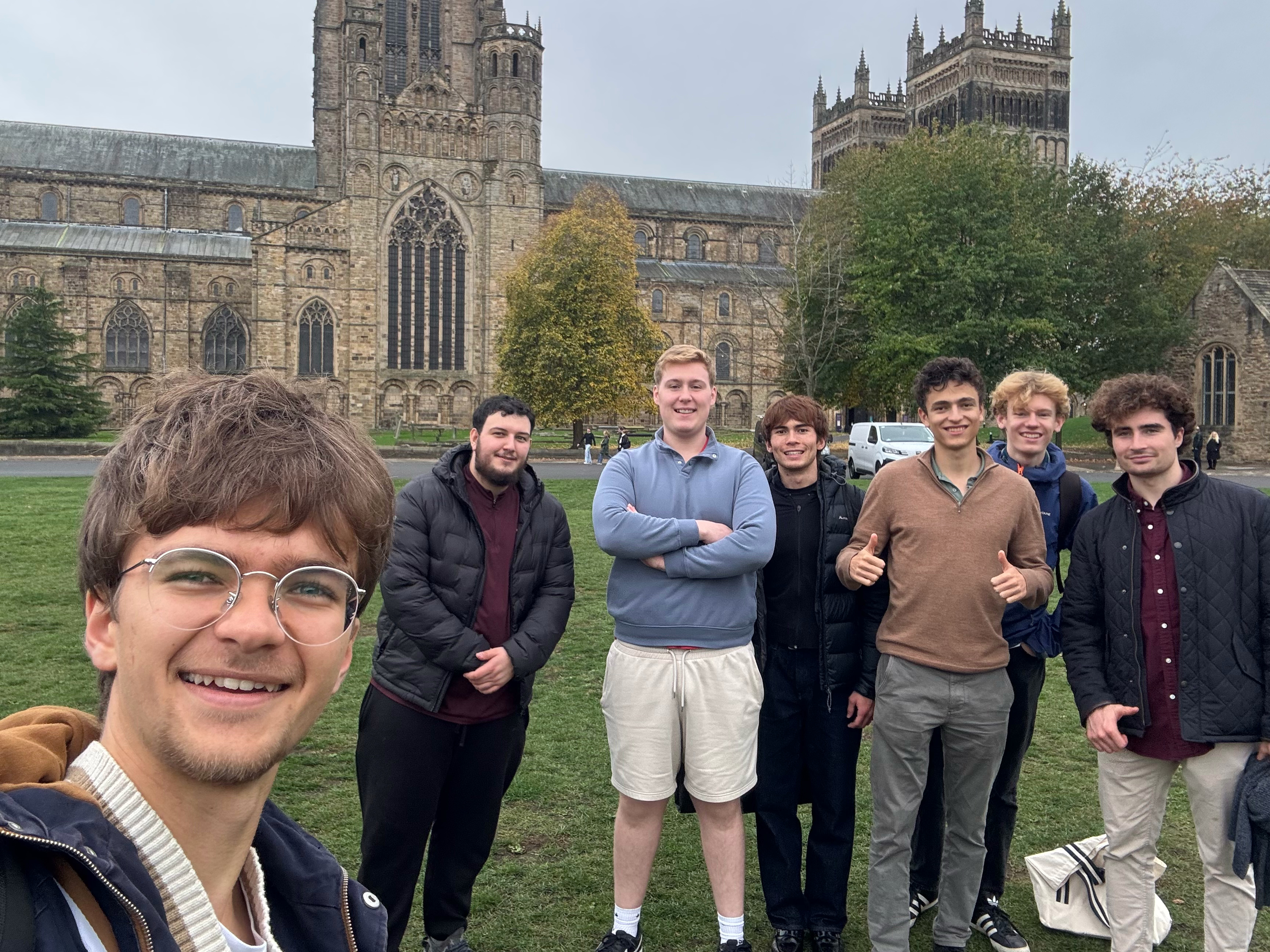
Having attended the Laidlaw Scholars Conference was a great opportunity to exercise such vulnerability, experiencing a variety of worldviews, learning how to receive feedback constructively and how to understand how different contexts and values impact it, as well as being present in such an active ideas exchange environment that motivates and challenges at the same time. The idea of being present in the larger network, such as an online posting platform or smaller local group of scholars, helped to observe my own initiatives and thoughts in the ecosystem of others. Also, it encouraged building stronger long-term connections that might be much more sustainable and effective for any future cooperation, and that are felt more intimate and trusted.
Completing the LiA project in Nepal has also broadened my worldview, encouraging me to be more adaptable and empathetic, seeing the appearances of my skills from the perspective of a different cultural context. It further challenged me to attentively observe the execution structure of SOS-Kinderdorf - the organisation I worked with, learning from their administrative organisation as well as noticing and reflecting on many factors such as ethics, charity work, effectiveness of specific media campaigning, ways of connecting with external partners, etc. In this way, I always remained open-minded to new frameworks presented to me and practised how to negotiate and judge between my previous standards and new realities experienced. It was also an opportunity to understand that the same skills and approaches may have different meanings depending on the context in which they are applied.
The coherency of the overall programme structure encouraged me to be more attentive to my planning and project execution, guiding me to work on more complex project ideas, learn to report them and observe the consistent development based on each unique phase. The ability to have six weeks of research and LiA projects supported financially helped to expand my interests into completely new areas to me as well as gave a chance to properly delve into them considering a variety of perspectives and voices. The university leadership trainings as well as Oxford Character Project served as building stones to my project initiatives, helping to practise different group dynamics and observe different enactments of leadership within them. It also helped to nourish the trait of responsibility of any action that I am part of, thinking about the variety of potentials and causes it might lead to and the effect it brings to communities and environments I serve and belong to. Such long-term structure has also helped to envision more sustainable outcomes and learn from them, how to do it, that are built on the cooperation of many sources and aimed to resolve problems in multiple pathways and that open new ways for future development.
And more strikingly, what I underwent during the programme is how my understanding of my own values and the way they are shaped changed from passive to more explorative and reflective. I realised that for the change and for the good, great leadership requires an ever-changing balance which stays adaptable and respectful to any circumstance and people, providing a mix of different opinions and having the ability to sacrifice, innovate and play around in order to find new structures. The training provided at Oxford Character Project was crucial in learning about my own behaviour as a constant that is always fluid and modified, and being able to realise how I as an agent could affect or postpone the realisation of actions, intentions and traits developing in me. It also broadly encouraged me to think about the ethics of any of my work at all times, thinking about a wider scale of audience and environments I am working with as well as my connection and particular definition of it to each of the contexts that I am taking part in.
Both of my projects were an exercise in such balancing, judging different unknown worldviews to me, taking risks, accepting new knowledge and perspectives, as well as believing and choosing what counts as right in order to enact a change, ideally in a systematic way. Looking back at the programme, I feel that this change in how I understand leadership is one of the most valuable outcomes of the experience. Rather than seeing leadership only through the actions and outcomes visible to others, I became more attentive to the internal processes that shape those actions and outcomes. The programme therefore helped me to understand leadership as something that is constantly developing together with myself, my values, my relationships and the environments I am part of.

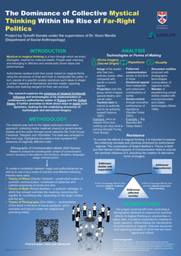
With my current interests in media studies and being impacted by the ongoing war in Ukraine, I became interested to explore the communicative methods used within the environments of far-right, authoritarian regimes. My project 'The Dominance of Collective Mystical Thinking Within the Rise of Far-Right Politics' will delve into the performance of authoritarian governance based on magical practices, involving interaction based on set of rituals and symbolic elements that aims to distance individuals from objective reality and involve them into specific collective imaginary.
The research will focus on communicative applications, particularly looking into speech structure and non-verbal elements (context, gestures, media tools). It will analyse the online materials to understand the communicative patterns used between participants, contributing to the greater understanding of the authoritarian structure and its potentials for social control, and finding pathways for its resistance.
---
I'm incoming third year Film and Anthropology student, being interested in documentary and video-essay form. I have extensive background in cinematography and commercial videography, with passion of story making and telling.
I am interested to communicate and expand my knowledge, share my experience, especially if you are working with similar topics of Magic, Political Power, War, Displacement, Media and Communication