Reflections on interning at the United Nations Environment Programme
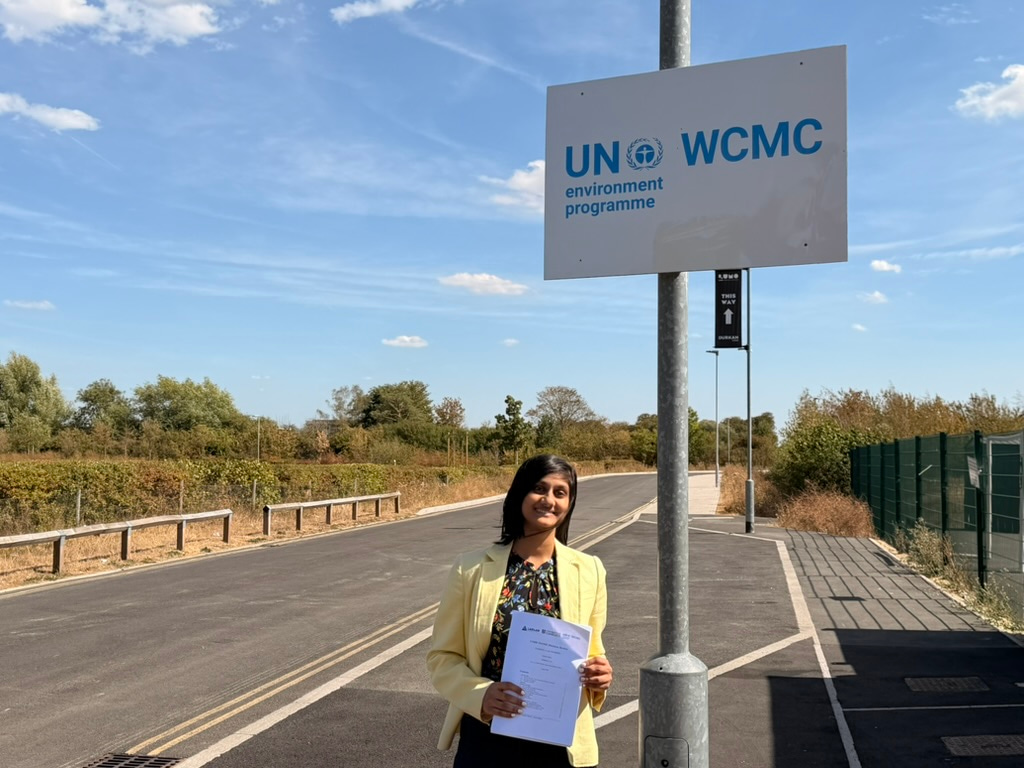
When starting my internship at the United Nations Environmental Programme's World Conservation Monitoring Centre (UNEP-WCMC), admittedly I was quite apprehensive. As a Historian interested in political economy, my exposure to the scientific work taken to combat Climate Change has been limited. The work I engaged with as Chair of my county's Youth Cabinet against the destruction of fish passes in the River Severn and listening to the concerns of young people about how climate change impacts their lives gave me the context and understanding as to why the work of the UNEP is so important but I, as I am sure many of us are, was uncertain what exactly that work entailed. That is where the LiA comes in.
The Leadership in Action project has incredibly opportunity to facilitate volunteering and community oriented work that as young people, we might be unable to afford or undertake independently at the same rigour and extent that we are able to here. Working for the UNEP-WCMC I have learnt about the scale of the organisation and impact that it has had. Looking back over the last six weeks, I have had the opportunity to get exposure to Nature-based solutions and undertake analysis that helped me write a report for a collaborative effort between the UNEP and the WWF, building on my existing skills and applying them in a completely new area.
My project sat within the Nature-based Solutions team, where I focused on how we could facilitate the uptake of Nature-based solutions to support the restoration and protection of ecosystems to build resilience to climate change. Whilst these appear in the climate plans of 92 of 101 developing countries, they remain underfunded and slow to scale and identifying that there is an abundance of expertise, tools and platforms to support governments, the question was why were they not being used and how can we increase their usage.
The task of answering these questions was quite difficult. I began with analysing the full dataset of tools available for nature-based solutions - 253 adaptation tools - to test what the strengths and limitations of the available knowledge and tools are. I then worked through qualitative and quantitative data responses to the data set to get a better understanding of not only what tools were available but also how these tools were being used. I then looked at what collaboration happened across these platforms, and who the platforms were targeting. Across my internship I found myself considering the interests of stakeholders across the landscape, from indigenous communities to international organisations and trying to understand how these stakeholders could be facilitated in achieving their environmental-based goals.
Coming into the internship, my exposure to international organisations was very limited and purely academic: I had come to the understanding that the practical and grassroots implementation of their work was typically minimal or limited by the structures they work through; however, I have been pleasantly proven wrong by the last six weeks. The breadth and depth of the conversations that I have been exposed to and part of, alongside the work that I have been able to assist with has made me realise that the scale of the institutions means that each person is helping shape part of a global puzzle. I am incredibly grateful to have been part of this puzzle, even for a summer, and that I have been able to produce a report that is being used across the UNEP-WCMC and the WWF.
What made this possible was the Leadership in Action programme. The LiA gave me the structure, the time and backing to take on a piece of work at an institution and level of rigour that I would not have accessed on my own. Just as importantly, it placed responsibility in me to define a question, do the analysis and stand behind the conclusions which is very different to the work you typically are exposed to as an undergraduate. I leave with a far clearer sense of what organisations like the UNEP actually do, a set of more refined skills as well as a confidence that I have assisted in work that supports communities directly.
I am enormously grateful to the Nature-based Solutions team at the UNEP-WCMC, particularly my supervisors Rosario and Bhopal, and to the Laidlaw Foundation for making this possible.
If you have any questions about the internship, the Laidlaw scholarship or anything more general, please feel free to reach out!
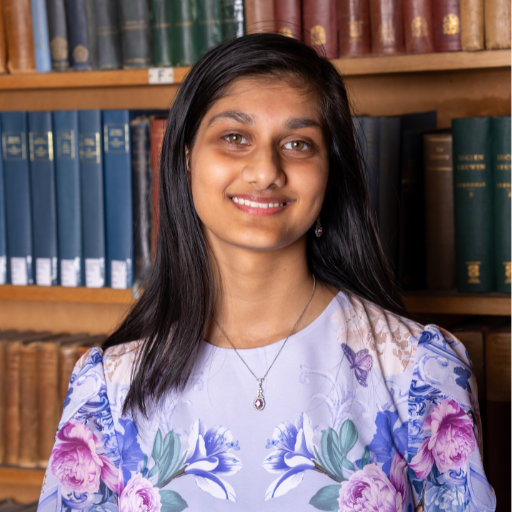
Undergraduate Historian at the University of Cambridge. Keen interest in Social Justice, Democracy and Representation, Electoral Politics and Political Economy. Founder of Per Capita Media - Journalism, for all.
