Get To Know Cambridge Central Mosque

Overview
My Leadership in Action (LiA) project took place at Cambridge Central Mosque, Europe’s first eco‑mosque[1] and one of the most architecturally significant religious spaces in the UK. The mosque receives thousands of visitors each year (according to the admins manager): school groups, faith organisations, academics, tourists, and local residents, who come to learn about Islam, sustainability, and the mosque’s unique timber architecture. Despite this demand, the tour programme was largely volunteer‑run, inconsistently structured, and heavily dependent on a small number of overstretched staff. Tours varied widely in quality, content, and duration, and the absence of a clear system placed pressure on volunteers and limited the mosque’s ability to engage the wider Cambridge community.
My project aimed to redesign and strengthen this tour programme so that it becomes a sustainable, high‑quality educational resource long after my project ends. The core objective was to create a structured, audience‑specific, volunteer‑supported model that improves visitor experience while reducing pressure on mosque staff. This required rewriting and tailoring tour scripts, creating a sustainable tour guide training framework, and developing a publicity strategy to increase engagement from tourists, faith groups, and local residents.
This work was not simply operational; it was deeply systemic. The tour programme sits at the intersection of community education, interfaith dialogue, cultural representation, and volunteer management. Improving it meant addressing structural issues: inconsistent communication, unclear expectations, lack of training, and absence of a coherent narrative about the mosque’s identity. My project therefore became a case study in how local systems reflect global challenges: misunderstanding between communities, how lack of funding leads to delated implementation of change, and the need for sustainable civic institutions.
The Laidlaw values guided my approach throughout. Ambition shaped my willingness to redesign an entire programme rather than make small adjustments. Bravery was essential in stepping into a leadership role within a religious and culturally sensitive environment. Curiosity drove my analysis of visitor needs, volunteer experiences, and the mosque’s existing systems. And Good grounded my work in justice, equity, and mutual respect - ensuring that the programme serves both the mosque community and the wider public.
This report covers my role in the Cambridge Central Mosque, what I achieved in my LiA project, what challenges I faced, what I learned throughout my LiA project and an assessment of my SMART goals.
My Function
My role at Cambridge Central Mosque had two sides: a defined project and a wider part in the life of the building. The project was to revamp the tour programme from top-to-bottom. Alongside it, I worked as a part-time receptionist and general volunteer. I answered visitor queries, helped with accessibility needs, and supported events such as Friday prayer, VIP hospitality and funerals. Both sides shaped how I led.
Programme designer. My main task was turning scattered, informal practice into usable documents. I collated information from several sources into a master tour script, and wrote a guide on delivering it that covers practical issues such as noise and how to adapt to different audiences. I also produced a separate set of operational instructions that every guide must follow and designed a start-to-end training framework. I built all of these knowing the mosque would not adopt them until months after I left, so they had to make sense to someone who had never met me.
Researcher and strategist. For the publicity goal, I researched how comparable attractions and services, such as Ely Cathedral and punting tours, present themselves online. I also reviewed competitors' customer feedback and the ticketing platforms available, and recommended changes to the mosque's website, including clearer information on its accessibility limits. I drafted outreach messages to tourism listing sites and planned visitor resources such as a welcome leaflet and a children's activity sheet.
Learner and consultant. I was not an expert in the mosque's religious life, so a large part of my role was listening. I observed tours, consulted my supervisor (the Admins manager), experienced guides, staff and Imams, and checked my materials against their knowledge. I led on structure and clarity, and deferred to religious leaders on theological questions.
Part of the team. Staff at the mosque have defined roles but all contribute to everything else. Taking on reception and volunteer duties was therefore part of belonging to that team, and it often left me only part of the day for my project. This was also where I practised leadership most directly, in dealing calmly with visitors when they were upset or difficult.
Across these roles, my function was to design tools, gather the knowledge to make them accurate, and leave them in a form the mosque could pick up without me.
Obstacles & My Responses
Challenge 1: Leading in a Religious and Culturally Sensitive Space
Working within a mosque required a level of cultural sensitivity and respect that shaped every decision I made. The space is not merely architectural; it is spiritual, communal, and deeply meaningful to worshippers. I had to learn how to lead without imposing, how to innovate without disrupting, and how to communicate without oversimplifying or misrepresenting Islamic practices.
How I responded: I consulted Imams, staff, and long‑standing volunteers to understand the mosque’s values and expectations. For example, the Imam corrected whether people should speak during the Friday sermon and that they should be silent, as if they are praying. This curiosity helped me avoid assumptions and ensured that my scripts and training materials were accurate and respectful. I learned to balance confidence with humility: speaking authoritatively when guiding volunteers, but deferring appropriately to religious leaders when discussing theological matters.
Challenge 2: Designing a Sustainable System in an Under‑Resourced Environment
The mosque’s tour programme was stretched thin. Volunteers available were few, staff were busy, and workload was high. Redesigning the system meant confronting the reality of limited resources and finding ways to create structure without adding burden.
How I responded: I mapped the entire tour workflow: booking, script usage, visitor feedback, and identified where improvements were needed. I created tools that reduced cognitive load: clear scripts, a guide on how to use them, and training documents that volunteers could use independently. I designed the system so that it could run without me, emphasising sustainability over short‑term efficiency. The changes being comprehensible was especially important given that I knew these changes would not be implemented into the mosque’s system until months after my project (due to the busyness of the understaffed mosque) so must be able to be implemented without my presence.
Challenge 3: Communicating Across Diverse Audiences
Visitors ranged from secondary school children to academics, from local residents to international tourists, from Muslims to people with no prior exposure to Islam. Tailoring communication to each group was essential.
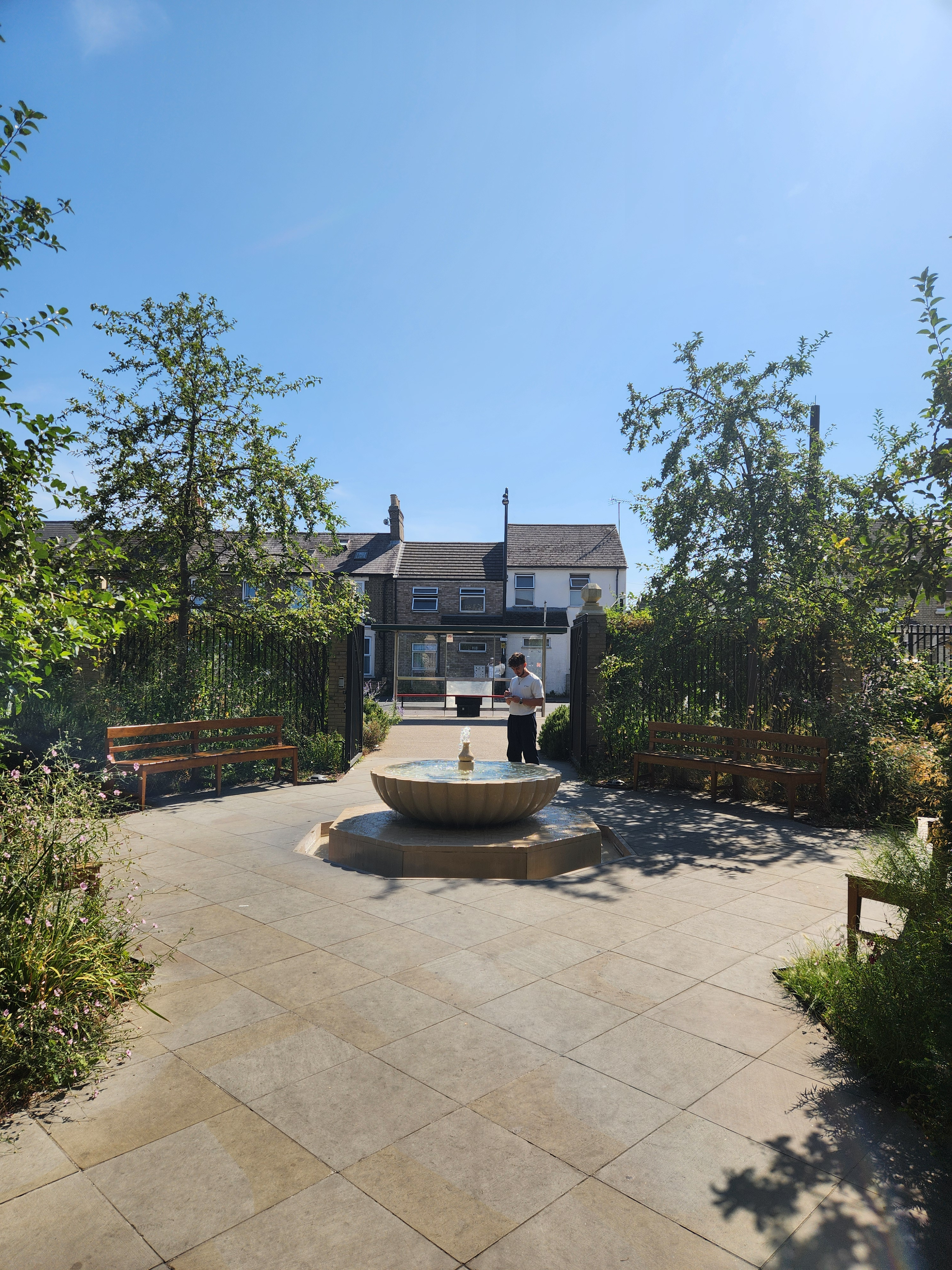
How I responded: I observed tours and noted where visitors became confused, disengaged, or overwhelmed. I included a document called “Guidance for Tours” which was mainly created to address this problem by detailing out the core themes of the mosque each group would show most interest in, what tone fits each group best, possible misconceptions of each group, etc. For example, I realised that people struggled to hear the tour guide across the fountain in the Islamic garden so I outlined how the tour guide should direct the movements of the group to move them away from the fountain when listening.
Challenge 4: Managing Time Between Doing My Project and Other Functions of the Mosque
Throughout my project, I was mainly located at reception, simultaneously attending to visitors while doing my project. This included giving directions, providing for accessibility needs and providing basic information for visitors (e.g. parking). I also, as technically a volunteer, helped out with many functions in the mosque such as setting up for Friday prayer, catering for VIPs (such as a senior visiting dignitary), and backfilling graves for funerals. This meant that I would frequently be preoccupied with other things while trying to complete my project.
How I responded: At times when I was particularly busy (such as weeks 2-5), I would retire to the conference room during off-peak hours to do my work. I did also work out of hours on some days to be able to complete my SMART goals within the timeframe. My supervisor asked me to cover reception, and since every member of staff works across roles, I treated it as part of being on the team. There was a risk the mosque would come to depend on me, which was one more reason the documents had to work without me. Interestingly, some opportunities for growth as a leader came from this responsibility as a part-time receptionist. Talking to such a wide variety of people (from cleaners to staff to Imams to politicians to members of the public) made me humble as I realised that at the end of the day everyone is human and they should be treated as such, equally and attentively.
Another significant lesson I gained from my role as a receptionist was when one afternoon I had to cater to one gentleman that approached the receptionist who was quite angry, emotive and rude. Despite this, I responded calmly and collectedly by actively listening to him during his energetic and emotional complaints, making sure not to interrupt or be disrespectful (and also offered him one of my cookies I was eating at the time). Later on, I was told that he had a history of difficult interactions with the mosque. However, in the face of this, I later became one of the few people who could calm him down during his visits to the mosque. This connected to leading as it helped me learn how to handle difficult situations, which I then used when handling a difficult tour question.
Assessment of SMART Goals
SMART Goal 1: Redesign and Tailor Tour Scripts for Different Audiences
The aim of this goal was to allow religious, historical, architectural and eco-sustainable information regarding the mosque (and Islam) to be delivered in a more coherent and comprehensive manner to those interested. I shadowed around four tours, then sent drafts to my supervisor and three experienced guides for revision who said the documents were “clear and comprehensive”. I also aimed to complete this goal within the first two weeks and was able to within the timeframe. The goal didn’t change but became more specific as I would identify parts that talk about sustainability and make sure to emphasise them in the text.
Outcome: I produced a 10-page master script by collating information from scattered documents; produced a 9-page “Guidance for Tours” document on how to deliver the information taking into account things such as noise and different audiences; and produced a separate document for operational instructions (e.g. guide behaviour, dress code, checking in, catering to special needs, etc.) that all tour guides must do.
SMART Goal 2: Creating a Sustainable Training Framework
The aim of this goal was to help make sure that the training of the tour guides is consistently thorough, enabling each tour guide to competently represent the mosque before giving any real tours. This goal was measured in the same way as goal 1. I aimed to complete this goal in week 3 but instead extended it to weeks 3-4 as one SMART goal was dropped (mentioned later on). The goal didn’t change but became more specific as I included how ongoing development should take place, the mentor note-taking templates, tour guide application form and mid-training tour guide quiz.
Outcome: I created a start-to-end training framework (shadowing, interview process, orientation, practice tours, ongoing development) to be applied to all future trainee tour guides that can be used to make sure that the tour guides are competent enough to give tours before starting.
SMART Goal 3: Develop a Publicity Strategy to Increase Engagement
The aim of this goal was initially to advertise the tours via the mosque’s website. This goal was measurable because it was a matter of whether I conducted the research to answer the questions of my supervisor and presented it in a readable format. I aimed to complete this goal within the last two weeks and was able to within the timeframe. The goal became more broad to increasing the visibility of tours rather than just advertising the mosque’s website.
Outcome:
- I conducted market research to see how competing locations (Ely Cathedral, King’s College Chapel, Oliver Cromwell’s House, The Stained Glass Museum) and services (e.g. punting tours, Cambridge walking tours) organised their websites.
- I recommended changes to the mosque website’s current design, especially emphasising the accessibility limits (wheelchair access, pushchair access, catering for elderly visitors, service animals, air conditioning, heating) of the mosque.
- I looked at reviews of the competitors and made note of the most common positive and negative comments.
- I conducted market research on 12 top ticketing/booking platforms used by competitors and other available platforms.
- I drafted emails/messages to 14 websites that advertise tourism such as TripAdvisor, “things to do in Cambridge”, “gardens to visit”, etc.
- I planned resources (a welcome leaflet, a digital resource pack, a children’s activity sheet, leaflet to take away about the mosque, leaflet to take away about Islam) for visitors which aim to increase engagement with the mosque.
Limitations and Lessons Learned
Initially, I had planned another SMART goal for week 4-5 which was to recruit and train new tour guides/current tour guides however this goal became unachievable due to the timing of the project meaning that there were only a few tour guides (around 5 out of 30) available in the summer. Therefore, I had decided to drop it and instead make the training programme more detailed, extend the timeframe of goal 2 and 3 and liaise with my supervisor further to make sure all the documents I made regarding SMART goal 1 and 2 were usable without my presence. In the future, I will check staff and guide availability at the planning stage and keep a fallback goal.
Another significant issue in my project was that the measurability of my goals was limited to whether I “did it or not”, i.e., there was no quantitative data to measure the impact of the goals (such as tours delivered by newly trained guides, number of positive reviews). The reason for this was, again, because the project took place in the summer so there were only a few tours given throughout the time period and because of the delayed application of my changes. This could potentially be problematic if, e.g., my supervisor (the admins manager) leaves as that would mean a staff member unfamiliar with my work will have to take extra time to familiarise themselves with the documents before implementing them. To mitigate this, next time, I would make a handover note.
Finally, my planning of timeframes per goal could have been better. For SMART goal 2, because I felt I would not be able to finish it in time, I sometimes neglected my other duties in the mosque and worked overtime. As a result, I actually ended up finishing almost a week early because I had worked so hard. This meant that in my last week of my project, I had almost nothing to do. Therefore, I took on other smaller “projects” requested by my supervisor to keep me occupied in the last week such as creating detailed guidelines of staff behaviour in the mosque, guidelines on VIP hosting and cemetery backfilling (the latter was later rejected as it was too similar to the health and safety document for cemetery backfilling so I will make sure to check what already exists before drafting next time). All of these required in depth consultation with the Imams to provide the relevant Islamic guidance on behavioural conduct. The lesson taken from this is that I should have a mid-point check to get a clear view of how things are progressing.
Final Thoughts & Acknowledgements
My Leadership in Action project at Cambridge Central Mosque has been one of the most meaningful experiences of my academic and personal development. It challenged me to lead in a culturally sensitive environment, to design sustainable systems, and to communicate across diverse audiences. It taught me how local realities reflect global challenges: misunderstanding between communities, how lack of funding leads to delated implementation of change, and the need for sustainable civic institutions.
At the end of this project, tour scripts have been reorganised, the training framework has been created, and the publicity of the website has been planned. Unfortunately, recruitment of tour guides was dropped and the impact of project is yet to be proven. To prove the impact of the project, mosque needs to implement the changes recommended and see if there is an increase in tours or positive feedback.
I am grateful to my supervisor, the mosque staff, volunteers, and Imams who welcomed me, supported me, and trusted me with this work. Their generosity, patience, and commitment to community education inspired me daily. I am also grateful to the Laidlaw Foundation for enabling this experience and for encouraging leadership that is ambitious, brave, curious, and grounded in Good.
This project has shaped the leader I am becoming: someone who values cultural humility, systemic thinking, and sustainable change. Someone who believes that small, local actions can contribute to global understanding. Someone who must have cookies at hand on demand to calm down difficult people.
I leave the mosque with gratitude, pride, and a deep sense of responsibility - to continue building bridges, strengthening communities, and leading with curiosity, courage, and compassion.
[1] Inside Europe’s first eco-mosque, Clare College, University of Cambridge (https://stories.clare.cam.ac.uk/inside-europe-s-first-eco-mosque/)