From Research to Rainforest: Six weeks at the University of St Andrews in Scotland and The Sloth Conservation Foundation in Costa Rica
Now that both of my summers in the Laidlaw Scholars Programme are behind me, I’ve realised the best question to be asking about them isn’t necessarily what I achieved, but rather what changed in how I approach the work. The programme is built upon three components — Capacities, Change Maker Values, and Character — and only in hindsight can I see the differential manner in which they build on each other, as well as the particular influence of the third on the first two.
Capacity
My first Laidlaw summer built capability within me. I gained discipline, analytical skill, and the ability to communicate empirical findings to non-specialist audiences. At the time it seemed an accomplishment unto itself. In practice, I discovered it was the prerequisite for everything else that followed, without which I would have arrived in Costa Rica enthusiastic but largely useless to the organisation hosting me.
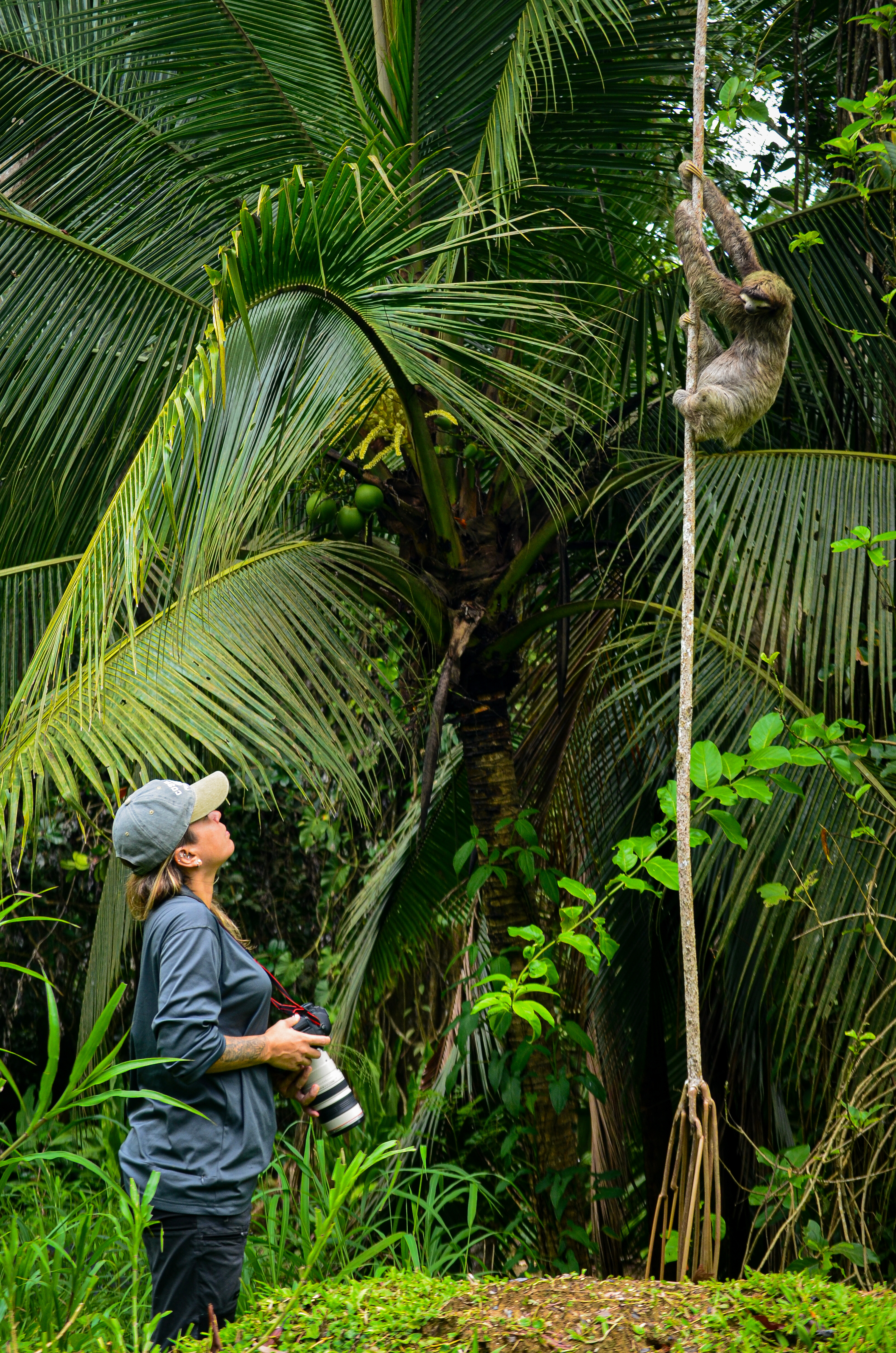
That capacity was tested immediately and in unfamiliar directions during my LiA project with the Sloth Conservation Foundation (SloCo) in Limón Province, Costa Rica. Logging GPS and behavioural data for the Urban Sloth Project and the Eternal Sloths initiative was a direct application of the methodological habits I developed during the research summer. Translating the same science into material a ten-year-old would find compelling drew on an entirely different and much less comfortable set of muscles. The photography I produced across the placement — documenting sloths, wildlife bridges, and the indigenous communities working to protect them – ultimately garnered 196,676 views across SloCo's social media channels, which is a figure I find both gratifying and slightly disorienting. It is a reminder that in conservation, the constraint is frequently not the science but the storytelling.
Change Maker Values
The LiA was where change maker values stopped being something I wrote about and started being something I had to practise, often imperfectly. For a start, my proposal contained a lot of confident language about contributing to community-led efforts, respecting local expertise, and avoiding the saviour posture. Writing those commitments was relatively simple. Living them, however, demanded that I repeatedly accept the fact that the most useful thing I could offer was often not my expertise, but rather my willingness to be redirected by people who understood the context far better than I did.
The outputs I'm proudest of reflect that. Across two workshops delivered at the local high school, I taught 22 indigenous Bribri students — sessions co-designed with SloCo's education team rather than imported wholesale from my own assumptions about what young people ought to know. Similarly, through the Connected Gardens Project, numerous trees were planted across two large indigenous Bribri plantations, directly reducing the amount of habitat fragmentation on land whose owners made that decision themselves, on their own terms, for reasons that were only partly the ones I had prepared to argue.
I want to stress that last point. My SMART goals gave me metrics I could measure — surveys completed, landowners contacted, materials produced — and it was useful for structuring six weeks that could otherwise easily have dissolved into unfocused enthusiasm. But the numbers hide the more important learning, which is that the two plantations came into the corridor network primarily because SloCo has spent years on the ground in Limón, building lasting connections with and earning the trust of those communities. My contribution was real but marginal, and admitting it honestly is, I think, more valuable than overstating it.
Limón Province taught me that conservation is never just ecological. It is a province that has historically received less public investment than Costa Rica's Pacific coast, home to significant Afro-Caribbean and indigenous Bribri and Cabécar communities long marginalised from formal environmental decision-making. Forest is not cleared there because people lack environmental values. It is cleared because economic survival demands it. Any conservation strategy that fails to reckon with that is not a strategy but a moral posture, and one that is ultimately destined to fail.
Character
Character was the connective tissue between the other two components — the quality that determined whether my capacities were deployed well and whether my stated values survived contact with pressure, fatigue, and the daily temptation to cut corners in a place where nobody was checking.
The Oxford Character Project starts with the image of character as the root system of a tree: unseen but essential, with skills and achievements as the branches and leaves that the roots sustain. I found this a little neat at first, though perhaps also somewhat overdone. By the end of the programme I found it to be uncomfortably accurate.
The first Virtuosity Character Assessment produced a result I had not expected. I assumed my strongest dimensions would cluster around Drive and Transcendence, since I tend to lead with energy and vision and have generally been rewarded for doing so. What the assessment unearthed instead was that my Humility and Temperance sat lower than I expected, and that my Drive often bled into its excess vice — results-driven to the point of tunnel vision, striving for excellence that didn't always leave room for others to contribute.
The Virtues and Vices Index was among the most useful conceptual tool the OCP, and more broadly the Laidlaw Scholars Programme, introduced across either summer. Before it, I did not truly grasp the notion that good qualities, in excess, could turn bad; that is to say, that every virtue sits between two failure modes. Drive without balance becomes fanatical, humanity without boundaries becomes exploitable, and integrity without flexibility becomes dogmatic. Accordingly, character stopped being a checklist and became a system requiring active maintenance and constant correction.
Continuing as a Global Citizen
A global mindset, I have come to believe, is not cultural fluency or comfort with travel. It is the discipline of holding two things at once — a genuine conviction about what needs to change, and a genuine humility about one's standing to change it. It is the recognition that the systemic barriers a community faces are usually more legible to that community than to an outsider, and that arriving with solutions is frequently a failure of listening disguised as helpfulness.
Of the Seven Strategies for character development, the one I expect to carry furthest is exemplars. Dr. Rebecca Cliffe modelled a version of leadership I had not previously observed at close range: scientifically rigorous, thoroughly spirited, and utterly unyielding, selfless devotion to a higher cause. She founded an organisation on the conviction that preventing harm is more valuable than responding to it — a principle which generates far less visible reward than rescue work, and which she has pursued anyway for the better part of a decade. Watching someone hold that line, in a field where the incentives push relentlessly towards the photogenic and the immediate, was instructive and inspirational in a way no session could have been.
The wider SloCo team taught me at least as much, and in some respects more. They are a small group doing work of a scale that ought to require many more people, and they do it without any of the institutional scaffolding I have taken for granted throughout my education. Above all, though, it is their kindness and generosity that define them — qualities that permeate the organisation so thoroughly that its conservation practice is grounded in relationship as much as expertise. Both the students I taught and the trees I planted on Bribri land were not simply because anyone had made a persuasive scientific case, but because colleagues had spent years turning up, listening, and treating community partners as people first. Trust of that kind cannot be accelerated; it is the residue of many small acts of decency. The warmth that made a stranger feel like family within a fortnight is the same warmth that has made SloCo trusted in communities with every historical reason to be wary of outside organisations. Kindness, practised consistently, is a strategy as much as a disposition. They remain my clearest reference point for the kind of leader I would like to become, and I expect to measure myself against their example for a long time.


