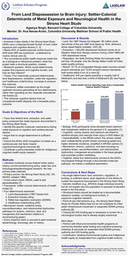
From Land Dispossession to Brain Injury: Settler-Colonial Determinants of Metal Exposure and Neurological Health in the Strong Heart Study - Research Abstract
American Indian communities face a disproportionate burden of environmental metal exposure and associated cognitive decline. This paper argues that this burden results from four interlocking, historically produced social determinants: nineteenth-century land dispossession, the siting of extractive industry on tribal land, a regulatory gap in federal drinking water law, and chronic underfunding of Indian Health Service care. Using a settler-colonial determinants of health framework and a synthesis of historical, legal, toxicological, and epidemiological literature, the paper analyzes each determinant before showing how they converge in data from the Strong Heart Study, where elevated blood and urinary metal levels are linked, through oxidative stress, neuroinflammation, and cerebrovascular injury, to measurable cognitive decline. The paper finds that no single determinant is sufficient to explain the observed burden; each depends on the others to sustain exposure that remains undetected and unremediated. This multi-determinant, mechanism-grounded framing departs from single-cause explanations common in the public health literature on this population. The paper concludes that interventions addressing only one determinant, or only clinical symptoms, are unlikely to close existing health disparities, and that policy responses must instead be coordinated across land, water, and health systems. This analysis contributes to Indigenous health equity scholarship by tracing compounding structural determinants to their neurobiological endpoint.