Final Reflections: My LiA in Melbourne with Big Group Hug, 2026.
This summer (/Australian winter!), I have been so lucky to complete my LiA placement with the children’s charity Big Group Hug (BGH), based in Melbourne, Australia. Over the course of 6 weeks at the organisation, I gained a deep understanding of its operation, impact, and the essential role of not-for-profit organisations in supporting local communities more generally. BGH specialises in providing material aid to children in need, without restrictions based on catchment area, circumstance or any other eligibility criteria. In short, if a family needs aid in any form to support their children, whether it be clothes, toys and books, toiletries, baby formula, hardware such as prams, cots, playpens (the list goes on!), BGH tries its hardest to provide and distribute this as fast as possible. BGH does not deal directly with recipients, but rather aid is ordered and delivered through caseworkers from a range of front-line charities who support refugee families, those starting a new life after domestic violence, and so many more.
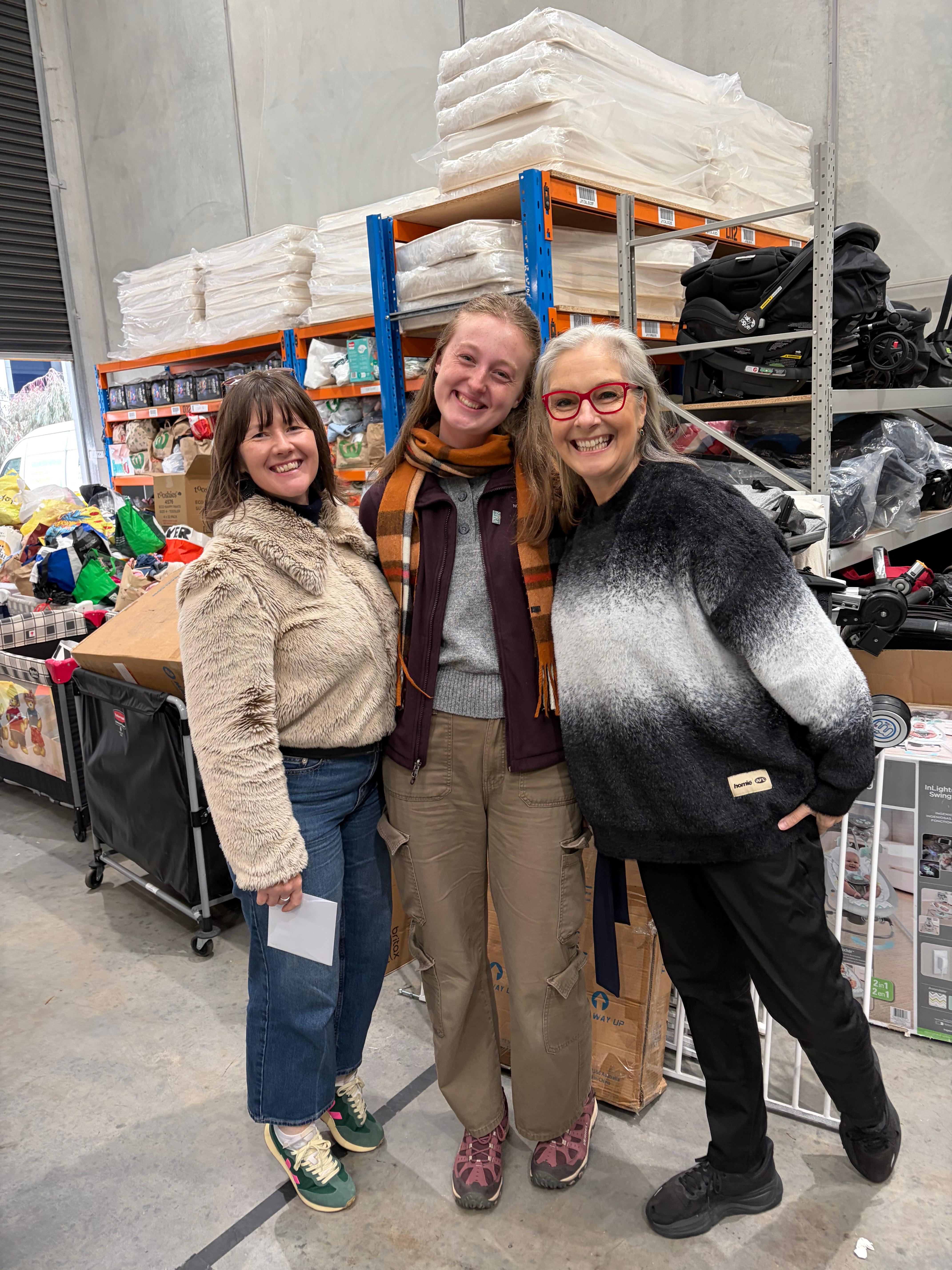
The organisation is driven by an army of volunteers across three sites in Melbourne, who work to turn bags full of donations from schools and individuals into custom-made packs for different ages and genders. Their work is supported by an amazing team of paid staff, who oversee the management of the warehouses, communications and marketing, corporate relationships and many more aspects of the organisation. It was amazing to work alongside the staff and volunteers at the organisation and see firsthand how the collective efforts of hundreds of people at not-for-profits like BGH can make such a huge difference to the lives of so many in need.
Where it all started: the initial project proposal and goals
Back in December, when I was beginning discussions surrounding a potential placement this June-August, BGH’s CEO Bernadene and I met online to discuss project ideas. What I most clearly remember from that meeting (other than it being very early morning – 6am for me due to the huge time difference!) is Bernadene’s warmth and willingness to not only propose ideas that would work best for the organisation, but also which would most align with my skills and interests. As it turned out, the goals we set in that initial meeting and over the coming weeks largely remained unchanged after arriving in Australia and throughout the project, leading to a finished outcome that I feel answers the brief we developed all those months ago.
The overarching goal for my LiA placement was to conduct a survey for caseworkers, collecting their feedback on the service provided and their opinions on the most essential items of aid for their families. However, I quickly came to realise this involved a lot more thought than initially anticipated. What questions should we ask? How can we understand whether answers are different depending on what kind of families an individual caseworker works with? How do we maximise response rate, particularly when considering how busy caseworkers are? These were just a few of the questions that I, alongside Bernadene and the communications & marketing manager Maria, had to consider throughout the design, response gathering and analysis of results.
Objectives
The objectives were established through SMART goals. In summary, these involved:
- Design a survey asking specific, meaningful questions to elicit feedback on BGH experience and ‘item priority’ in the context of unprecedented volumes of requests for aid.
- Promote completion of the survey using various means, aiming for enough responses to generate meaningful recommendations from feedback.
- Produce a report with concrete recommendations for management on what is working and how we can improve caseworkers’ experience with BGH.
Outcomes against my SMART goals
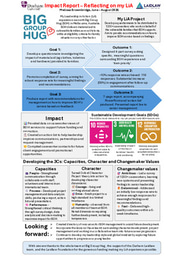
The final outcomes of my LiA project were:
- Caseworker survey designed and sent to 1200 participants, with a ~10% final response rate (119 respondents). This included a substantial proportion of response following two waves of ‘follow-up’ communications encouraging survey completion.
- Excel spreadsheet with an overview of all responses, visuals in the form of graphs/charts summarising answers, and contact details for follow-up.
- 7-page report summarising response statistics, key findings and recommendations for improvement for management.
- PowerPoint presentation to accompany the report, which I presented in a Teams meeting to 4 senior leaders at BGH.
Whilst I am proud that these outcomes satisfy the initial goals and objectives established at the start of the project, the process to completing them did come with some challenges. For example, the survey design process did take longer than initially expected, with multiple waves of feedback and refinement. This shifted the whole project back a few days, leaving reduced time in the final week to pull everything together. This was accompanied by the fact that the main software I used for analysis, Excel, is not one I am overly familiar with, meaning the final week was relatively time pressured and a steep learning curve!
Also, despite being pleased with my presentation on the final Thursday, I still took on board feedback on things to change to improve the report in the final couple of days. This allowed me to reflect that presenting findings does not have to represent a ‘perfect’ final outcome, but rather another step on the journey to making the finished project the best it can be.
Leadership development
Over the course of the 6 weeks, I enjoyed implementing the theory of successful leadership into practice. I was so grateful to be given numerous opportunities to put these skills into practice, including through acting as project manager of the caseworker survey and leading an hour-long meeting reporting the findings. Beyond this, I truly valued the opportunity to watch successful leadership, all the way from Bernadene at the CEO level down to smaller but vital acts of on-the-ground leadership by volunteers. As I reflected in my weekly updates, one thing that particularly stood out to me was the importance of celebrating achievement and giving voice to all in the room, rather than just a selected few. BGH’s ethos of recognising and valuing everyone’s contribution is a core takeaway that will stay with me long after finishing my placement, and is one I will continue to try and implement into my leadership going forward.
SDGs
BGH’s work, and my project within this, closely align with several of the SDGs. These include:
SDG3 – Good Health and Wellbeing. My project investigated which items of aid caseworkers considered most important for vulnerable children and families, with contribution to health and wellbeing a core consideration for this.
SDG10 – Reduced Inequalities. BGH’s core mission is designed to reduce material inequalities that can prevent children and families from succeeding to their full potential. My work recommending how BGH could make their system even more efficient for caseworkers and families will hopefully contribute to strengthening this work even further.
SDG12 – Responsible consumption and production. Alongside my project, I really enjoyed the opportunity to work in the warehouse alongside volunteers. One of the aspects of this role was assisting in sorting unsuitable items for recycling, of which BGH generates over 140 tonnes a year to be diverted from landfill!
Translating the OCP virtues into practice
Throughout the 6-week experience, I aimed to be continuously reflective of my leadership style and development, particularly in incorporating lessons learned through the 6-month Oxford Character Project (OCP). Having the opportunity to translate OCP character virtues from theory into real-world leadership is one that I both enjoyed and found challenging; at times, it felt difficult to maintain all character dimensions equally. For example, I sometimes found the dimension of ‘temperance’ slipping into the deficient ‘anxious’ state, particularly in situations of increased stress around project deadlines. Additionally, I found myself aware when ‘humility’ was needed to take feedback on board without seeing them as a criticism of my existing work, but rather genuine and helpful suggestions aiming to make my work the best it could be.
I also feel I was able to strengthen several character dimensions through the LiA experience. ‘Courage’, for one – moving to live and work abroad alone for nearly 7 weeks is something I would not have thought I was capable of as recently as a year ago! I also felt ‘driven’ throughout my project to leave with the best finished result, and I was continually amazed by the ‘humanity’ of the staff and volunteers. Looking forward, I will aim to: continue strengthening existing character virtues, incorporate lessons that I have learnt from observing leadership into my own leadership style, and reflect on how I can improve character dimensions I sometimes find harder.
Developing my global mindset
Working in Australia for my LiA has undoubtedly shaped my understanding of global citizenship and what it means to lead in a global context. Perhaps my biggest takeaway surrounding this is that good leadership, wherever you are in the world, shares common virtues: respect for others, willingness to make time for all members of a team, and a clear vision for success in whatever form that may take. That being said, being conscious of cultural nuance is vital, and I hope there will be other opportunities to continue to deepen my understanding of this in different international cultures and contexts in the future
Overall summary
In my first weekly reflection of my LiA, I described my experience in the word ‘welcomed’. Now, having finished my placement, I would summarise my placement in the word ‘thankful’. I am so grateful for the opportunity to live and volunteer in Melbourne for 6 weeks, but even more so for the amazing people who made the experience so beneficial, both for my personal development and (I hope!) for BGH as well. I have learnt so much from my time at BGH and my leadership style going forward will undoubtedly draw upon the lessons and reflections I have had during my time here. Thank you also to the Laidlaw team at Durham for their support throughout the process, and the generous funding from the Laidlaw Foundation which made the experience possible.
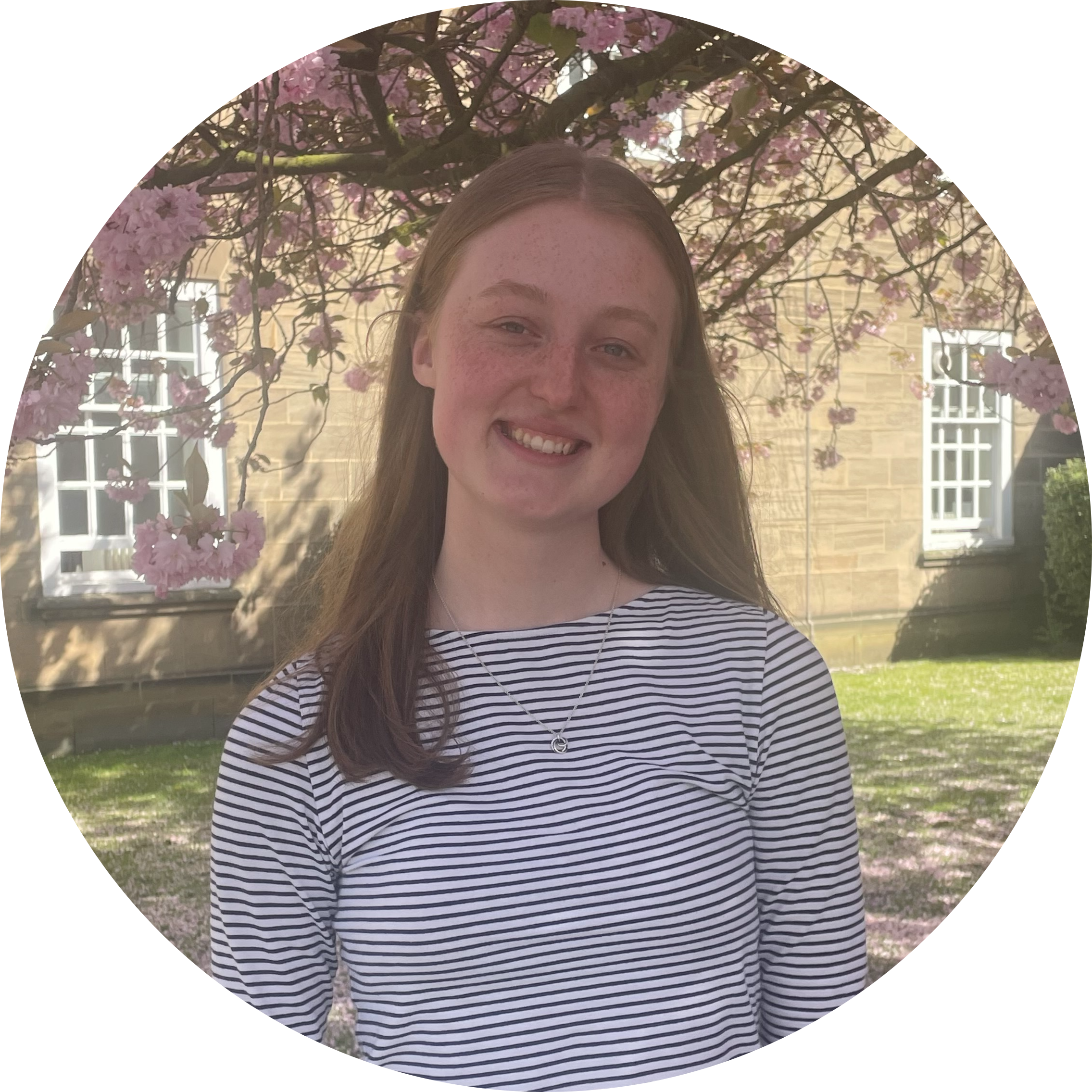
Hello! I'm Melissa (she/her), an incoming third-year undergraduate student at Durham University studying BSc Natural Sciences. I am passionate about multi-disciplinary learning, and my range of degree modules across the departments of Biology, Geography and Anthropology allow me to explore my interests across both the sciences and social sciences. I love all things human, and am especially interested in the fields of human biology, equitable healthcare, and public health.
In summer 2025, I thoroughly enjoyed commencing my journey as a Laidlaw Scholar with my research project focussing on the development of vision in human fetuses, including focussing on how maternal mental health impacts upon this. In summer 2026, I had the privilege of travelling to Melbourne, Australia to undertake my 6-week LiA project with the not-for-profit Big Group Hug.
In my free time, I love to spend time with friends and family, bake, go for walks, and play with my cocker spaniel! I am also passionate about volunteering, various sports, reading, and music!
Feel free to get in touch!