Final Reflection on Laidlaw Experience
When I watched my Laidlaw application video back, I see a hopeful student with pig tails and a slightly blocked nose; she is trying her best to convince the panel, and herself, that she is the type of person they are looking for, and that her burgeoning ideas are salient enough to be taken seriously. Two years later, I can say with conviction that she has grown into an ethical leader in her field, and her ideas and research came alive thanks to the Laidlaw Foundation.
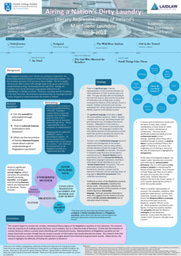
At the beginning of my 18 month journey through the Laidlaw development programme, I was dedicated to pursuing my self-devised research project on the Magdalen Laundries in Irish Literature. Through carrying out that research under the kind supervision of Prof. Paul Delaney I learned the importance of ethics, initiative, and conviction when researching sensitive subject matter. My project took on forms I was not expecting, and I am still working on materials gathered during my Summer 1, which excites me very much. The experience shone a light on what leadership looks like in the academic sphere, but it was my time in Mexico which taught me about what leadership means in a global context.
The importance of humility was a recurrant theme throughout my work with Makessense Americas and Las Sabinas in particular. I developed my cultural humility: learning to listen rather than impose any preconceptions onto people living in a different cultural context, resisting the urge to fall into the narrative of the western 'saviour'. For example, when the Sabinas spoke about reparative justice beyond punitive or institutional settings for survivors of sexual violence, at first it was difficult for me to understand. I come from a context in which institutional bodies are viewed as largely just, with checks and balances, and monitoring bodies in place to theoretically enforce fair policies (though when it comes to addressing sexual violence these institutions are far from perfect). Through listening and asking questions, I came to understand that the context in which Las Sabinas find themselves means that an institutional mistrust is ingraned in their communities, and that justice derived from policing is not usually realistic in their line of work. Listening and communicating with Las Sabinas allowed me to fully appreciate the resiliance it therefore takes for them to continually engage with bodies like the UN Women's Council to advocate for change, while also working outside of the State's apperatus.
Leading with humility and care did not always look how I envisioned; I was making puppets, painting a stage, and conducting rollerskating workshops for children. When one thinks about leadership and making a change, they tend to envision grand projects and taking sweeping actions. What I learned was that being willing to take on mundane tasks and work with stakeholders like children, who are often overlooked in academic and prestigous contexts, can be how you can make the biggest difference as a leader, even if it feels silly sometimes (see my puppet for reference). Through these experiences I grew as a global citizen, appreciating what it means to come into community with people from across the globe to work towards realizing a collective goal.
My time within the Laidlaw foundation has redefined what I think a successful leader looks like. Owing to my experiences throughout the programme, but particularly in summer 2, I am now considering training as a Peer Support Worker after I graduate, because it aligns with the goals and qualities I have discovered as important to me as a leader. I have gained confidence in myself as an academic, and see my research as worth pursuing now. Laidlaw has given me tools like networking and collaboration needed to realise my goals in academia both in Ireland and abroad. Overall, Laidlaw has fundamentally impacted my life positively, and I hope to carry its impact into my future projects and learning.