Final Programme Reflection


When I started the Laidlaw Programme, I planned everything down to the last detail. I liked knowing what each week would look like, what the outcome would be, and exactly how I would get there. Two summers later, the aspect of me that's changed the most is that I've learnt to hold my plans more loosely. Planning still matters, but both of my projects taught me, in different ways, that a plan is more of a starting point.
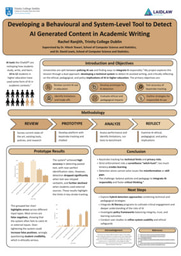
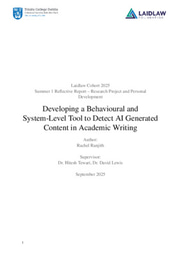
My first summer was a research project on detecting AI-generated content in academic writing. I set out to build a technical tool: a platform that tracked keystrokes and flagged pasted or AI-generated text. It worked well for obvious copy-pasting and struggled with almost everything else. Somewhere in the testing, I realised the more interesting question wasn't how to catch students. It was why detection alone was never going to be enough. I had to decide whether to push on with the project as I'd designed it or let it grow into something broader, covering the ethics of surveillance, trust between students and institutions, and how AI should fit into learning at all. I wasn't entirely comfortable changing course, but it was the right call. It was also the first time I really understood that adapting isn't the same as failing.
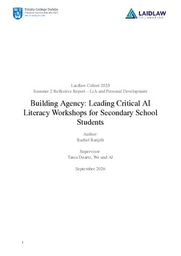
That shift carried straight into my second summer. For my Leadership in Action project, I partnered with We and AI, a UK-based not-for-profit, to adapt and deliver a series of critical AI literacy workshops for secondary school students. Looking back, the two summers feel like two sides of the same die. There would be far less misuse of AI if people thought critically about it, but critical thinking doesn't remove the need for good safeguards. Summer 1 approached the problem through detection and policy, and Summer 2 approached it through education and agency. Together they gave me a much fuller picture than either would have alone.
Summer 2 also tested me in ways I didn't expect. The original plan was an intensive bootcamp to train volunteer facilitators, but scheduling conflicts made that unworkable, so the format became looser, collaborative jam sessions. For a long stretch the work was ambiguous, with little structure or clear ownership, and much of the momentum had to come from me. It was very much a case of making the best of what we had. It wasn't always comfortable, but it taught me more about determination and self-leadership than a smoothly run project would have. I faced the same judgement call as the year before: hold on to the plan, or adapt? Once again, adapting was what the situation needed, even when I wasn't happy about it.
The biggest leadership lesson came from the students themselves. You cannot make people care. What you can do is show them something worth caring about and trust them to make up their own minds. My group started the series as students who were there half-heartedly. By the final session they were actively contributing, challenging ideas and applying the frameworks we'd built together. Watching that happen without forcing it changed how I think about leadership. It's less about control and more about creating the conditions for people to engage on their own terms. In the language of the Laidlaw 3C framework, it drew on emotional intelligence and communication far more than on any technical skill I brought with me.
My experience of developing a global mindset was quieter than the word "international" might suggest. Working with a UK organisation wasn't a dramatic cultural shift, but it did show me how a universal issue looks different depending on who's in the room. The facilitators, the We and AI team and the students each brought their own context and assumptions about AI, and the work was richer for it. It also made me more aware that the tools to question these technologies aren't equally distributed. For me, being a global citizen has come to mean paying attention to who gets access to that kind of thinking and who doesn't.
When I think about where I still need to grow, it isn't a single gap so much as keeping these lessons active. The programme stretched me thoroughly, and the risk now is slipping back into old habits. I want to keep getting more comfortable with ambiguity, keep building confidence in drawing out quieter voices in a group, and keep practising the kind of leadership that invites people in rather than directs them.
Looking ahead, I don't have a neatly defined plan, which, given everything above, feels fitting. What I want is to carry this into every part of my life: to stay curious, to adapt when the situation calls for it, and to lead in a way that gives people space to decide for themselves why something matters.
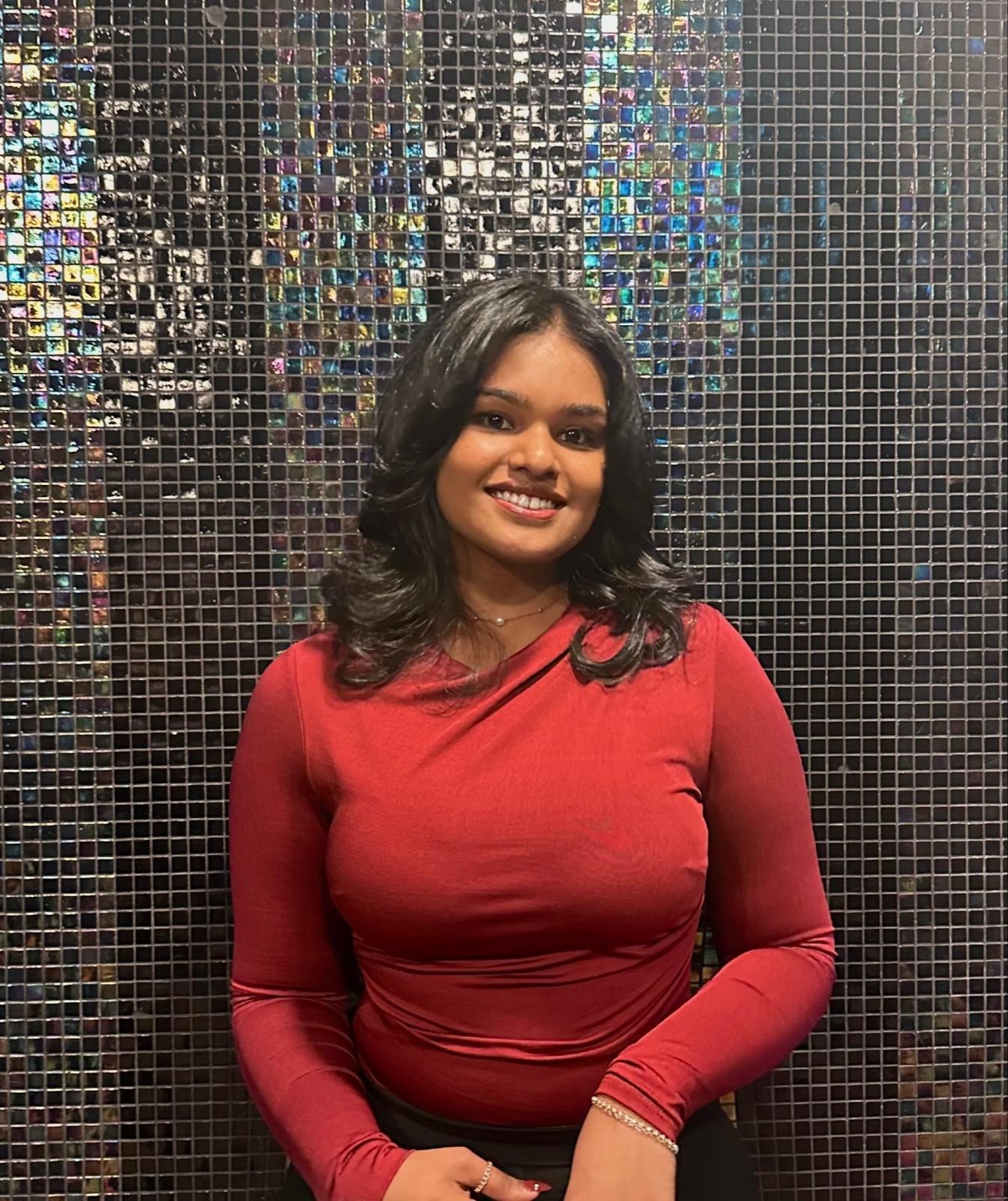
Hi! I’m Rachel, a 3rd year undergraduate at Trinity College Dublin. I'm a Computer Science major with a minor in Business. My current research focuses on AI-generated content detection in academic writing, and how we can design systems that go beyond surface-level tone analysis and actually look at how something was created, not just what it looks like on the page.
I’m particularly interested in where technology meets accountability; whether that’s through blockchain-backed transparency, ethical design, or just building tools that help people do good things better. I think we need to be a lot more thoughtful about how we integrate AI into education, and a lot more ambitious about the kinds of institutions we want to shape in the process. Also, like most people who spend too long on side projects, I occasionally forget how to relax.
When I do, though, I read whatever I can get my hands (usually poetry or classic fiction). Or I try baking some treats. Or I go cafe hopping with friends for conversation. If you’d like to chat about any of the above, or anything really, I’d love to hear from you.