
What new ideas, challenges, or other issues have you encountered with regard to your project (this might include data collection, information that contradicts your assumptions or the assertions of others, materials that have enriched your understanding of the topic, or led you to change your project, etc.)?
Before starting Laidlaw, I had a neat 6-week plan with deadlines and goals to make the most of my time and finish my research project within that timeframe. However, in just the first week, I realized how unrealistic my deadlines were and how near-impossible it was to complete a publication-ready manuscript in 6 weeks. While this initial realization was hard for me to swallow, as I still wanted to push myself as hard as I could, I eventually came around to giving myself more time and being realistic with my goals. Instead of trying to finish my entire manuscript in 6 weeks, along with my poster and infographics, I've decided to work calmly on my manuscript without pressure, and in the last week of Laidlaw school, consolidate my findings into what I have leading up to then. In doing so, I can then take the entirety of my summer and some of my school year to thoroughly write a manuscript I am proud of.
How have these ideas or challenges shaped the bigger picture of your research? Has the scope or focus of your topic changed since you began this project? If so, how?
Definitely. While I had a preconceived idea of my paper's scope, every new research paper I read and analyzed during my Literature Review gave me dozens of ideas on different analyses, figures, and tables to include within my paper. However, in reaching the midpoint of LaidLaw last week, I realized it wouldn't be feasible to complete all of these ideas for my LaidLaw paper, so I've decided to cut them down to the core findings for my LaidLaw paper and then use the rest of my summer to finish up my analyses.
Now that you’ve engaged in Part II of the Leadership Retreat, reflect on a learning point that remains with you as a new way to understand leadership, and to incorporate into your own engagement, in the future.
After coming out of the leadership retreat, I am somewhat happy to realize there is no one perfect or best leadership model in any situation. At times, I feel as though I try to over-optimize situations and look for the one possible best way; however, going through the case study helped me understand that leadership isn't necessarily 1 fixed structure that we are looking for, but rather learning from what went wrong and continuously correcting to improve. With that mindset, I hope to put less pressure on myself when certain leadership situations aren't ideal and be more open to the process of continuously changing, even if there isn't one perfect organization of roles or hierarchy at the end.
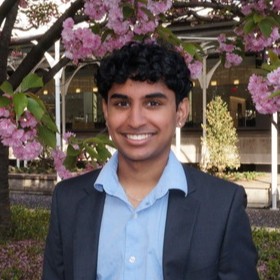
Hey everyone! My name is Karthik Mahakala, and I am a rising Sophomore studying Environmental Biology at Columbia College. Specifically, I am extremely passionate about environmental health sciences, which encompasses how physical, chemical, and biological factors in the natural and built environments impact public health.
This summer, I will be evaluating the reliability of consumer-facing packaging signals for skin-lightening products across Northern Manhattan as a research assistant in the Llanos Lab.


Please sign in
If you are a registered user on Laidlaw Scholars Network, please sign in