How have the workshops and discussions on leadership this week changed your understanding of what leadership means?
The leadership workshop this week was extremely insightful and allowed me to recognize how leadership is truly a behavior not simply a title. Initially as we were taking the survey trying to identify what type of social style (driver, amiable, analytical, or expressive) we have a tendency towards I wondered how a leader could possess all these traits simultaneously or if one would just hope the group had people with different dominant social styles. However, through the workshop I was able to understand how leadership is about maintaining balance. Even through the case study, we saw how people often gravitate towards extremes. Rowan desired quick action and decisiveness while Ellis shut down due to an absence of careful planning and deliberating. A leader must identify these extremes within each person or even the group as a whole and bring attention to the need for balance. Each one of these social styles or approaches are valuable and some situations may need one more than another. The quality of a leader involves being able to put their own tendencies aside to meet the needs and goals of the group as a whole. Rather than being a perfectly well rounded person who is equal parts driver, amiable, analytical,, leaders must be flexible and willing to play the role, whether or not it is the approach they typically use, that is most needed for the group.
How might you imagine applying one model of leadership during your Laidlaw summer on campus—either within the Laidlaw cohort or beyond this community? While we often associate leadership and leaders with seniority, how might leadership be modeled among individuals who are among the youngest people on campus (i.e. you!)?
I think the approach that most aligns with my role in the lab as I conduct my research is analytical. By continuously striving to learn, practice, and grow, I can meaningfully contribute to the scholarly conversation surrounding social memory through my novel experiment. This curiosity and passion is necessary for leadership as it is what breakthroughs and discoveries stem from. Leadership may seem more outright with seniority, but underclassman have countless opportunities to demonstrate leadership behavior by bringing new perspectives, approaches, and talents to a group dynamic. You must take the initiative and the possible risk to share your ideas while being receptive to others' thoughts, even encouraging those around you to offer their insights.

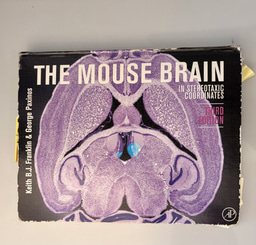
Hi everyone! My name is Phoebe Matthew, and I am a rising sophomore at Columbia University majoring in Neuroscience & Behavior and possibly minoring in Computer Science. My research this summer in the Siegelbaum Lab at the Zuckerman Mind Brain Behavior Institute explores the role of the ventral CA1 excitatory neurons in the hippocampus, which are known to receive signals from the CA2 region that is heavily implicated in social memory, in valence associated social memory. This type of memory is not only the recognition of a familiar individual but also the memory of how that individual made you feel. Social memory is impaired in several neuropsychiatric disorders, and it is essential to understand how the mechanism behind it to inform possible therapeutics.
Beyond the lab, I am a volunteer at a local memory care facility through Brain Exercise Initiative, a writer for Grey Matters (campus neuroscience journal), and involved in Columbia Synapse (traumatic brain injury advocacy group). I also recently got certified as an EMT. I am passionate about brain health advocacy/awareness, science communication, and service. In my free time, I enjoy painting, crafting, reading, and playing the ukulele. I would love to meet everyone, so please do not hesitate to reach out!