Designing Toilets in Rural China!
Reflective Report
My Leadership-in-Action experience did not go exactly as planned, which was probably the most valuable part of it. I originally expected to spend three weeks working on a building restoration project on Cheung Chau, followed by three weeks on a rural sanitation project in Henan, designing toilets. Instead, the Cheung Chau project ended early due to a safety concern, I joined an unexpected research trip through Sichuan, and then completed the final part of the project in Henan. Looking back, the experience developed my character, leadership capacity and global mindset much more through these changes than it would have if everything had gone according to plan.
Character
The clearest test of my character happened on Cheung Chau. I was helping restore a run-down building at a Living Grass conservation site when I found out that asbestos-containing roofing material was being removed from the building. The roof had collapsed in on itself. I was not an expert in asbestos management, but I knew enough to recognise that it could be a serious risk. I raised the concern with the project team and discussed it with my supervisor. Following those discussions, it was agreed that I should stop participating at the site.
This was probably where I developed the Laidlaw values of brave and good most strongly. It would have been easier to assume that because other people were initially continuing, everything must be fine. I was also very new to the team, and raising a concern that could significantly affect the project schedule and budget had to be handled carefully. I therefore had to trust my own judgement enough to raise the issue, while doing so respectfully and without overstating what I knew.
At the same time, the experience taught me about humility. I did not know enough to tell the team exactly how the asbestos should be managed. My responsibility was to raise the concern, explain what I understood and recognise where specialist knowledge was needed. I think that balance between having the confidence to speak up and the humility to recognise the limits of my knowledge is something I will carry into engineering work in the future.
Leadership capacity
When the Cheung Chau project ended, I suddenly had around two weeks with no clear project. Rather than accepting that the time was lost, I contacted my supervisor and asked if there was another way I could contribute. This led to me joining a research trip through Sichuan linked to the development of a school building in Xichang.
This was probably where I developed determination and adaptability most. I had made a detailed plan before travelling, but I learned that being committed to a goal does not mean being attached to one particular plan. The original route had changed, but the broader purpose of the LiA had not.
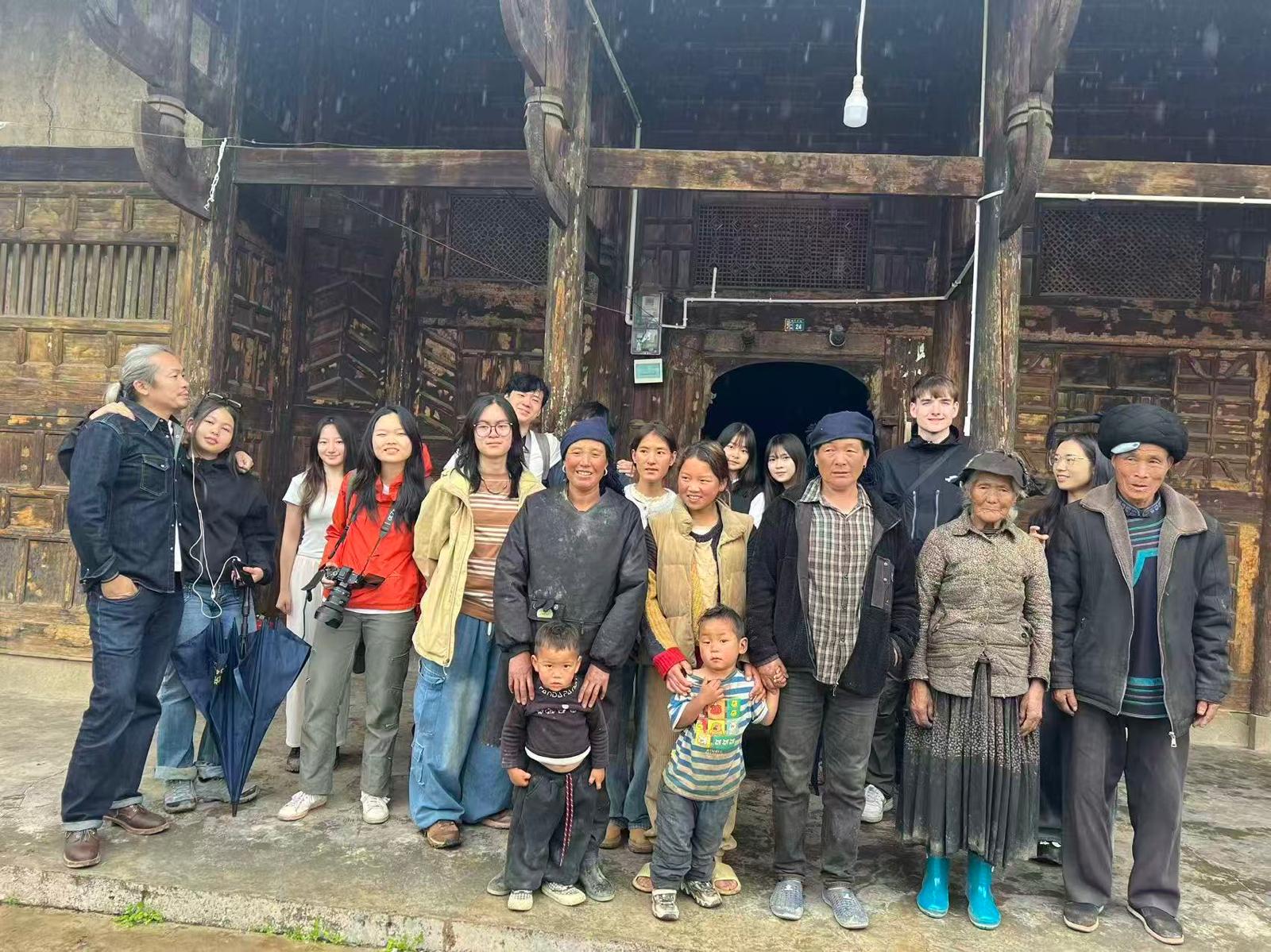
In Sichuan, I travelled through rural villages with the HKU team, meeting master builders and documenting traditional construction techniques that could inform the school project. My role was mainly visual documentation and communication. I filmed the work, organised footage and helped capture the knowledge being shared.
This developed my people capacity, particularly communication and cross-cultural collaboration. I was often working in Mandarin-speaking environments and tried to use my Mandarin as much as possible. I was far from fluent, but I became much more comfortable communicating imperfectly, asking questions and making sure I understood what people meant.
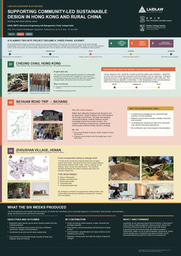
The final phase in Henan challenged my thinking in a different way. The project was, at its core, about designing and building sanitation solutions (toilets) for several rural households. We first looked at how each household currently lived and managed water and waste, before developing a separate design for each one. At first, this felt surprisingly slow to me. My engineering instinct was to look for the common problem and develop one scalable solution that could be repeated across multiple households. Instead, the architecture team deliberately designed around each household’s specific water access, farming practices, livestock, existing structures and daily routines. Over time, I began to understand why. The problem was not simply “how do we build a better toilet?” but “what sanitation solution will actually work for this household?” This challenged my assumption that the most efficient or scalable solution is always the best one.
This developed my process and performance capacities, particularly design thinking and critical problem-solving. I realised that I often move too quickly towards optimisation before fully understanding the problem. Sometimes the best solution is not the most scalable one. A technically efficient system is not useful if it does not fit how people actually live.
Global mindset
The LiA also changed what I think having a global mindset means.
Before the summer, I probably associated it mainly with being comfortable working internationally and communicating with people from different cultures. I now think it is much more about recognising that my own way of approaching a problem is only one perspective.
This was clear in Sichuan. Many of the master builders we met had decades of practical construction knowledge, even if that knowledge was not expressed through engineering calculations or formal academic language. This reinforced something I already believed: formal academic knowledge is only one form of expertise, and the practical experience of the master builders was equally important to understanding how these buildings were designed and constructed.
The same was true in Henan. At first, some sanitation practices were unfamiliar to me. However, once I understood the limited water access, agricultural use of waste and everyday routines of the households, those practices made much more sense.
For me, developing a global mindset has therefore meant becoming more comfortable entering an unfamiliar environment without immediately judging it through the standards I already know.
Looking forward
The LiA developed some attributes more than others. I think I became more adaptable, more willing to speak up when something is concerning and better at communicating across unfamiliar environments.
I also became more aware of areas I still need to improve.
I want to become more comfortable with ambiguity when there is no clear plan. I want to question my assumptions before moving immediately towards a solution. I also want to continue improving my Mandarin so I can engage more deeply in future international work rather than relying on basic communication.
Overall, the biggest change in how I think about leadership is that I no longer associate it mainly with being the person in charge. During the LiA, leadership often meant something much simpler such as raising a concern, asking a question, adapting when a plan failed, listening to someone with different expertise, or recognising when I did not have the answer.
That is probably the most important thing I learned from the experience.