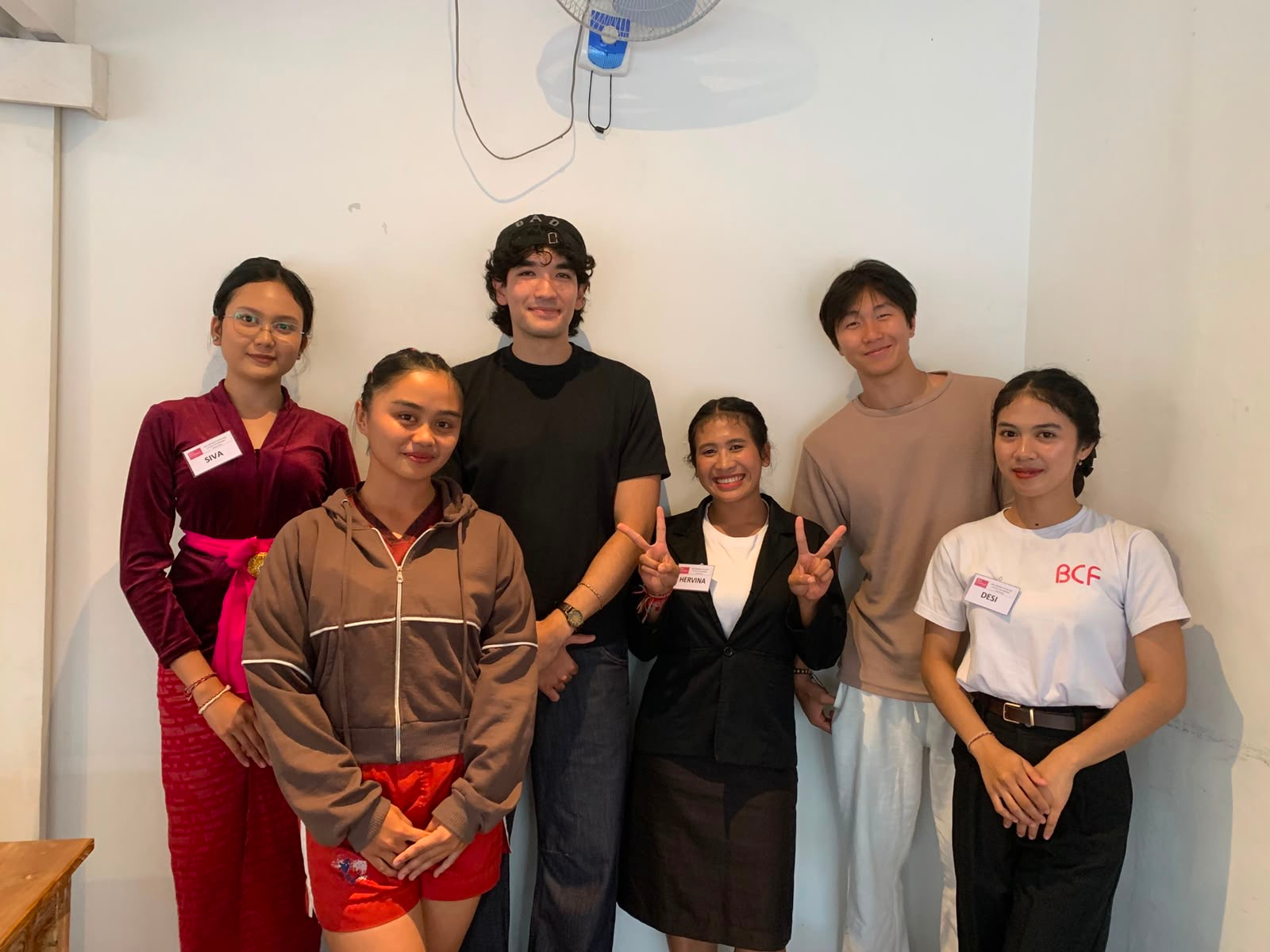
Learning to Lead with Humanity
One of the most valuable lessons of my Laidlaw Scholarship came from recognising how much I had misunderstood the nonprofit sector. Before working at Bali Children Foundation, I had underestimated the competition for funding and the effort required to sustain an organisation dedicated to social good. Seeing that work firsthand changed how I understand leadership and the responsibility that comes with wanting to make a difference.
Alongside the Oxford Character Project’s leadership programme, my Leadership in Action experience helped me connect ideas about character with practical decisions. The lesson that stayed with me most was leading with humanity. In Bali, that idea became tangible through my colleagues’ humility, their work ethic and their commitment to children’s education.
Understanding the work behind social impact
During June and July 2026, I worked as a Fundraising Intern at Bali Children Foundation, focusing on stakeholder management, donation analysis and improvements to its customer relationship management system.
I quickly gained an appreciation for the demands of running a nonprofit. Organisations must earn donors’ trust, maintain relationships and manage limited resources while remaining accountable to the communities they support. A worthwhile mission still requires effective systems and sustained effort.
My colleagues’ approach moved me. Their humility and commitment gave me a practical example of leadership grounded in service. Working alongside them encouraged me to think more carefully about what I could contribute and to respect the experience already within the organisation. I had useful technical skills, but I also had a great deal to learn.
Putting the 3Cs into practice
Laidlaw’s framework of Change Maker Values, Character and Capacities helps me understand how I developed throughout this experience.
My Change Maker Values became clearer as I connected my daily work to BCF’s wider purpose. Analysing donation records could feel far removed from children’s education, yet reliable information supports the fundraising on which programmes depend. This helped me appreciate the value of work whose contribution may be indirect but still matters. Curiosity and determination encouraged me to investigate problems and consider improvements that could remain useful after my placement.
My Character developed through learning to balance initiative with humility. When building a centralised donor database, I needed to recognise that records could never fully capture the relationships behind them. BCF’s founder brought knowledge of donors that helped verify and contextualise the information. Listening to that experience was essential to producing something useful.
My Capacities grew through analysis, problem-solving and communication. One challenge involved investigating why the CRM recorded only approximately 30% of donations. I compared transaction records and traced the problem to automated workflows that were missing recurring payments. Because I could not edit those workflows myself, I prepared evidence and explained the required changes to the external provider. Following their implementation, donation capture increased to approximately 96%.
That experience strengthened my confidence in taking responsibility without formal authority. Progress depended on making the problem understandable and enabling others to act. It also showed me how closely the 3Cs connect: technical ability becomes more useful when guided by purpose, sound judgement and respect for others.
Leading with humanity
The Oxford session on leading with humanity gave me a way to reflect on these experiences. Its questions about care, empathy and giving others space and trust encouraged me to consider how my actions affect the people around me.
At BCF, this was particularly relevant to the relationship between donors and beneficiaries. Fundraising requires clear communication about impact, alongside care for the dignity and privacy of the children and communities involved. I came to understand that ethical leadership includes paying attention to how people are represented, even when the immediate task appears administrative or commercial.
Humanity also means considering colleagues’ needs and capacity. A new system is only valuable if people can realistically maintain it. This made me more conscious of listening before proposing changes and designing work around the organisation that would continue using it.
Carrying a global mindset forward
Working in Bali deepened my understanding of how international support connects with local educational opportunities. Seeing its effects on children in rural Bali gave social impact a personal significance that I will continue to value.
Developing a global mindset means recognising both these connections and the limits of my own perspective. In future settings, I want to learn from people who understand their communities, question my assumptions and consider whose voices are missing from decisions.
I will carry this into corporate work as well as opportunities to contribute directly to social good. Leading ethically will mean being honest about evidence and uncertainty, considering who benefits from a decision and who might bear its costs, and speaking up when something needs scrutiny. I also want to keep finding ways to apply my skills to organisations with a social purpose.
The Scholarship has given me a fuller understanding of the leader I want to become. My colleagues in Bali and the Oxford programme taught me to value humanity as an everyday practice. I want that lesson to remain visible in how I listen, make decisions and take responsibility for the effects of my work.