Beyond Abstinence: Evaluating Comprehensive Sexuality Education to Reduce Teen Pregnancy and School Dropout
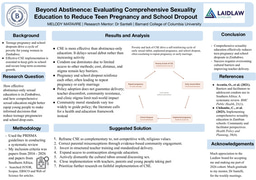
Growing up in Zimbabwe, teenagers are exposed to one message as a response to teen pregnancy and early school dropout: girls must abstain from any sexual activities. This message is delivered with good intentions and hope for better outcomes; however, it has done little to break the cycle of teenage pregnancy, school dropout and poverty that continues to affect young women across the country. Despite years of teaching teenage girls to abstain from sexual activity, cases of teenage pregnancy continue to happen, suggesting that the problem is not a lack of discipline but a lack of access to accurate and empowering education. This research uses a systematic review of research papers and policy from 2016 to 2026. Using a PRISMA-informed systematic review methodology, this study synthesizes findings from Zimbabwe alongside neighboring countries Botswana, Mozambique and Zambia that share similar socio-political and educational contexts. This comparative lens allows the paper to identify not only what CSE frameworks exist on paper, but where implementation gaps consistently emerge across the regional policy documents and WHO guidelines, as an approach to address the question of how effective abstinence-only sexual education is in Zimbabwe, and how comprehensive sexual education might better equip young people to make informed decisions that reduce teenage pregnancies and school drop-outs. By evaluating systematic literature from Southern African countries with similar socio-political climates, this paper demonstrates that while CSE concepts exist in the current syllabus, a redesigned training approach that includes teachers, parents, and young adults is vital to reduce teen pregnancies and early school dropout rates significantly. With education being one of the most important tools for escaping the shackles of poverty, reducing teen pregnancies and early school dropouts by involving parents, teachers and students in the implementation of CSE will ensure the long-term success of CSE.

Born and raised in Zimbabwe, Melody Matavire is a prospective Physics and Data Science major with a deep passion for both STEM and social impact. While science and technology shape much of my academic interests, I have also become increasingly aware of the social challenges that continue to affect communities and shape people’s lives in lasting ways.
One issue that is especially close to my heart is early teen pregnancy and school dropouts. Growing up, I witnessed how situations like these can alter the trajectory of young people’s futures, particularly for girls whose educational opportunities become limited long before they are able to fully explore their potential. Through the Laidlaw Scholars Programme, I hope to research how comprehensive sexual education can be used as a practical and culturally relevant tool to address early teen pregnancies and reduce school dropout rates.
Beyond academics and research, I enjoy exploring new experiences, asking too many questions, and finding connections between science, society, and everyday life, otherwise you can also find me in the kitchen cooking whilst singing.