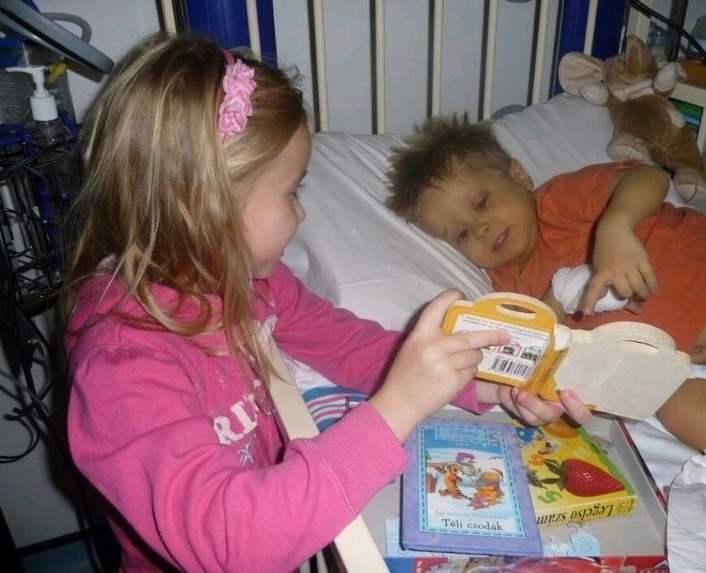
When I was growing up, I read to my brother whenever he was in hospital. Some of my first memories of storytelling include his smile while listening to a story, completing sticker books, drawing pictures with odd felt tip pens and broken crayons, and turning blue medical gloves into elephants with eyes and names. I would run around the corridors dressed in fancy dress costumes and give them to the other children, siblings, parents, and staff on the ward.
At the time, I didn’t know anything about character or leadership development. I’m not even sure I knew what those words meant. We simply did what felt right – imagining, creating, and sharing happiness. A story. A drawing. An elephant. A smile. These small gestures of hope tried, with the seemingly little power they had, to lead a way to getting better. And, thankfully, my brother did get better. We had the luckiest childhood growing up together with loving parents, where imagination and storytelling remained the heart and soul of all we did - from the characters we invented to the way we met real people with empathy.
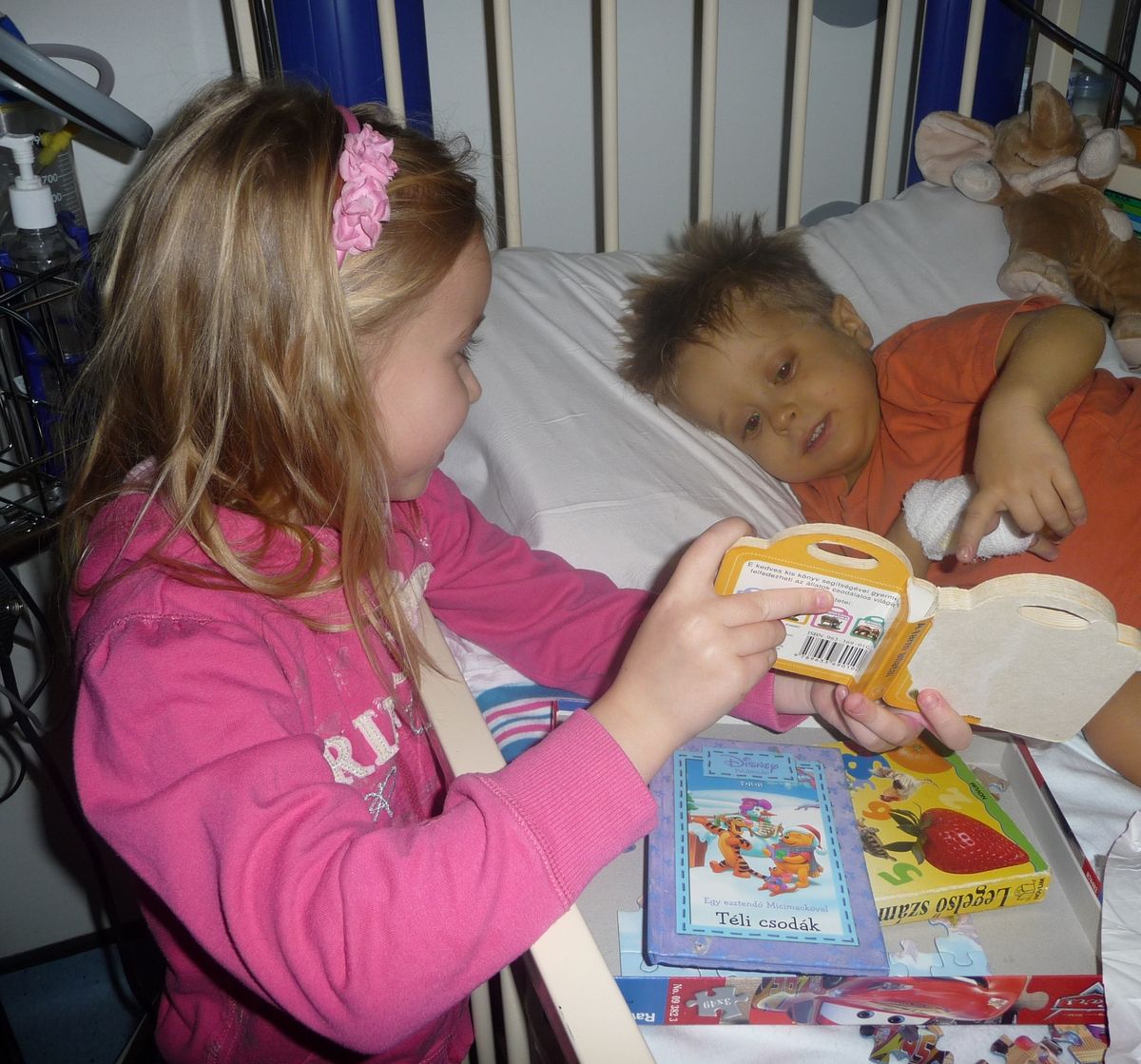
Figure 1 Me reading to my brother in hospital
When I began studying English Literature at university, I felt grateful to have the opportunity keep learning and was glad to read texts from a range of time periods, genres, and authors. Books, as always, kept my world open to other worlds and I gladly got lost in researching for essay topics. I also became interested in how academics develop their own research specialisms and whenever I thought about what my own specific research interests may be, I could never forget how storytelling held the hands of medicine. And, most of all, how the natural connection between these disciplines is rarely spoken about, if even thought about at all.
My flatmate, having been part of the 2024-25 cohort, introduced me to the Laidlaw Scholars Programme. I decided that if I were lucky enough to be given a place, I wanted to use this opportunity to conduct research relating to the connection between literature and medicine.
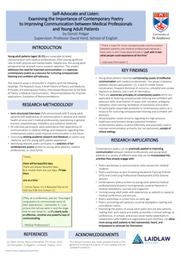
This began with the support of Professor David Herd, who supervised my self-defined research proposal and project. With a strong interest in the connection between literature and human rights, he was supportive of my vision to connect two seemingly separate disciplines. My research essay is titled as follows: Self-Advocate and Listen: Examining the Importance of Contemporary Poetry to Improving Communication between Medical Professionals and Young Adult Patients | Laidlaw Scholars Network.
The research process itself involved a literature review and semi-structured interviews with medical professionals and young adult patients (aged 18-25). This was my first time conducting interviews for research and I learnt not only the practicalities of receiving ethical approval for a project, but also how to lead the interviews in a sensitive and professional way that makes participants feel comfortable, valued, and heard. I came to appreciate that meaningful leadership is not about gathering support for our own ideas but creating a space within them for others to share their perspectives. My ideas developed after every participant I interviewed, and I believe one of the best decisions I made when writing the research essay was letting their voices lead.
It was also invaluable to be surrounded by the other students from my Laidlaw cohort. From team building activities, DISC leadership profiles, the Laidlaw Scholars Conference and the Oxford Character Project, we supported one another while working towards our own goals. Character and leadership development showed not only in ambition and commitment to our projects but in quieter, more unassuming ways: reminding one another about deadlines, responding to any questions reassuringly, randomly seeing one another in the library café and sitting down to eat together, and sharing words of support and genuine interest in one another’s projects.
For my Leadership in Action project, I chose to volunteer with Chain of Life, a charity based in Quebec, Canada, that educates secondary school students aged 15-17 years about organ and tissue donation. As I have worked with several organisations in the UK to raise awareness of organ donation, it felt natural and purposeful to dedicate this opportunity to building on that existing work.
Throughout my six weeks in Quebec, I was welcomed into the homes and classrooms of four Chain of Life teachers. We collaboratively created and delivered several new lessons, resources, and engaging activities for students. The following are key topics that we covered: celebrating life and fostering empathy, media literacy, understanding family refusals, health and prevention, and the roles of medical professionals, governments, and education in organ donation. I learnt that students, when given the opportunity and right support, can lead conversations about organ donation. They can lead conversations within their own families and communities.
I also learnt a lot about leadership from the charity’s founder and president, Lucie Dumont. She supported me from the moment I reached out to her and ensured that I was surrounded by the most welcoming and kind people throughout my stay in Quebec. This reinforced to me that leadership, above all, is about lifting others. About giving back. About making people feel like they can make an impact. Lucie also introduced me to the philosophy of Edgar Morin, which has influenced Chain of Life’s pedagogical approach. In his essay Seven Complex Lessons in Education for the Future [1], he argues that scientific and humanities disciplines should not be isolated from one another but instead united and viewed within context of one another. Reading this felt in many ways like a full circle moment – the research project which got me a place on the Laidlaw Programme was about uniting literature and medicine, and my Leadership in Action project brought me to a charity that not only shares but lives this vision.
At the end of my six weeks in Quebec, I was interviewed about my experience with Chain of Life, and the recording is available to watch here: Doroti Polgár: Joining Chain of Life – A Journey into Organ Donation Education | Videos & Movies on Vimeo.
If there is one most valuable thing that I have learnt throughout my journey as a Laidlaw Scholar, it is that developing character, leadership skills, and a global mindset is not achieved alone. It requires a whole community, one that grows with you. We learn from one another, exchange knowledge, share experiences, and make a difference together. I will carry this with me into further academic research and charity work. The Laidlaw Scholars Leadership and Research Programme has given me the resources and belief to continue making valuable contributions to organ donation education and the interdisciplinary research area of literature and medicine – I will always be thankful. Thank you for giving me the opportunity to hold the hands of my early memories of storytelling and lead them into a chapter of hope not even they could have imagined.
[1] Morin, Edgar. Seven Complex Lessons in Education for the Future. Translated by Nidra Poller. Paris: UNESCO Publishing, 1999.
[2] Chain of Life. "Doroti Polgár: Joining Chain of Life – A Journey into Organ Donation Education," Vimeo, uploaded by Chain of Life, 2026, https://vimeo.com/1217485611.