Supporting Recovery Through Accessible Rehabilitation
Preview
Working alongside surgeons and physiotherapists, assisting in surgery and attending physiotherapy clinics helped me understand the continuum from surgical treatment to postoperative rehabilitation. These experiences informed both the selection of exercises and the way they were demonstrated, allowing me to translate clinical guidance into clear resources for patients recovering from upper- and lower-limb surgery.
The resulting series comprised 25 videos covering early joint mobilisation, active and active-assisted range-of-motion exercises, and progressive strengthening. Lower-limb demonstrations included ankle dorsiflexion, seated knee extension, knee flexion and exercises using elastic resistance bands. Upper-limb demonstrations included bilateral shoulder elevation using a stick and ball-supported exercises against a wall. Together, the videos illustrated movements used at different stages of rehabilitation, from early bedside exercises performed lying or seated to more demanding exercises undertaken in standing.
The emphasis was on making each movement understandable and easy to revisit. Demonstrations were accompanied by concise instructions, captions and clearly displayed exercise names and repetition counts. Working with the physiotherapy team helped me appreciate the importance of adapting rehabilitation to the individual patient, rather than presenting recovery as a uniform sequence. The videos were designed to reinforce the guidance provided by the clinical team and offer patients a practical reference beyond their appointments.

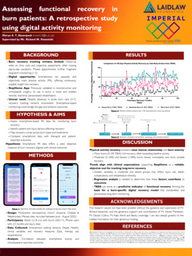
Hello! I am a current undergraduate medical student at Imperial College London with a strong interest in surgical innovation and trauma care. My research project focuses on tracking the recovery of burns patients using digitised tools, aiming to enhance outcomes and personalise post-trauma care through technology-driven solutions.